

467
of H 2 increases glycerol conversion, while the selectivity for propylene decreases
because of again hydrogenation of obtained propylene into propane. Sato et al. studied the hydrogenolysis of glycerol into propylene over WO 3 modified Cu/Al 2 O 3
under ambient H 2 pressure [37]. Further addition of SiO 2 -Al 2 O 3 under the catalyst
bed of WO 3 -Cu/Al 2 O 3 converts the 1-propanol to obtain 84.8% of selectivity for
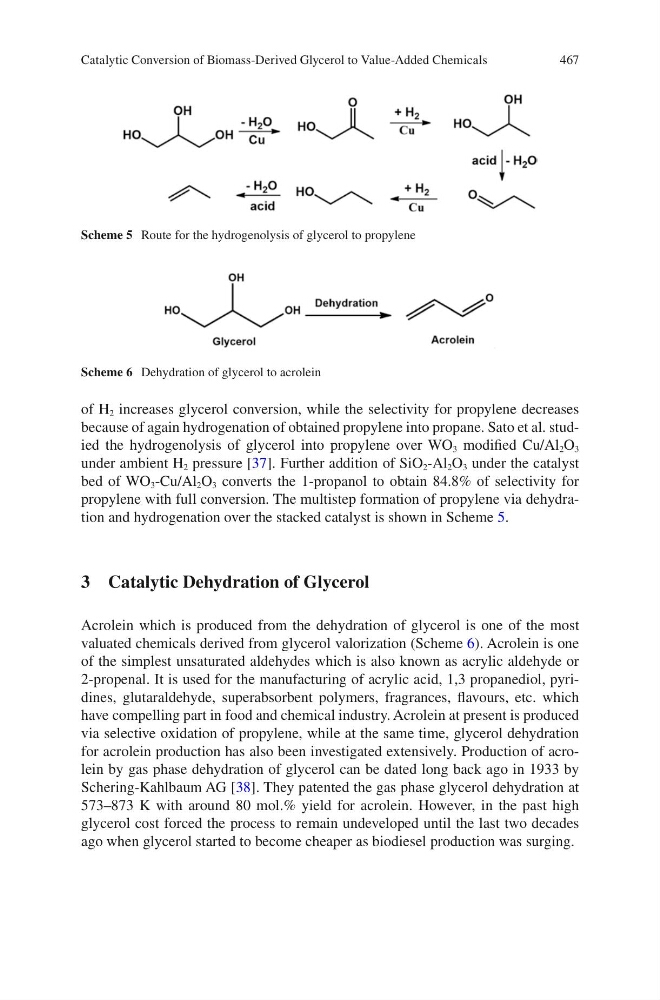
propylene with full conversion. The multistep formation of propylene via dehydration and hydrogenation over the stacked catalyst is shown in Scheme 5.
3 Catalytic Dehydration of Glycerol
Acrolein which is produced from the dehydration of glycerol is one of the most
valuated chemicals derived from glycerol valorization (Scheme 6). Acrolein is one
of the simplest unsaturated aldehydes which is also known as acrylic aldehyde or
2-propenal. It is used for the manufacturing of acrylic acid, 1,3 propanediol, pyridines, glutaraldehyde, superabsorbent polymers, fragrances, flavours, etc. which
have compelling part in food and chemical industry. Acrolein at present is produced
via selective oxidation of propylene, while at the same time, glycerol dehydration
for acrolein production has also been investigated extensively. Production of acrolein by gas phase dehydration of glycerol can be dated long back ago in 1933 by
Schering-Kahlbaum AG [38]. They patented the gas phase glycerol dehydration at
573–873 K with around 80 mol.% yield for acrolein. However, in the past high
glycerol cost forced the process to remain undeveloped until the last two decades
ago when glycerol started to become cheaper as biodiesel production was surging.
Scheme 5 Route for the hydrogenolysis of glycerol to propylene
Scheme 6 Dehydration of glycerol to acrolein
Catalytic Conversion of Biomass-Derived Glycerol to Value-Added Chemicals
of H 2 increases glycerol conversion, while the selectivity for propylene decreases
because of again hydrogenation of obtained propylene into propane. Sato et al. studied the hydrogenolysis of glycerol into propylene over WO 3 modified Cu/Al 2 O 3
under ambient H 2 pressure [37]. Further addition of SiO 2 -Al 2 O 3 under the catalyst
bed of WO 3 -Cu/Al 2 O 3 converts the 1-propanol to obtain 84.8% of selectivity for
propylene with full conversion. The multistep formation of propylene via dehydration and hydrogenation over the stacked catalyst is shown in Scheme 5.
3 Catalytic Dehydration of Glycerol
Acrolein which is produced from the dehydration of glycerol is one of the most
valuated chemicals derived from glycerol valorization (Scheme 6). Acrolein is one
of the simplest unsaturated aldehydes which is also known as acrylic aldehyde or
2-propenal. It is used for the manufacturing of acrylic acid, 1,3 propanediol, pyridines, glutaraldehyde, superabsorbent polymers, fragrances, flavours, etc. which
have compelling part in food and chemical industry. Acrolein at present is produced
via selective oxidation of propylene, while at the same time, glycerol dehydration
for acrolein production has also been investigated extensively. Production of acrolein by gas phase dehydration of glycerol can be dated long back ago in 1933 by
Schering-Kahlbaum AG [38]. They patented the gas phase glycerol dehydration at
573–873 K with around 80 mol.% yield for acrolein. However, in the past high
glycerol cost forced the process to remain undeveloped until the last two decades
ago when glycerol started to become cheaper as biodiesel production was surging.
Scheme 5 Route for the hydrogenolysis of glycerol to propylene
Scheme 6 Dehydration of glycerol to acrolein
Catalytic Conversion of Biomass-Derived Glycerol to Value-Added Chemicals