

453
compared to the other oxygenates and alcohols. It is a stable liquid and does not
form peroxides under neutral conditions. These properties made GVL as a sustainable fuel additive and solvent. Moreover, GVL can be stored and transported in
larger scale, and it is biodegradable [95]. All the products from cellulose deconstruction are soluble in GVL, so it can be utilized as a biphasic solvent system in
biorefineries [96]. Luterbacher reported the use of GVL as effective solvent in
thermo-catalytic preparation of soluble sugars with high yields from corn stover
and wood.
Among the biomass-derived chemicals, GVL became one of the prominent
chemicals in the last decade because of its excellent properties as green solvent and
fuel additive. It is also a useful precursor for the preparation of high-value biopolymers and liquid alkanes [97, 98]. Currently GVL production is based on a multistep
process involving the selective fractionation and depolymerization of the lignocellulosic biomass. The derived monosaccharides from biomass are converted to levulinic acid (LA) by acid-catalysed transformation. GVL is obtained by the
hydrogenation of LA.
In general, GVL was obtained by LA and its esters’ hydrogenation. Hydrogenation
of LA can be conceded by two methods: (1) metal-catalysed hydrogenation with
molecular H 2 and (2) catalytic transfer hydrogenation (CTH) with hydrogen donors
such as alcohols, formic acid, etc. Conventional hydrogenation carried over expensive noble metal catalysts at high H 2 pressure. However, CTH approach proceeds
over simple and cheap metal oxide catalysts with alcohols as H-donors. Figure 17
shows the graphical representation of conventional and CTH approach for GVL
synthesis.
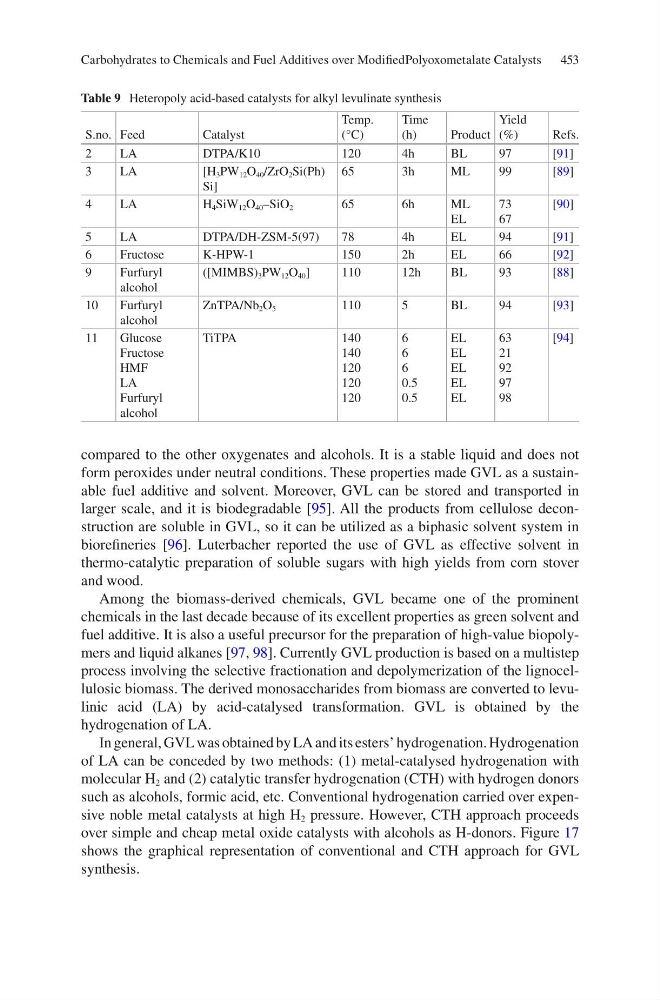
Table 9 Heteropoly acid-based catalysts for alkyl levulinate synthesis
S.no. Feed
Catalyst
Temp.
(°C)
Time
(h)
Product
Yield
(%)
Refs.
2
LA
DTPA/K10
120
4h
BL
97
[91]
3
LA
[H 3 PW 12 O 40 /ZrO 2 Si(Ph)
Si]
65
3h
ML
99
[89]
4
LA
H 4 SiW 12 O 40 –SiO 2
65
6h
ML
EL
73
67
[90]
5
LA
DTPA/DH-ZSM-5(97)
78
4h
EL
94
[91]
6
Fructose
K-HPW-1
150
2h
EL
66
[92]
9
Furfuryl
alcohol
([MIMBS) 3 PW 12 O 40 ]
110
12h
BL
93
[88]
10
Furfuryl
alcohol
ZnTPA/Nb 2 O 5
110
5
BL
94
[93]
11
Glucose
Fructose
HMF
LA
Furfuryl
alcohol
TiTPA
140
140
120
120
120
6
6
6
0.5
0.5
EL
EL
EL
EL
EL
63
21
92
97
98
[94]
Carbohydrates to Chemicals and Fuel Additives over ModifiedPolyoxometalate Catalysts
compared to the other oxygenates and alcohols. It is a stable liquid and does not
form peroxides under neutral conditions. These properties made GVL as a sustainable fuel additive and solvent. Moreover, GVL can be stored and transported in
larger scale, and it is biodegradable [95]. All the products from cellulose deconstruction are soluble in GVL, so it can be utilized as a biphasic solvent system in
biorefineries [96]. Luterbacher reported the use of GVL as effective solvent in
thermo-catalytic preparation of soluble sugars with high yields from corn stover
and wood.
Among the biomass-derived chemicals, GVL became one of the prominent
chemicals in the last decade because of its excellent properties as green solvent and
fuel additive. It is also a useful precursor for the preparation of high-value biopolymers and liquid alkanes [97, 98]. Currently GVL production is based on a multistep
process involving the selective fractionation and depolymerization of the lignocellulosic biomass. The derived monosaccharides from biomass are converted to levulinic acid (LA) by acid-catalysed transformation. GVL is obtained by the
hydrogenation of LA.
In general, GVL was obtained by LA and its esters’ hydrogenation. Hydrogenation
of LA can be conceded by two methods: (1) metal-catalysed hydrogenation with
molecular H 2 and (2) catalytic transfer hydrogenation (CTH) with hydrogen donors
such as alcohols, formic acid, etc. Conventional hydrogenation carried over expensive noble metal catalysts at high H 2 pressure. However, CTH approach proceeds
over simple and cheap metal oxide catalysts with alcohols as H-donors. Figure 17
shows the graphical representation of conventional and CTH approach for GVL
synthesis.
Table 9 Heteropoly acid-based catalysts for alkyl levulinate synthesis
S.no. Feed
Catalyst
Temp.
(°C)
Time
(h)
Product
Yield
(%)
Refs.
2
LA
DTPA/K10
120
4h
BL
97
[91]
3
LA
[H 3 PW 12 O 40 /ZrO 2 Si(Ph)
Si]
65
3h
ML
99
[89]
4
LA
H 4 SiW 12 O 40 –SiO 2
65
6h
ML
EL
73
67
[90]
5
LA
DTPA/DH-ZSM-5(97)
78
4h
EL
94
[91]
6
Fructose
K-HPW-1
150
2h
EL
66
[92]
9
Furfuryl
alcohol
([MIMBS) 3 PW 12 O 40 ]
110
12h
BL
93
[88]
10
Furfuryl
alcohol
ZnTPA/Nb 2 O 5
110
5
BL
94
[93]
11
Glucose
Fructose
HMF
LA
Furfuryl
alcohol
TiTPA
140
140
120
120
120
6
6
6
0.5
0.5
EL
EL
EL
EL
EL
63
21
92
97
98
[94]
Carbohydrates to Chemicals and Fuel Additives over ModifiedPolyoxometalate Catalysts