

452
9 Synthesis of γ-Valerolactone
γ-Valerolactone (GVL) is a versatile molecule with industrial interest. Naturally it
is found in fruits, and it is a colourless liquid. It is a stable compound at normal
conditions and has a sweet, herbaceous odour, which makes it suitable for the production of perfumes and food additives. The vapour pressure of GVL is low
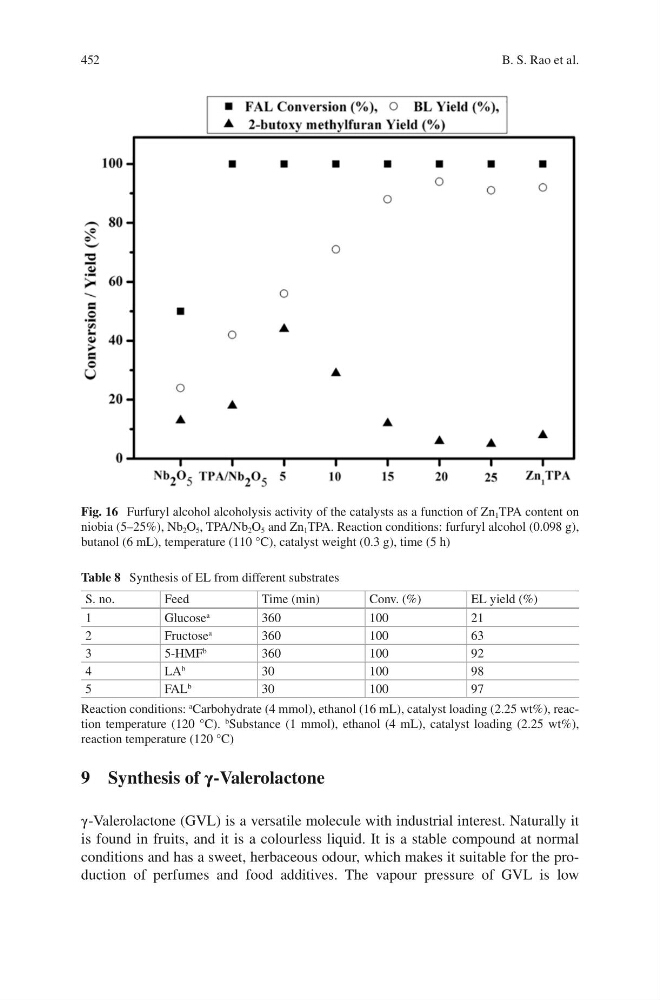
Fig. 16 Furfuryl alcohol alcoholysis activity of the catalysts as a function of Zn 1 TPA content on
niobia (5–25%), Nb 2 O 5 , TPA/Nb 2 O 5 and Zn 1 TPA. Reaction conditions: furfuryl alcohol (0.098 g),
butanol (6 mL), temperature (110 °C), catalyst weight (0.3 g), time (5 h)
Table 8 Synthesis of EL from different substrates
S. no.
Feed
Time (min)
Conv. (%)
EL yield (%)
1
Glucose
a
360
100
21
2
Fructose
a
360
100
63
3
5-HMF
b
360
100
92
4
LA
b
30
100
98
5
FAL
b
30
100
97
Reaction conditions:
a
Carbohydrate (4 mmol), ethanol (16 mL), catalyst loading (2.25 wt%), reaction temperature (120 °C).
b
Substance (1 mmol), ethanol (4 mL), catalyst loading (2.25 wt%),
reaction temperature (120 °C)
B. S. Rao et al.
9 Synthesis of γ-Valerolactone
γ-Valerolactone (GVL) is a versatile molecule with industrial interest. Naturally it
is found in fruits, and it is a colourless liquid. It is a stable compound at normal
conditions and has a sweet, herbaceous odour, which makes it suitable for the production of perfumes and food additives. The vapour pressure of GVL is low
Fig. 16 Furfuryl alcohol alcoholysis activity of the catalysts as a function of Zn 1 TPA content on
niobia (5–25%), Nb 2 O 5 , TPA/Nb 2 O 5 and Zn 1 TPA. Reaction conditions: furfuryl alcohol (0.098 g),
butanol (6 mL), temperature (110 °C), catalyst weight (0.3 g), time (5 h)
Table 8 Synthesis of EL from different substrates
S. no.
Feed
Time (min)
Conv. (%)
EL yield (%)
1
Glucose
a
360
100
21
2
Fructose
a
360
100
63
3
5-HMF
b
360
100
92
4
LA
b
30
100
98
5
FAL
b
30
100
97
Reaction conditions:
a
Carbohydrate (4 mmol), ethanol (16 mL), catalyst loading (2.25 wt%), reaction temperature (120 °C).
b
Substance (1 mmol), ethanol (4 mL), catalyst loading (2.25 wt%),
reaction temperature (120 °C)
B. S. Rao et al.