

368
The procedure of dealumination used for making hierarchical zeolites involves
severe acid treatments that can severely damage the zeolite framework. Moreover,
the process involves the reduction in the number of interconnecting channels from
the external surface to the pores leading to a serious accessibility drawback [173].
Henceforth, the process of desilication for the generation of mesoporosity is often
preferred over the dealumination one. It is reported that hierarchical zeolites prepared by desilication offer better mesopore accessibility and preserved acidity as
compared to those by dealumination [175]. Ogura et al. in their studies concluded
that desilication process could be a promising approach for creation of uniform
mesoporous framework structure with zeolitic acidity [176]. During desilication,
base treatment causes leaching of Si species from zeolite framework, creating interconnected mesopores that are accessible from the external surface of zeolite.
The use of templates is regarded as less energy efficient and environmentally
benign with high temperature requirement for toxic organic template removal and
greenhouse gas emission during its combustion. Zhijie Wu and coworkers have
recently reviewed green synthesis of hierarchical zeolites [177].
Hierarchical zeolites possess several advantages over microporous zeolites, such
as improved mass transport of reactants, facilitated by mesopores, due to enhanced
accessibility of the acid sites, and due to shorter diffusion path length of hierarchical
materials, products retained for lesser time in micropores, thus causing reduction in
probability of side reactions which consequently increases preference toward primary products and enhances the catalyst’s life by improving the transport of coke
precursors out of the catalyst. Also, they are far better over individual mesoporous
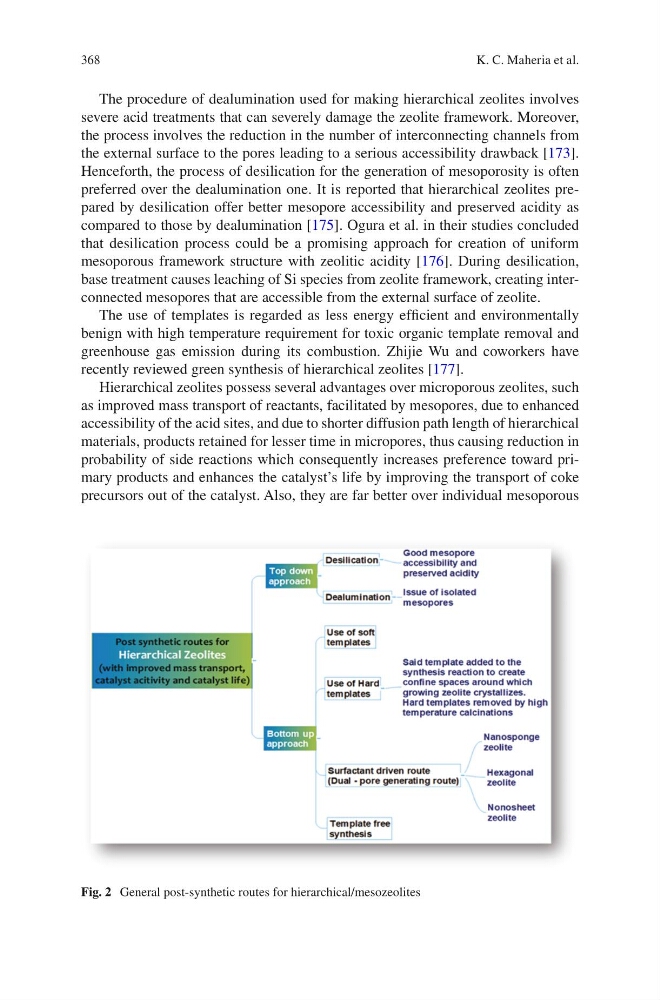
Fig. 2 General post-synthetic routes for hierarchical/mesozeolites
K. C. Maheria et al.
The procedure of dealumination used for making hierarchical zeolites involves
severe acid treatments that can severely damage the zeolite framework. Moreover,
the process involves the reduction in the number of interconnecting channels from
the external surface to the pores leading to a serious accessibility drawback [173].
Henceforth, the process of desilication for the generation of mesoporosity is often
preferred over the dealumination one. It is reported that hierarchical zeolites prepared by desilication offer better mesopore accessibility and preserved acidity as
compared to those by dealumination [175]. Ogura et al. in their studies concluded
that desilication process could be a promising approach for creation of uniform
mesoporous framework structure with zeolitic acidity [176]. During desilication,
base treatment causes leaching of Si species from zeolite framework, creating interconnected mesopores that are accessible from the external surface of zeolite.
The use of templates is regarded as less energy efficient and environmentally
benign with high temperature requirement for toxic organic template removal and
greenhouse gas emission during its combustion. Zhijie Wu and coworkers have
recently reviewed green synthesis of hierarchical zeolites [177].
Hierarchical zeolites possess several advantages over microporous zeolites, such
as improved mass transport of reactants, facilitated by mesopores, due to enhanced
accessibility of the acid sites, and due to shorter diffusion path length of hierarchical
materials, products retained for lesser time in micropores, thus causing reduction in
probability of side reactions which consequently increases preference toward primary products and enhances the catalyst’s life by improving the transport of coke
precursors out of the catalyst. Also, they are far better over individual mesoporous
Fig. 2 General post-synthetic routes for hierarchical/mesozeolites
K. C. Maheria et al.