

354
[46–48]. The presence of carboxylic groups along with the presence of ketone in the
structure of LA provides the possible environment for its conversion into pyrrolidinones via catalytic tandem reductive amination and amidation reactions. The reaction proceeds through the formation of imine, which further gives γ-amino pentanoic
acid as an intermediate. Finally, pyrrolidinone is produced via amidation of γ-amino
pentanoic acid. Many reports are available for both catalytic systems, i.e., homogeneous and heterogeneous for the transformation of LA into pyrrolidinone. Fu et al.
have reported the homogeneous catalyst system based on Ru and formic acid as
hydrogen donor [49]. Sun et al. [50] have designed very efficient heterogeneous
solid acid catalyst NHC-Ru, which shows excellent activity even after 37 catalytic
recycles (Scheme 7).
In heterogeneous catalytic system, the catalysts loaded with metals and metal
oxides over the supports show noticeable improved catalytic activity for the reaction
of reductive amination. Rode et.al have carried out the synthesis of pyrrolidinones
over ZrO 2 -supported Au catalyst with formic acid as hydrogen donor [51]. Siddiki
and coworkers [52] have developed TiO 2 -supported Pt-based catalyst. They have
proposed that the Pt sites surrounded by TiO X species enhance the chemoselectivity
of the catalyst and exhibited higher catalytic performance with ~98% yield of pyrrolidinone in the reductive amination process [50]. Other metal alloy-based catalysts were developed by Esposito et al., and they have applied it in the continuous
flow reactor. It was observed that there is not any variation found in the activity of
catalyst FeNi even after 52.5 h [53]. Further text of the chapter is focused on levulinate esters, the most important levulinic acid-derived value-added chemical.
O
O
OH
Levulinic acid
OH
O
OH
O
HO
-H 2 O
MeO
OH
O
O
O
OH
O
HO
Succinic acid
H 2 O
H 2 O 2
Oxidation
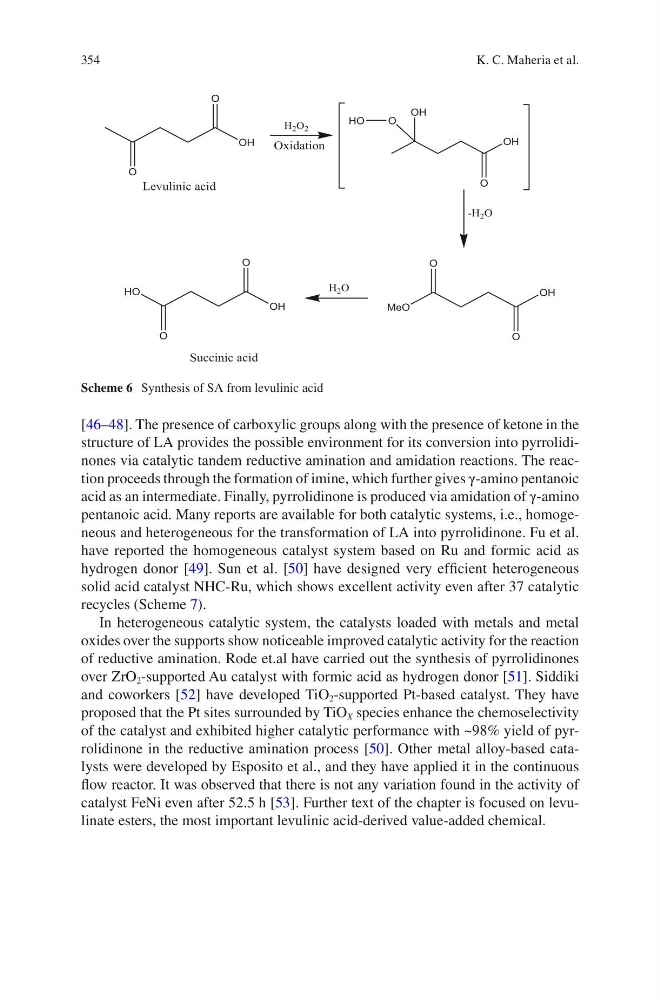
Scheme 6 Synthesis of SA from levulinic acid
K. C. Maheria et al.
[46–48]. The presence of carboxylic groups along with the presence of ketone in the
structure of LA provides the possible environment for its conversion into pyrrolidinones via catalytic tandem reductive amination and amidation reactions. The reaction proceeds through the formation of imine, which further gives γ-amino pentanoic
acid as an intermediate. Finally, pyrrolidinone is produced via amidation of γ-amino
pentanoic acid. Many reports are available for both catalytic systems, i.e., homogeneous and heterogeneous for the transformation of LA into pyrrolidinone. Fu et al.
have reported the homogeneous catalyst system based on Ru and formic acid as
hydrogen donor [49]. Sun et al. [50] have designed very efficient heterogeneous
solid acid catalyst NHC-Ru, which shows excellent activity even after 37 catalytic
recycles (Scheme 7).
In heterogeneous catalytic system, the catalysts loaded with metals and metal
oxides over the supports show noticeable improved catalytic activity for the reaction
of reductive amination. Rode et.al have carried out the synthesis of pyrrolidinones
over ZrO 2 -supported Au catalyst with formic acid as hydrogen donor [51]. Siddiki
and coworkers [52] have developed TiO 2 -supported Pt-based catalyst. They have
proposed that the Pt sites surrounded by TiO X species enhance the chemoselectivity
of the catalyst and exhibited higher catalytic performance with ~98% yield of pyrrolidinone in the reductive amination process [50]. Other metal alloy-based catalysts were developed by Esposito et al., and they have applied it in the continuous
flow reactor. It was observed that there is not any variation found in the activity of
catalyst FeNi even after 52.5 h [53]. Further text of the chapter is focused on levulinate esters, the most important levulinic acid-derived value-added chemical.
O
O
OH
Levulinic acid
OH
O
OH
O
HO
-H 2 O
MeO
OH
O
O
O
OH
O
HO
Succinic acid
H 2 O
H 2 O 2
Oxidation
Scheme 6 Synthesis of SA from levulinic acid
K. C. Maheria et al.