

128
1.5% for PA 610. Thus, moisture absorption has a severe effect on the amidic
linkages such as it can cause plasticizing, thus lowering the glass transition
temperature and reducing both elastic modulus and strength at break. The effect of
moisture on the main properties of polyamides are summarized in Table 6 [27, 28,
31, 34].
6 Chitin
Polysaccharides are biologically relevant, quite often heterogeneous polymers comprising of monosaccharide moieties interacting via glycosidic linkages. Their source
of origin ranges from cyanobacteria to plants to animals. Similarly, they portray a
variety of functions, the primary one being energy storage apart from structural support, inter−/intracellular communication, host-guest recognition, etc. [41].
Commercially, the polysaccharides are crucial owing to their biocompatibility in the
food industry as thickening agents, in cosmetics, fillers in composite materials, and
also in drug delivery systems [42, 43]. Considering the routes of application of
polysaccharides, their degradation is inevitable after particular time [44–46]. Chitin,
being abundantly available, is one of the preferred choices for composite preparation
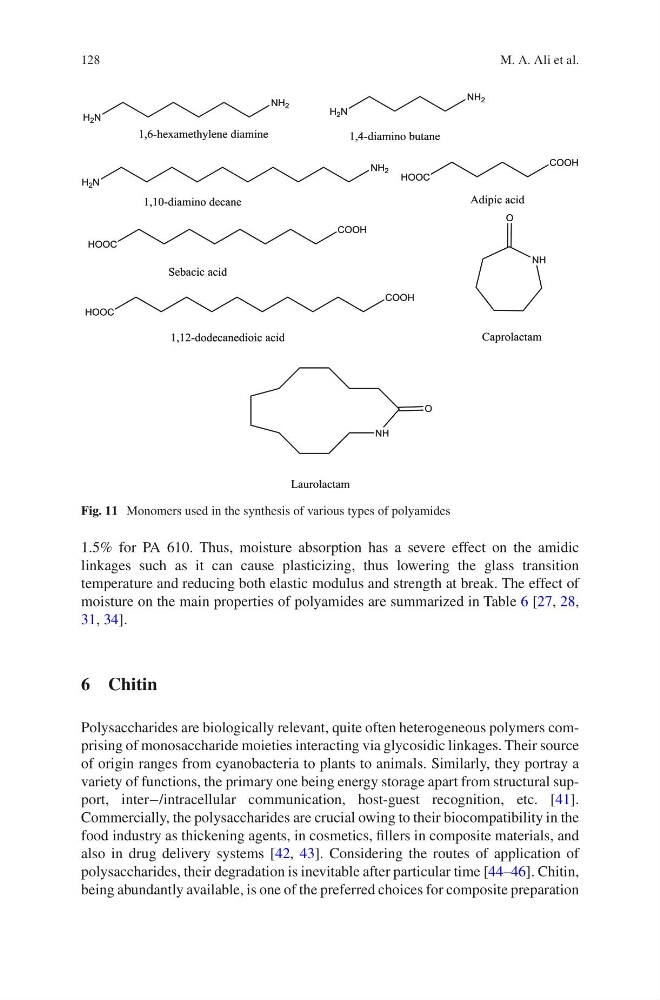
Fig. 11 Monomers used in the synthesis of various types of polyamides
M. A. Ali et al.
1.5% for PA 610. Thus, moisture absorption has a severe effect on the amidic
linkages such as it can cause plasticizing, thus lowering the glass transition
temperature and reducing both elastic modulus and strength at break. The effect of
moisture on the main properties of polyamides are summarized in Table 6 [27, 28,
31, 34].
6 Chitin
Polysaccharides are biologically relevant, quite often heterogeneous polymers comprising of monosaccharide moieties interacting via glycosidic linkages. Their source
of origin ranges from cyanobacteria to plants to animals. Similarly, they portray a
variety of functions, the primary one being energy storage apart from structural support, inter−/intracellular communication, host-guest recognition, etc. [41].
Commercially, the polysaccharides are crucial owing to their biocompatibility in the
food industry as thickening agents, in cosmetics, fillers in composite materials, and
also in drug delivery systems [42, 43]. Considering the routes of application of
polysaccharides, their degradation is inevitable after particular time [44–46]. Chitin,
being abundantly available, is one of the preferred choices for composite preparation
Fig. 11 Monomers used in the synthesis of various types of polyamides
M. A. Ali et al.