

xxix
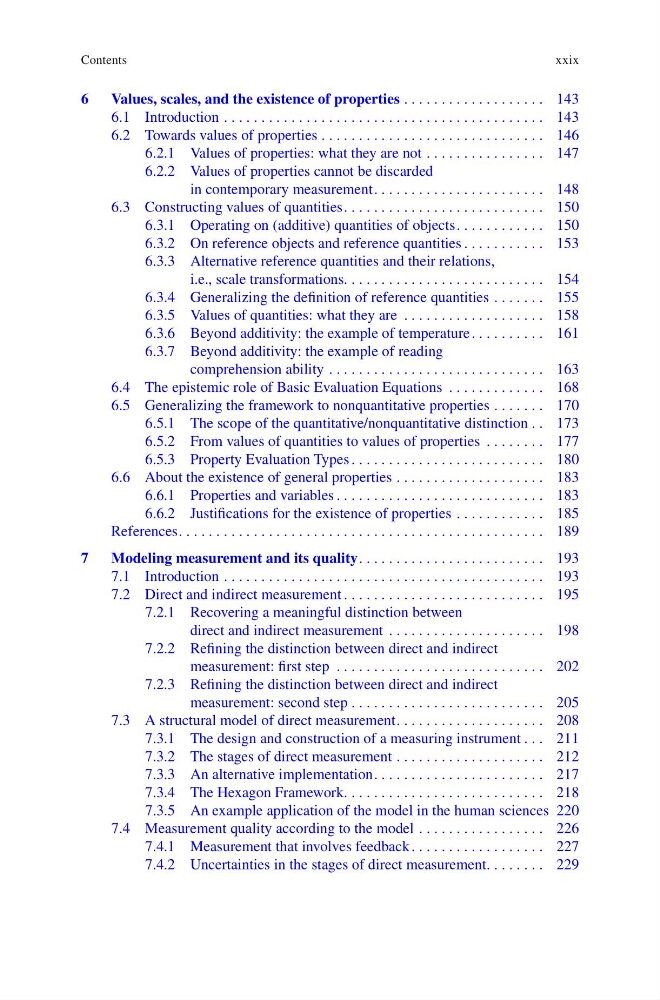
6 Values, scales, and the existence of properties . . . . . . . . . . . . . . . . . . . 143
6.1 Introduction . . . . . . . . . . . . . . . . . . . . . . . . . . . . . . . . . . . . . . . . . . . 143
6.2 Towards values of properties . . . . . . . . . . . . . . . . . . . . . . . . . . . . . . 146
6.2.1 Values of properties: what they are not . . . . . . . . . . . . . . . . 147
6.2.2 Values of properties cannot be discarded
in contemporary measurement . . . . . . . . . . . . . . . . . . . . . . . 148
6.3 Constructing values of quantities . . . . . . . . . . . . . . . . . . . . . . . . . . . 150
6.3.1 Operating on (additive) quantities of objects . . . . . . . . . . . . 150
6.3.2 On reference objects and reference quantities . . . . . . . . . . . 153
6.3.3 Alternative reference quantities and their relations,
i.e., scale transformations. . . . . . . . . . . . . . . . . . . . . . . . . . . 154
6.3.4 Generalizing the definition of reference quantities . . . . . . . 155
6.3.5 Values of quantities: what they are . . . . . . . . . . . . . . . . . . . 158
6.3.6 Beyond additivity: the example of temperature . . . . . . . . . . 161
6.3.7 Beyond additivity: the example of reading
comprehension ability . . . . . . . . . . . . . . . . . . . . . . . . . . . . . 163
6.4 The epistemic role of Basic Evaluation Equations . . . . . . . . . . . . . 168
6.5 Generalizing the framework to nonquantitative properties . . . . . . . 170
6.5.1 The scope of the quantitative/nonquantitative distinction . . 173
6.5.2 From values of quantities to values of properties . . . . . . . . 177
6.5.3 Property Evaluation Types . . . . . . . . . . . . . . . . . . . . . . . . . . 180
6.6 About the existence of general properties . . . . . . . . . . . . . . . . . . . . 183
6.6.1 Properties and variables . . . . . . . . . . . . . . . . . . . . . . . . . . . . 183
6.6.2 Justifications for the existence of properties . . . . . . . . . . . . 185
References . . . . . . . . . . . . . . . . . . . . . . . . . . . . . . . . . . . . . . . . . . . . . . . . . 189
7 Modeling measurement and its quality . . . . . . . . . . . . . . . . . . . . . . . . . 193
7.1 Introduction . . . . . . . . . . . . . . . . . . . . . . . . . . . . . . . . . . . . . . . . . . . 193
7.2 Direct and indirect measurement . . . . . . . . . . . . . . . . . . . . . . . . . . . 195
7.2.1 Recovering a meaningful distinction between
direct and indirect measurement . . . . . . . . . . . . . . . . . . . . . 198
7.2.2 Refining the distinction between direct and indirect
measurement: first step . . . . . . . . . . . . . . . . . . . . . . . . . . . . 202
7.2.3 Refining the distinction between direct and indirect
measurement: second step . . . . . . . . . . . . . . . . . . . . . . . . . . 205
7.3 A structural model of direct measurement . . . . . . . . . . . . . . . . . . . . 208
7.3.1 The design and construction of a measuring instrument . . . 211
7.3.2 The stages of direct measurement . . . . . . . . . . . . . . . . . . . . 212
7.3.3 An alternative implementation . . . . . . . . . . . . . . . . . . . . . . . 217
7.3.4 The Hexagon Framework . . . . . . . . . . . . . . . . . . . . . . . . . . . 218
7.3.5 An example application of the model in the human sciences 220
7.4 Measurement quality according to the model . . . . . . . . . . . . . . . . . 226
7.4.1 Measurement that involves feedback . . . . . . . . . . . . . . . . . . 227
7.4.2 Uncertainties in the stages of direct measurement . . . . . . . . 229
Contents
6 Values, scales, and the existence of properties . . . . . . . . . . . . . . . . . . . 143
6.1 Introduction . . . . . . . . . . . . . . . . . . . . . . . . . . . . . . . . . . . . . . . . . . . 143
6.2 Towards values of properties . . . . . . . . . . . . . . . . . . . . . . . . . . . . . . 146
6.2.1 Values of properties: what they are not . . . . . . . . . . . . . . . . 147
6.2.2 Values of properties cannot be discarded
in contemporary measurement . . . . . . . . . . . . . . . . . . . . . . . 148
6.3 Constructing values of quantities . . . . . . . . . . . . . . . . . . . . . . . . . . . 150
6.3.1 Operating on (additive) quantities of objects . . . . . . . . . . . . 150
6.3.2 On reference objects and reference quantities . . . . . . . . . . . 153
6.3.3 Alternative reference quantities and their relations,
i.e., scale transformations. . . . . . . . . . . . . . . . . . . . . . . . . . . 154
6.3.4 Generalizing the definition of reference quantities . . . . . . . 155
6.3.5 Values of quantities: what they are . . . . . . . . . . . . . . . . . . . 158
6.3.6 Beyond additivity: the example of temperature . . . . . . . . . . 161
6.3.7 Beyond additivity: the example of reading
comprehension ability . . . . . . . . . . . . . . . . . . . . . . . . . . . . . 163
6.4 The epistemic role of Basic Evaluation Equations . . . . . . . . . . . . . 168
6.5 Generalizing the framework to nonquantitative properties . . . . . . . 170
6.5.1 The scope of the quantitative/nonquantitative distinction . . 173
6.5.2 From values of quantities to values of properties . . . . . . . . 177
6.5.3 Property Evaluation Types . . . . . . . . . . . . . . . . . . . . . . . . . . 180
6.6 About the existence of general properties . . . . . . . . . . . . . . . . . . . . 183
6.6.1 Properties and variables . . . . . . . . . . . . . . . . . . . . . . . . . . . . 183
6.6.2 Justifications for the existence of properties . . . . . . . . . . . . 185
References . . . . . . . . . . . . . . . . . . . . . . . . . . . . . . . . . . . . . . . . . . . . . . . . . 189
7 Modeling measurement and its quality . . . . . . . . . . . . . . . . . . . . . . . . . 193
7.1 Introduction . . . . . . . . . . . . . . . . . . . . . . . . . . . . . . . . . . . . . . . . . . . 193
7.2 Direct and indirect measurement . . . . . . . . . . . . . . . . . . . . . . . . . . . 195
7.2.1 Recovering a meaningful distinction between
direct and indirect measurement . . . . . . . . . . . . . . . . . . . . . 198
7.2.2 Refining the distinction between direct and indirect
measurement: first step . . . . . . . . . . . . . . . . . . . . . . . . . . . . 202
7.2.3 Refining the distinction between direct and indirect
measurement: second step . . . . . . . . . . . . . . . . . . . . . . . . . . 205
7.3 A structural model of direct measurement . . . . . . . . . . . . . . . . . . . . 208
7.3.1 The design and construction of a measuring instrument . . . 211
7.3.2 The stages of direct measurement . . . . . . . . . . . . . . . . . . . . 212
7.3.3 An alternative implementation . . . . . . . . . . . . . . . . . . . . . . . 217
7.3.4 The Hexagon Framework . . . . . . . . . . . . . . . . . . . . . . . . . . . 218
7.3.5 An example application of the model in the human sciences 220
7.4 Measurement quality according to the model . . . . . . . . . . . . . . . . . 226
7.4.1 Measurement that involves feedback . . . . . . . . . . . . . . . . . . 227
7.4.2 Uncertainties in the stages of direct measurement . . . . . . . . 229
Contents