

3.3 Discussion and Conclusion
87
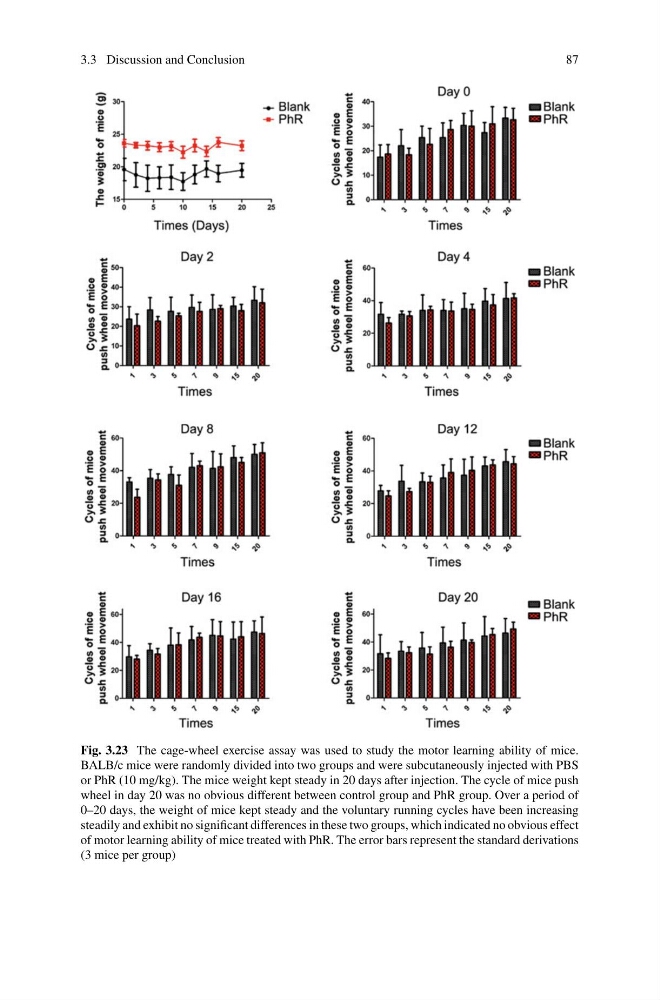
Fig. 3.23 The cage-wheel exercise assay was used to study the motor learning ability of mice.
BALB/c mice were randomly divided into two groups and were subcutaneously injected with PBS
or PhR (10 mg/kg). The mice weight kept steady in 20 days after injection. The cycle of mice push
wheel in day 20 was no obvious different between control group and PhR group. Over a period of
0–20 days, the weight of mice kept steady and the voluntary running cycles have been increasing
steadily and exhibit no significant differences in these two groups, which indicated no obvious effect
of motor learning ability of mice treated with PhR. The error bars represent the standard derivations
(3 mice per group)
87
Fig. 3.23 The cage-wheel exercise assay was used to study the motor learning ability of mice.
BALB/c mice were randomly divided into two groups and were subcutaneously injected with PBS
or PhR (10 mg/kg). The mice weight kept steady in 20 days after injection. The cycle of mice push
wheel in day 20 was no obvious different between control group and PhR group. Over a period of
0–20 days, the weight of mice kept steady and the voluntary running cycles have been increasing
steadily and exhibit no significant differences in these two groups, which indicated no obvious effect
of motor learning ability of mice treated with PhR. The error bars represent the standard derivations
(3 mice per group)