

26
2 Synthesis of In-Tether Chiral Center Peptides …
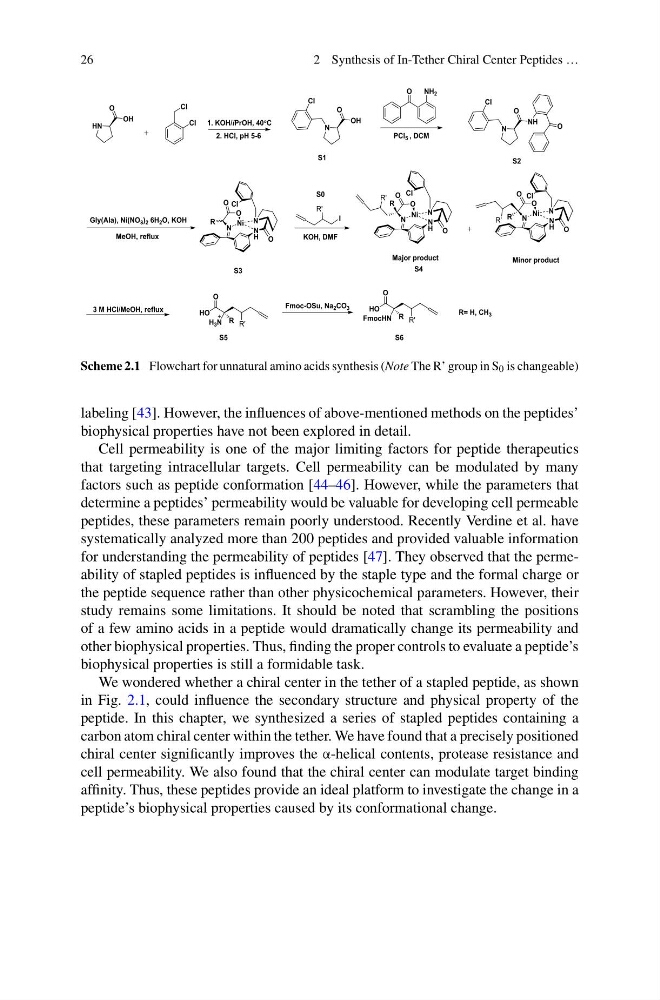
Scheme 2.1 Flowchart for unnatural amino acids synthesis (Note The R’ group in S 0 is changeable)
labeling [43]. However, the influences of above-mentioned methods on the peptides’
biophysical properties have not been explored in detail.
Cell permeability is one of the major limiting factors for peptide therapeutics
that targeting intracellular targets. Cell permeability can be modulated by many
factors such as peptide conformation [44–46]. However, while the parameters that
determine a peptides’ permeability would be valuable for developing cell permeable
peptides, these parameters remain poorly understood. Recently Verdine et al. have
systematically analyzed more than 200 peptides and provided valuable information
for understanding the permeability of peptides [47]. They observed that the permeability of stapled peptides is influenced by the staple type and the formal charge or
the peptide sequence rather than other physicochemical parameters. However, their
study remains some limitations. It should be noted that scrambling the positions
of a few amino acids in a peptide would dramatically change its permeability and
other biophysical properties. Thus, finding the proper controls to evaluate a peptide’s
biophysical properties is still a formidable task.
We wondered whether a chiral center in the tether of a stapled peptide, as shown
in Fig. 2.1, could influence the secondary structure and physical property of the
peptide. In this chapter, we synthesized a series of stapled peptides containing a
carbon atom chiral center within the tether. We have found that a precisely positioned
chiral center significantly improves the α-helical contents, protease resistance and
cell permeability. We also found that the chiral center can modulate target binding
affinity. Thus, these peptides provide an ideal platform to investigate the change in a
peptide’s biophysical properties caused by its conformational change.
2 Synthesis of In-Tether Chiral Center Peptides …
Scheme 2.1 Flowchart for unnatural amino acids synthesis (Note The R’ group in S 0 is changeable)
labeling [43]. However, the influences of above-mentioned methods on the peptides’
biophysical properties have not been explored in detail.
Cell permeability is one of the major limiting factors for peptide therapeutics
that targeting intracellular targets. Cell permeability can be modulated by many
factors such as peptide conformation [44–46]. However, while the parameters that
determine a peptides’ permeability would be valuable for developing cell permeable
peptides, these parameters remain poorly understood. Recently Verdine et al. have
systematically analyzed more than 200 peptides and provided valuable information
for understanding the permeability of peptides [47]. They observed that the permeability of stapled peptides is influenced by the staple type and the formal charge or
the peptide sequence rather than other physicochemical parameters. However, their
study remains some limitations. It should be noted that scrambling the positions
of a few amino acids in a peptide would dramatically change its permeability and
other biophysical properties. Thus, finding the proper controls to evaluate a peptide’s
biophysical properties is still a formidable task.
We wondered whether a chiral center in the tether of a stapled peptide, as shown
in Fig. 2.1, could influence the secondary structure and physical property of the
peptide. In this chapter, we synthesized a series of stapled peptides containing a
carbon atom chiral center within the tether. We have found that a precisely positioned
chiral center significantly improves the α-helical contents, protease resistance and
cell permeability. We also found that the chiral center can modulate target binding
affinity. Thus, these peptides provide an ideal platform to investigate the change in a
peptide’s biophysical properties caused by its conformational change.