

(stage 11). How can small variations in insolation lead to the
greatest of transitions? A natural solution is to view the great
cycles at 100,000 years, not as a linear oscillation around an
equilibrium point whose amplitude is inevitably linked to the
amplitude of the forcing, but rather as a relaxation oscillation
between two different climate modes between which the
system can switch as soon as certain thresholds are crossed.
This is what is proposed in the Paillard model (1998):
dV=dt ¼ V R À V
ð
Þ =s R À F=s F
This time, the volume of ice is ‘relaxed’ towards different
V R values: the ‘climate mode’ R is changed as a function of
certain threshold overruns on the astronomical forcing i and
on the volume of ice V. In particular, an essential point
emerging from the study of this model is that in order to
predict deglaciations at the right position, they must be
linked to the glacial maxima: the switch between
-200
0
200
400
600
800
1000
Paillard’s model
Imbrie’s model
Calder’s model
Summer insolation at 65°N
LR04
Time (thousands of years before present)
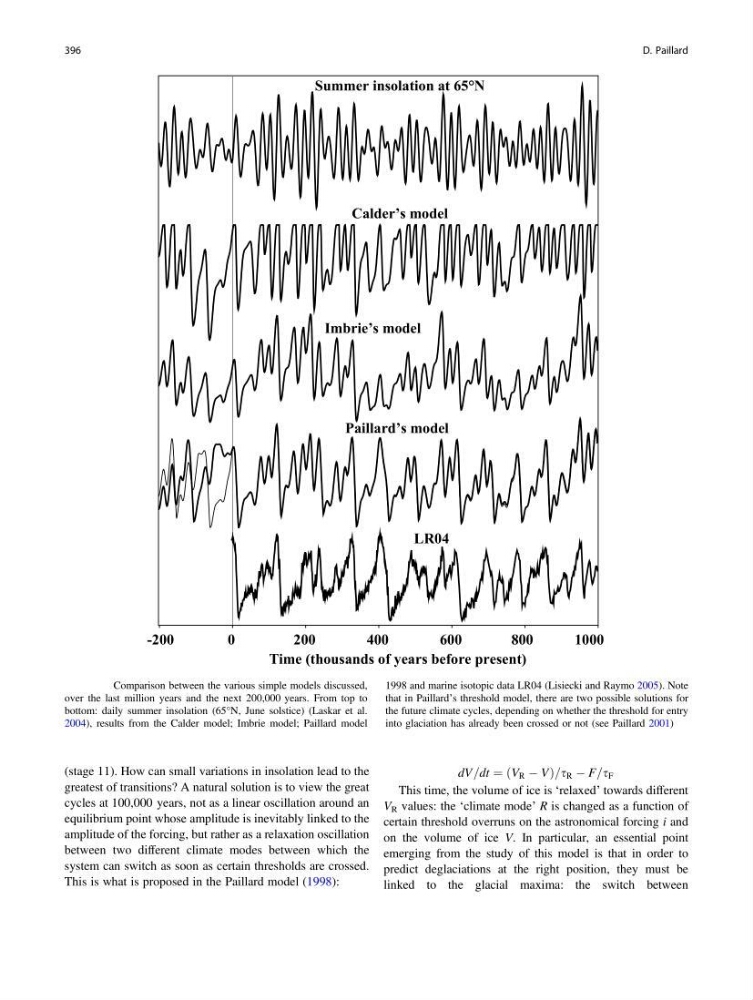
Fig. 28.7 Comparison between the various simple models discussed,
over the last million years and the next 200,000 years. From top to
bottom: daily summer insolation (65°N, June solstice) (Laskar et al.
2004), results from the Calder model; Imbrie model; Paillard model
1998 and marine isotopic data LR04 (Lisiecki and Raymo 2005). Note
that in Paillard’s threshold model, there are two possible solutions for
the future climate cycles, depending on whether the threshold for entry
into glaciation has already been crossed or not (see Paillard 2001)
396
D. Paillard
greatest of transitions? A natural solution is to view the great
cycles at 100,000 years, not as a linear oscillation around an
equilibrium point whose amplitude is inevitably linked to the
amplitude of the forcing, but rather as a relaxation oscillation
between two different climate modes between which the
system can switch as soon as certain thresholds are crossed.
This is what is proposed in the Paillard model (1998):
dV=dt ¼ V R À V
ð
Þ =s R À F=s F
This time, the volume of ice is ‘relaxed’ towards different
V R values: the ‘climate mode’ R is changed as a function of
certain threshold overruns on the astronomical forcing i and
on the volume of ice V. In particular, an essential point
emerging from the study of this model is that in order to
predict deglaciations at the right position, they must be
linked to the glacial maxima: the switch between
-200
0
200
400
600
800
1000
Paillard’s model
Imbrie’s model
Calder’s model
Summer insolation at 65°N
LR04
Time (thousands of years before present)
Fig. 28.7 Comparison between the various simple models discussed,
over the last million years and the next 200,000 years. From top to
bottom: daily summer insolation (65°N, June solstice) (Laskar et al.
2004), results from the Calder model; Imbrie model; Paillard model
1998 and marine isotopic data LR04 (Lisiecki and Raymo 2005). Note
that in Paillard’s threshold model, there are two possible solutions for
the future climate cycles, depending on whether the threshold for entry
into glaciation has already been crossed or not (see Paillard 2001)
396
D. Paillard