

Tethyan domain, suggesting widespread cooling at all latitudes (Dromart et al. 2003). The total duration of the event
was about 3 million years. This episode is also marked by
the reduction, by a factor of about 10, of carbonate deposits.
The d
13 C values also suggest a positive excursion of about
0.5‰ over the same period. Finally, a drop in the sea level of
several tens of meters is supported by evidence (Dromart
et al. 2003), suggesting the establishment of temporary ice
caps (Fig. 27.14).
The reasons for this cooling are not completely understood, nor, indeed are those of all the abrupt cooling episodes of the Jurassic and the Cretaceous. However, several
avenues of enquiry have been opened. In particular, for this
specific event, the amount of organic matter buried in marine
sediments increased greatly during the middle Callovian just
before the cooling. The percentage of organic matter
increased from less than 1% during the early Callovian to
5%, and even 10% in the middle Callovian. This increased
rate of burial of organic matter may have led to an increase
in consumption of atmospheric CO 2 on a temporal scale
sufficiently short, relative to the response time of the terrestrial paleothermostat so that it was unable to intervene as
a stabilizer. This would have resulted in a reduction in CO 2
pressure which could have initiated the subsequent cooling.
This cooling, accompanied by a drop in sea level caused by
the development of glaciers on the coldest continents, was
responsible for the near halting of carbonate sedimentation
on the continental shelves.
Another hypothesis advanced recently connects the
massive reduction in carbonate deposits on the continental
shelves to the cooling episode. To date, it was assumed that
the arrival of colder climate conditions resulted in a reduction in bioconstruction activity in the reef areas. Conversely,
Donnadieu et al. (2011) suggest that the strong decrease in
carbonate reef activity due to external causes (tectonic reasons for example) caused an accumulation of alkalinity in
the oceans. In fact, this alkalinity continued to be supplied
by rivers (continental weathering), whereas the alkalinity
sink by deposition of carbonates was greatly reduced. The
result was a massive dissolution of atmospheric CO 2 in the
oceans. This caused CO 2 pressure to drop from 800 to
200 ppmv during crises in the carbonate production (lasting
a few hundred thousand years), resulting in a global average
cooling of 9 °C.
The Cretaceous-Tertiary Boundary, Meteorite
and the Deccan Traps
The Cretaceous-Tertiary boundary (K–T), dating back to
66 Ma, has been studied in detail because it corresponds to a
mass extinction event, which eliminated, among other species, the dinosaurs. Two major events occurred at the K–T
boundary: the collision of a meteorite with the Earth and the
establishment of the Deccan traps. This latter is a major
magmatic event which may have had a major impact on the
biosphere, but certainly had on the Earth’s climate from 10
5
to 10
6 years.
Dessert et al. (2001) have simulated the impact of the
Deccan Traps on the geochemistry and climate of the Earth.
The total volume of lava put in place is 3 Â 10
6 km
3 , corresponding to the emission of 1.6 Â 10
18 mol of CO 2 , or
half the current carbon content of the exosphere. This
emission could have occurred within a timeframe of about
10
5 years. This time scale is shorter than the response time
of the geological carbon cycle. This is thus far beyond the
capacity of the Earth’s paleothermostat to respond. This
produced a very rapid increase in the partial pressure of CO 2
which was increased to more than 3.5 times its initial level in
100 000 years (i.e. 1000 ppmv, assuming that the
pre-disturbance CO 2 levels were at the pre-industrial level of
280 ppmv: Dessert et al. 2001) The global average temperature was thus increased by 4 °C a hundred thousand
years after the establishment of the Traps.
Once the eruption ended and time passed, the Earth’s
paleothermostat could then take on its stabilizing role. The
surplus CO 2 was slowly consumed by silicate weathering,
which was itself accelerated by the increased greenhouse
effect. Over 2 million years, the level of CO 2 returned to a
stable level, one that was lower than the pre-disturbance
level by 60 ppmv, corresponding to an overall cooling
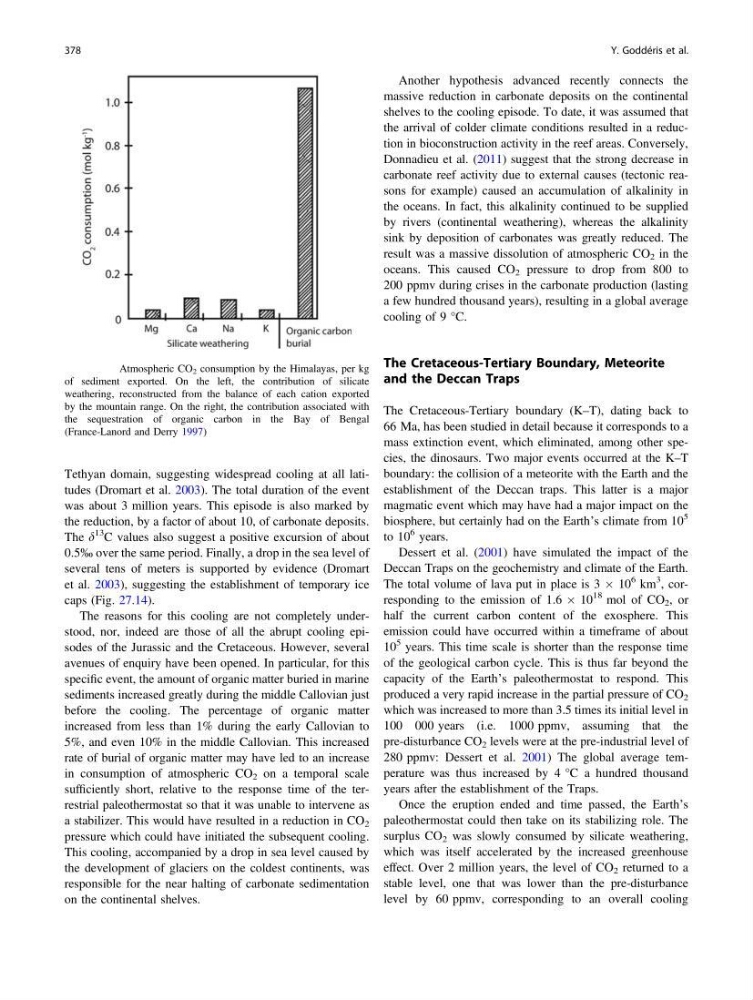
Fig. 27.13 Atmospheric CO 2 consumption by the Himalayas, per kg
of sediment exported. On the left, the contribution of silicate
weathering, reconstructed from the balance of each cation exported
by the mountain range. On the right, the contribution associated with
the sequestration of organic carbon in the Bay of Bengal
(France-Lanord and Derry 1997)
378
Y. Goddéris et al.
was about 3 million years. This episode is also marked by
the reduction, by a factor of about 10, of carbonate deposits.
The d
13 C values also suggest a positive excursion of about
0.5‰ over the same period. Finally, a drop in the sea level of
several tens of meters is supported by evidence (Dromart
et al. 2003), suggesting the establishment of temporary ice
caps (Fig. 27.14).
The reasons for this cooling are not completely understood, nor, indeed are those of all the abrupt cooling episodes of the Jurassic and the Cretaceous. However, several
avenues of enquiry have been opened. In particular, for this
specific event, the amount of organic matter buried in marine
sediments increased greatly during the middle Callovian just
before the cooling. The percentage of organic matter
increased from less than 1% during the early Callovian to
5%, and even 10% in the middle Callovian. This increased
rate of burial of organic matter may have led to an increase
in consumption of atmospheric CO 2 on a temporal scale
sufficiently short, relative to the response time of the terrestrial paleothermostat so that it was unable to intervene as
a stabilizer. This would have resulted in a reduction in CO 2
pressure which could have initiated the subsequent cooling.
This cooling, accompanied by a drop in sea level caused by
the development of glaciers on the coldest continents, was
responsible for the near halting of carbonate sedimentation
on the continental shelves.
Another hypothesis advanced recently connects the
massive reduction in carbonate deposits on the continental
shelves to the cooling episode. To date, it was assumed that
the arrival of colder climate conditions resulted in a reduction in bioconstruction activity in the reef areas. Conversely,
Donnadieu et al. (2011) suggest that the strong decrease in
carbonate reef activity due to external causes (tectonic reasons for example) caused an accumulation of alkalinity in
the oceans. In fact, this alkalinity continued to be supplied
by rivers (continental weathering), whereas the alkalinity
sink by deposition of carbonates was greatly reduced. The
result was a massive dissolution of atmospheric CO 2 in the
oceans. This caused CO 2 pressure to drop from 800 to
200 ppmv during crises in the carbonate production (lasting
a few hundred thousand years), resulting in a global average
cooling of 9 °C.
The Cretaceous-Tertiary Boundary, Meteorite
and the Deccan Traps
The Cretaceous-Tertiary boundary (K–T), dating back to
66 Ma, has been studied in detail because it corresponds to a
mass extinction event, which eliminated, among other species, the dinosaurs. Two major events occurred at the K–T
boundary: the collision of a meteorite with the Earth and the
establishment of the Deccan traps. This latter is a major
magmatic event which may have had a major impact on the
biosphere, but certainly had on the Earth’s climate from 10
5
to 10
6 years.
Dessert et al. (2001) have simulated the impact of the
Deccan Traps on the geochemistry and climate of the Earth.
The total volume of lava put in place is 3 Â 10
6 km
3 , corresponding to the emission of 1.6 Â 10
18 mol of CO 2 , or
half the current carbon content of the exosphere. This
emission could have occurred within a timeframe of about
10
5 years. This time scale is shorter than the response time
of the geological carbon cycle. This is thus far beyond the
capacity of the Earth’s paleothermostat to respond. This
produced a very rapid increase in the partial pressure of CO 2
which was increased to more than 3.5 times its initial level in
100 000 years (i.e. 1000 ppmv, assuming that the
pre-disturbance CO 2 levels were at the pre-industrial level of
280 ppmv: Dessert et al. 2001) The global average temperature was thus increased by 4 °C a hundred thousand
years after the establishment of the Traps.
Once the eruption ended and time passed, the Earth’s
paleothermostat could then take on its stabilizing role. The
surplus CO 2 was slowly consumed by silicate weathering,
which was itself accelerated by the increased greenhouse
effect. Over 2 million years, the level of CO 2 returned to a
stable level, one that was lower than the pre-disturbance
level by 60 ppmv, corresponding to an overall cooling
Fig. 27.13 Atmospheric CO 2 consumption by the Himalayas, per kg
of sediment exported. On the left, the contribution of silicate
weathering, reconstructed from the balance of each cation exported
by the mountain range. On the right, the contribution associated with
the sequestration of organic carbon in the Bay of Bengal
(France-Lanord and Derry 1997)
378
Y. Goddéris et al.