

HCO
À
3 CO
2À
3 þ H
þ
CO 2 is exchanged between the atmosphere and the surface ocean depending on the difference in partial pressure of
CO 2 (pCO 2 ) between the atmosphere and ocean, on sea ice
coverage and on wind. The pCO 2 in the ocean is governed
by temperature and salinity. The flux of carbon between
atmosphere and dissolved inorganic carbon is around 70
GtC/year in both directions.
In polar regions, CO 2 is more soluble in water because of
the colder conditions, resulting in more dissolved inorganic
carbon in the surface ocean. These regions are also major
sites of deep convection, where surface water becomes denser due to colder and more saline conditions, and can sink to
the ocean’s depths. The carbon from the surface is thus
transported to the deeper ocean. This uptake of carbon from
the atmosphere to the ocean is called the solubility pump.
Marine phytoplankton uses dissolved CO 2 during photosynthesis, using nutrients and solar energy, following the
simplified equation:
106 CO 2 þ 16 NO
À
3 þ H 2 PO
À
4 þ 17 H 3 O
þ
þ 105 H 2 O
þ solar energy ! CH 2 O
ð
Þ 106 NH 3
ð
Þ 16 H 3 PO 4
ð
Þþ138 O 2
The ratios C: N: P: O 2 are the Redfield ratios, and the
inorganic carbon assimilated by biology constitutes the gross
primary production. The difference between gross primary
production and the carbon respired by phytoplankton is the
net primary production. The phytoplankton that has synthetized organic carbon is then grazed by zooplankton. The
depth to which sufficient light penetrates to sustain life is
called the euphotic zone and extends to around 100–200 m
deep. When plankton dies, it is partially remineralized at the
surface, and the remainder sinks to the deeper ocean where it
will be progressively remineralized. Carbon can then be
found in two forms: particulate organic carbon or dissolved
organic carbon. During remineralisation, carbon and nutrients are returned to the solution in dissolved form and can be
used again in the euphotic zone for photosynthesis when it is
brought back to the surface. Hence, biology also transfers
carbon from the surface to the deep ocean leading to carbon
being taken up from the atmosphere by the ocean: this is the
biological pump. The flux of carbon between dissolved
inorganic carbon and marine biology is around 50 GtC/year.
Marine biology not only produces organic carbon, but
some organisms also create a shell made of calcium carbonate (CaCO 3 ). Most shells are made of calcite (coccolithophores and foraminifera) or aragonite (pteropods), two
forms of calcium carbonate. The equation for calcium carbonate production is:
Ca
2 þ
þ CO
2À
3 ! CaCO 3
In deep areas in the ocean where water is undersaturated
with respect to calcium carbonate, the inverse equation takes
place and the shells are progressively dissolved. If they reach
the bottom of the ocean, they are buried in sediments. At the
ocean surface, the production of calcium carbonate shells
leads to a decrease in CO
2À
3 , which increases CO 2 due to the
following equation:
Ocean : 38 000 GtC
Atmosphere : 600 GtC
Terrestrial
biosphere :
2 500 GtC
Surface
sediments :
1750 GtC
Permafrost :
1700 GtC
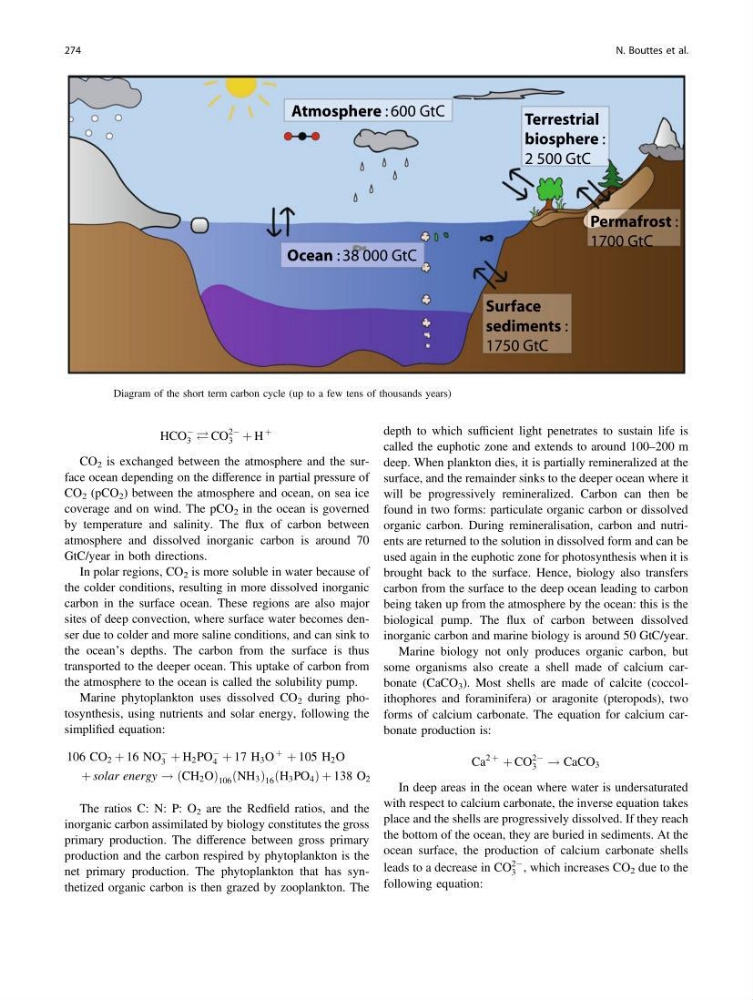
Fig. 23.2 Diagram of the short term carbon cycle (up to a few tens of thousands years)
274
N. Bouttes et al.
À
3 CO
2À
3 þ H
þ
CO 2 is exchanged between the atmosphere and the surface ocean depending on the difference in partial pressure of
CO 2 (pCO 2 ) between the atmosphere and ocean, on sea ice
coverage and on wind. The pCO 2 in the ocean is governed
by temperature and salinity. The flux of carbon between
atmosphere and dissolved inorganic carbon is around 70
GtC/year in both directions.
In polar regions, CO 2 is more soluble in water because of
the colder conditions, resulting in more dissolved inorganic
carbon in the surface ocean. These regions are also major
sites of deep convection, where surface water becomes denser due to colder and more saline conditions, and can sink to
the ocean’s depths. The carbon from the surface is thus
transported to the deeper ocean. This uptake of carbon from
the atmosphere to the ocean is called the solubility pump.
Marine phytoplankton uses dissolved CO 2 during photosynthesis, using nutrients and solar energy, following the
simplified equation:
106 CO 2 þ 16 NO
À
3 þ H 2 PO
À
4 þ 17 H 3 O
þ
þ 105 H 2 O
þ solar energy ! CH 2 O
ð
Þ 106 NH 3
ð
Þ 16 H 3 PO 4
ð
Þþ138 O 2
The ratios C: N: P: O 2 are the Redfield ratios, and the
inorganic carbon assimilated by biology constitutes the gross
primary production. The difference between gross primary
production and the carbon respired by phytoplankton is the
net primary production. The phytoplankton that has synthetized organic carbon is then grazed by zooplankton. The
depth to which sufficient light penetrates to sustain life is
called the euphotic zone and extends to around 100–200 m
deep. When plankton dies, it is partially remineralized at the
surface, and the remainder sinks to the deeper ocean where it
will be progressively remineralized. Carbon can then be
found in two forms: particulate organic carbon or dissolved
organic carbon. During remineralisation, carbon and nutrients are returned to the solution in dissolved form and can be
used again in the euphotic zone for photosynthesis when it is
brought back to the surface. Hence, biology also transfers
carbon from the surface to the deep ocean leading to carbon
being taken up from the atmosphere by the ocean: this is the
biological pump. The flux of carbon between dissolved
inorganic carbon and marine biology is around 50 GtC/year.
Marine biology not only produces organic carbon, but
some organisms also create a shell made of calcium carbonate (CaCO 3 ). Most shells are made of calcite (coccolithophores and foraminifera) or aragonite (pteropods), two
forms of calcium carbonate. The equation for calcium carbonate production is:
Ca
2 þ
þ CO
2À
3 ! CaCO 3
In deep areas in the ocean where water is undersaturated
with respect to calcium carbonate, the inverse equation takes
place and the shells are progressively dissolved. If they reach
the bottom of the ocean, they are buried in sediments. At the
ocean surface, the production of calcium carbonate shells
leads to a decrease in CO
2À
3 , which increases CO 2 due to the
following equation:
Ocean : 38 000 GtC
Atmosphere : 600 GtC
Terrestrial
biosphere :
2 500 GtC
Surface
sediments :
1750 GtC
Permafrost :
1700 GtC
Fig. 23.2 Diagram of the short term carbon cycle (up to a few tens of thousands years)
274
N. Bouttes et al.