

ering the period 1800–2011 (Lavergne et al. 2017)
(Fig. 16.6) and the other from the d
18 O of the cellulose of
Quercus (forest oaks and beams from old buildings in the
Rennes region covering the last 400 years (Raffali-Delerce
et al. 2004; Masson-Delmotte et al. 2005) (Fig. 16.7). The
relationship between isotope data and temperature was
established through calibrations carried out over the 1931–
2011 period for the cypress from Patagonia, and over the
1951–1996 period for the oaks in Brittany. For Lavergne
et al. (2018), the evolution of d
13 C in the cellulose of the
cypresses implies that the summers (December to February)
of the nineteenth century, particularly in the second half,
were cool (an average temperature of 13.4 °C) and the
summers of the twentieth and twenty-first centuries have
higher temperatures (average temperature of 14.2 °C).
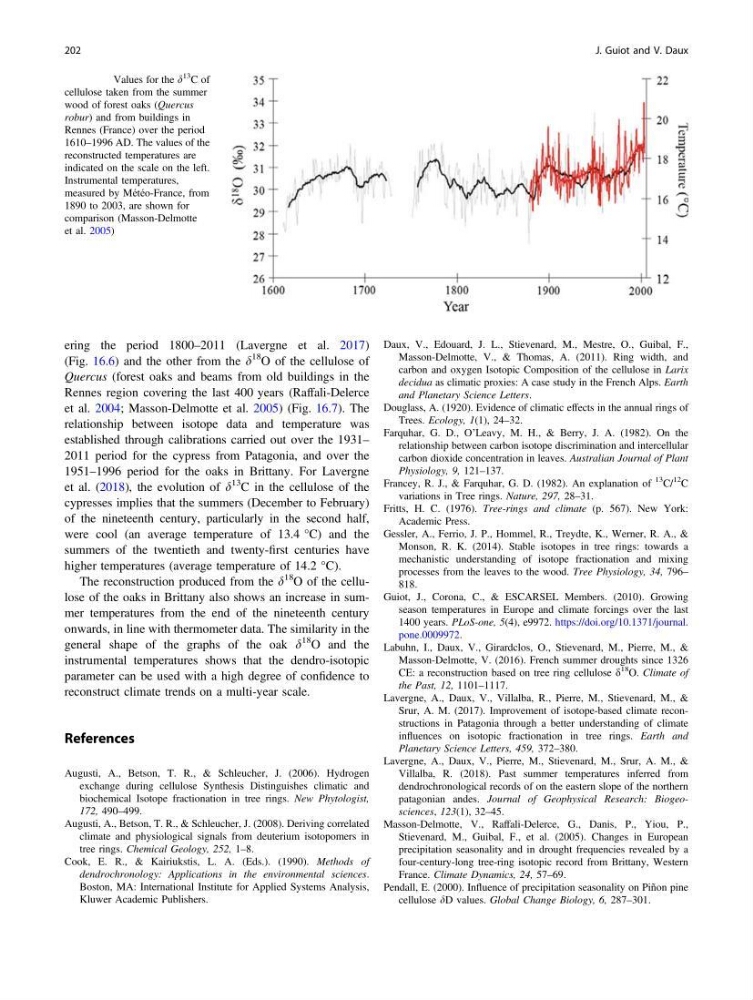
The reconstruction produced from the d
18
O of the cellulose of the oaks in Brittany also shows an increase in summer temperatures from the end of the nineteenth century
onwards, in line with thermometer data. The similarity in the
general shape of the graphs of the oak d
18 O and the
instrumental temperatures shows that the dendro-isotopic
parameter can be used with a high degree of confidence to
reconstruct climate trends on a multi-year scale.
References
Augusti, A., Betson, T. R., & Schleucher, J. (2006). Hydrogen
exchange during cellulose Synthesis Distinguishes climatic and
biochemical Isotope fractionation in tree rings. New Phytologist,
172, 490–499.
Augusti, A., Betson, T. R., & Schleucher, J. (2008). Deriving correlated
climate and physiological signals from deuterium isotopomers in
tree rings. Chemical Geology, 252, 1–8.
Cook, E. R., & Kairiukstis, L. A. (Eds.). (1990). Methods of
dendrochronology: Applications in the environmental sciences.
Boston, MA: International Institute for Applied Systems Analysis,
Kluwer Academic Publishers.
Daux, V., Edouard, J. L., Stievenard, M., Mestre, O., Guibal, F.,
Masson-Delmotte, V., & Thomas, A. (2011). Ring width, and
carbon and oxygen Isotopic Composition of the cellulose in Larix
decidua as climatic proxies: A case study in the French Alps. Earth
and Planetary Science Letters.
Douglass, A. (1920). Evidence of climatic effects in the annual rings of
Trees. Ecology, 1(1), 24–32.
Farquhar, G. D., O’Leavy, M. H., & Berry, J. A. (1982). On the
relationship between carbon isotope discrimination and intercellular
carbon dioxide concentration in leaves. Australian Journal of Plant
Physiology, 9, 121–137.
Francey, R. J., & Farquhar, G. D. (1982). An explanation of
13
C/
12
C
variations in Tree rings. Nature, 297, 28–31.
Fritts, H. C. (1976). Tree-rings and climate (p. 567). New York:
Academic Press.
Gessler, A., Ferrio, J. P., Hommel, R., Treydte, K., Werner, R. A., &
Monson, R. K. (2014). Stable isotopes in tree rings: towards a
mechanistic understanding of isotope fractionation and mixing
processes from the leaves to the wood. Tree Physiology, 34, 796–
818.
Guiot, J., Corona, C., & ESCARSEL Members. (2010). Growing
season temperatures in Europe and climate forcings over the last
1400 years. PLoS-one, 5(4), e9972. https://doi.org/10.1371/journal.
pone.0009972.
Labuhn, I., Daux, V., Girardclos, O., Stievenard, M., Pierre, M., &
Masson-Delmotte, V. (2016). French summer droughts since 1326
CE: a reconstruction based on tree ring cellulose d
18
O. Climate of
the Past, 12, 1101–1117.
Lavergne, A., Daux, V., Villalba, R., Pierre, M., Stievenard, M., &
Srur, A. M. (2017). Improvement of isotope-based climate reconstructions in Patagonia through a better understanding of climate
influences on isotopic fractionation in tree rings. Earth and
Planetary Science Letters, 459, 372–380.
Lavergne, A., Daux, V., Pierre, M., Stievenard, M., Srur, A. M., &
Villalba, R. (2018). Past summer temperatures inferred from
dendrochronological records of on the eastern slope of the northern
patagonian andes. Journal of Geophysical Research: Biogeosciences, 123(1), 32–45.
Masson-Delmotte, V., Raffali-Delerce, G., Danis, P., Yiou, P.,
Stievenard, M., Guibal, F., et al. (2005). Changes in European
precipitation seasonality and in drought frequencies revealed by a
four-century-long tree-ring isotopic record from Brittany, Western
France. Climate Dynamics, 24, 57–69.
Pendall, E. (2000). Influence of precipitation seasonality on Piñon pine
cellulose dD values. Global Change Biology, 6, 287–301.
Fig. 16.7 Values for the d
13
C of
cellulose taken from the summer
wood of forest oaks (Quercus
robur) and from buildings in
Rennes (France) over the period
1610–1996 AD. The values of the
reconstructed temperatures are
indicated on the scale on the left.
Instrumental temperatures,
measured by Météo-France, from
1890 to 2003, are shown for
comparison (Masson-Delmotte
et al. 2005)
202
J. Guiot and V. Daux
(Fig. 16.6) and the other from the d
18 O of the cellulose of
Quercus (forest oaks and beams from old buildings in the
Rennes region covering the last 400 years (Raffali-Delerce
et al. 2004; Masson-Delmotte et al. 2005) (Fig. 16.7). The
relationship between isotope data and temperature was
established through calibrations carried out over the 1931–
2011 period for the cypress from Patagonia, and over the
1951–1996 period for the oaks in Brittany. For Lavergne
et al. (2018), the evolution of d
13 C in the cellulose of the
cypresses implies that the summers (December to February)
of the nineteenth century, particularly in the second half,
were cool (an average temperature of 13.4 °C) and the
summers of the twentieth and twenty-first centuries have
higher temperatures (average temperature of 14.2 °C).
The reconstruction produced from the d
18
O of the cellulose of the oaks in Brittany also shows an increase in summer temperatures from the end of the nineteenth century
onwards, in line with thermometer data. The similarity in the
general shape of the graphs of the oak d
18 O and the
instrumental temperatures shows that the dendro-isotopic
parameter can be used with a high degree of confidence to
reconstruct climate trends on a multi-year scale.
References
Augusti, A., Betson, T. R., & Schleucher, J. (2006). Hydrogen
exchange during cellulose Synthesis Distinguishes climatic and
biochemical Isotope fractionation in tree rings. New Phytologist,
172, 490–499.
Augusti, A., Betson, T. R., & Schleucher, J. (2008). Deriving correlated
climate and physiological signals from deuterium isotopomers in
tree rings. Chemical Geology, 252, 1–8.
Cook, E. R., & Kairiukstis, L. A. (Eds.). (1990). Methods of
dendrochronology: Applications in the environmental sciences.
Boston, MA: International Institute for Applied Systems Analysis,
Kluwer Academic Publishers.
Daux, V., Edouard, J. L., Stievenard, M., Mestre, O., Guibal, F.,
Masson-Delmotte, V., & Thomas, A. (2011). Ring width, and
carbon and oxygen Isotopic Composition of the cellulose in Larix
decidua as climatic proxies: A case study in the French Alps. Earth
and Planetary Science Letters.
Douglass, A. (1920). Evidence of climatic effects in the annual rings of
Trees. Ecology, 1(1), 24–32.
Farquhar, G. D., O’Leavy, M. H., & Berry, J. A. (1982). On the
relationship between carbon isotope discrimination and intercellular
carbon dioxide concentration in leaves. Australian Journal of Plant
Physiology, 9, 121–137.
Francey, R. J., & Farquhar, G. D. (1982). An explanation of
13
C/
12
C
variations in Tree rings. Nature, 297, 28–31.
Fritts, H. C. (1976). Tree-rings and climate (p. 567). New York:
Academic Press.
Gessler, A., Ferrio, J. P., Hommel, R., Treydte, K., Werner, R. A., &
Monson, R. K. (2014). Stable isotopes in tree rings: towards a
mechanistic understanding of isotope fractionation and mixing
processes from the leaves to the wood. Tree Physiology, 34, 796–
818.
Guiot, J., Corona, C., & ESCARSEL Members. (2010). Growing
season temperatures in Europe and climate forcings over the last
1400 years. PLoS-one, 5(4), e9972. https://doi.org/10.1371/journal.
pone.0009972.
Labuhn, I., Daux, V., Girardclos, O., Stievenard, M., Pierre, M., &
Masson-Delmotte, V. (2016). French summer droughts since 1326
CE: a reconstruction based on tree ring cellulose d
18
O. Climate of
the Past, 12, 1101–1117.
Lavergne, A., Daux, V., Villalba, R., Pierre, M., Stievenard, M., &
Srur, A. M. (2017). Improvement of isotope-based climate reconstructions in Patagonia through a better understanding of climate
influences on isotopic fractionation in tree rings. Earth and
Planetary Science Letters, 459, 372–380.
Lavergne, A., Daux, V., Pierre, M., Stievenard, M., Srur, A. M., &
Villalba, R. (2018). Past summer temperatures inferred from
dendrochronological records of on the eastern slope of the northern
patagonian andes. Journal of Geophysical Research: Biogeosciences, 123(1), 32–45.
Masson-Delmotte, V., Raffali-Delerce, G., Danis, P., Yiou, P.,
Stievenard, M., Guibal, F., et al. (2005). Changes in European
precipitation seasonality and in drought frequencies revealed by a
four-century-long tree-ring isotopic record from Brittany, Western
France. Climate Dynamics, 24, 57–69.
Pendall, E. (2000). Influence of precipitation seasonality on Piñon pine
cellulose dD values. Global Change Biology, 6, 287–301.
Fig. 16.7 Values for the d
13
C of
cellulose taken from the summer
wood of forest oaks (Quercus
robur) and from buildings in
Rennes (France) over the period
1610–1996 AD. The values of the
reconstructed temperatures are
indicated on the scale on the left.
Instrumental temperatures,
measured by Météo-France, from
1890 to 2003, are shown for
comparison (Masson-Delmotte
et al. 2005)
202
J. Guiot and V. Daux