

During expansion, material from the upper mantle
reaches the surface at the axis of the ocean ridges, solidifies,
and is then pushed laterally in a symmetrical manner on
either side of the ridge. The oceanic crust, composed of
igneous rocks that contain magnetic minerals, acquires a
thermoremanent magnetization during cooling and therefore
registers the Earth’s magnetic field at the time of cooling.
Alternating normal and reverse polarities are recorded
“continuously” in rocks at the ocean bottom, which gives the
characteristic “pajama stripe” structure of the magnetic
anomalies distribution at sea. This structure can be detected
by trailing a magnetometer behind a research vessel.
This is exactly the type of work that was done by the
Lamont Doherty Geological Observatory team led by Heirtzler, Pitman and Le Pichon. Their studies showed that
magnetic anomalies, linear and symmetrical on both sides of
the ridges, exist over large areas of the North and South
Pacific and the Atlantic and South Indian oceans. In addition,
assuming that the anomalies originate from a sequence of
blocks magnetized in normal and reverse directions, they
showed that these anomalies correspond to the same scale of
magnetic polarities, the only difference being the rate of
expansion of the various ocean basins. Heirtzler et al. (1968)
also calculated the speed of expansion of the South Atlantic
by using the date (known from another source) of 3.35 Ma
for the Gauss/Gilbert boundary. Then, using various geophysical data and showing remarkable intuition, Heirtzler
et al. (1968) considered that the rate of expansion of the
South Atlantic remained constant for the last 80 million
years. With this assumption, they proposed a scale of magnetic polarities going back to 80 Ma. With its new approach
and results, this scale was a gigantic step forward. It extended
the magnetostratigraphic scale from 5 Ma to 80 Ma and
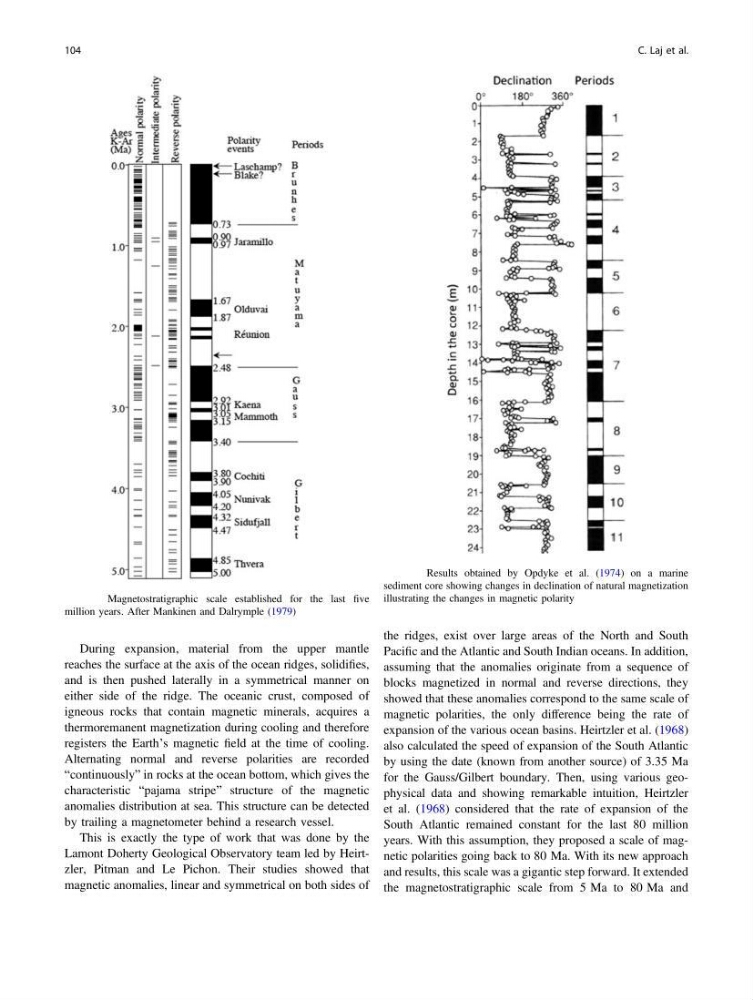
Fig. 7.3 Magnetostratigraphic scale established for the last five
million years. After Mankinen and Dalrymple (1979)
Fig. 7.4 Results obtained by Opdyke et al. (1974) on a marine
sediment core showing changes in declination of natural magnetization
illustrating the changes in magnetic polarity
104
C. Laj et al.
reaches the surface at the axis of the ocean ridges, solidifies,
and is then pushed laterally in a symmetrical manner on
either side of the ridge. The oceanic crust, composed of
igneous rocks that contain magnetic minerals, acquires a
thermoremanent magnetization during cooling and therefore
registers the Earth’s magnetic field at the time of cooling.
Alternating normal and reverse polarities are recorded
“continuously” in rocks at the ocean bottom, which gives the
characteristic “pajama stripe” structure of the magnetic
anomalies distribution at sea. This structure can be detected
by trailing a magnetometer behind a research vessel.
This is exactly the type of work that was done by the
Lamont Doherty Geological Observatory team led by Heirtzler, Pitman and Le Pichon. Their studies showed that
magnetic anomalies, linear and symmetrical on both sides of
the ridges, exist over large areas of the North and South
Pacific and the Atlantic and South Indian oceans. In addition,
assuming that the anomalies originate from a sequence of
blocks magnetized in normal and reverse directions, they
showed that these anomalies correspond to the same scale of
magnetic polarities, the only difference being the rate of
expansion of the various ocean basins. Heirtzler et al. (1968)
also calculated the speed of expansion of the South Atlantic
by using the date (known from another source) of 3.35 Ma
for the Gauss/Gilbert boundary. Then, using various geophysical data and showing remarkable intuition, Heirtzler
et al. (1968) considered that the rate of expansion of the
South Atlantic remained constant for the last 80 million
years. With this assumption, they proposed a scale of magnetic polarities going back to 80 Ma. With its new approach
and results, this scale was a gigantic step forward. It extended
the magnetostratigraphic scale from 5 Ma to 80 Ma and
Fig. 7.3 Magnetostratigraphic scale established for the last five
million years. After Mankinen and Dalrymple (1979)
Fig. 7.4 Results obtained by Opdyke et al. (1974) on a marine
sediment core showing changes in declination of natural magnetization
illustrating the changes in magnetic polarity
104
C. Laj et al.