

Thompson et al. and Villemant and Feuillet, ages are calculated which are consistent with the evolution of the reef
during the last interglacial period.
Figure 6.6 shows the ages of the different samples taken
from the reef according to depth. After correction using an
open system model, it is obvious that the points are now
organized in a linear trend, with older samples being located
deeper in the core than the corals sampled above. The
consistency in the linear relationship is such that it allows the
aggregation rate of the reef to be assessed. We can therefore
assume here that the process of nuclear recoil is the only
mechanism disrupting the dating system. In this example, we
applied the Thompson et al. model, with a value f 234 of
0.975 ± 0.005 and an initial d
234 U of 148 ± 2‰, values
determined by Thompson and his colleagues for corals from
Barbados.
The Open System: Empirical Model
When dating a single coral, one option is to cut it into
several sub-samples and to take them as independent samples to which corrections for an open system could be
applied. If the corrected values show a linear correlation
between the
230 Th/
238 U and
234 U/
238 U ratios indicating an
excess or depletion of
234 U and
230 Th, it is possible to calculate the point where the regression line intersects the line
of evolution in a closed system and to deduce the age of the
coral.
In this way, a more accurate determination of age might
be arrived at without having to apply a complicated theory.
This idea was used by Scholz et al. (2004) to correct U/Th
ages of corals from the Mediterranean. Scholz and his
colleagues started with a result showing a variability of
activity ratios (
230 Th/
238 U) and (
234 U/
238 U) between
sub-samples of several corals that could not be explained by
the Thompson model. The open system model, subsequent
to the process of nuclear recoil, is logically limited to
samples which have not undergone any physicochemical
alteration. Once the coral skeleton is modified (dissolution,
recrystallization, or other), uranium and thorium can be
exchanged with the ambient environment. Hence, although
still present, the recoil effect is no longer the only and
predominant mechanism.
It is therefore obvious that theoretical models have strong
limitations and coral selection becomes critical. Moreover,
the open system models do not take small-scale variations in
uranium concentration within the coral into account, even
though these will also impact on the isotope redistribution
process (Robinson et al. 2006).
Thus, it is essential to adapt the interpretation of results
according to the quality of the selected samples to obtain the
most accurate ages possible. It must be kept in mind that
these ages, corrected by models, are approximations. In fact,
models are created to bring the ages as close as possible to
an unknown reality, and the researcher cannot know if the
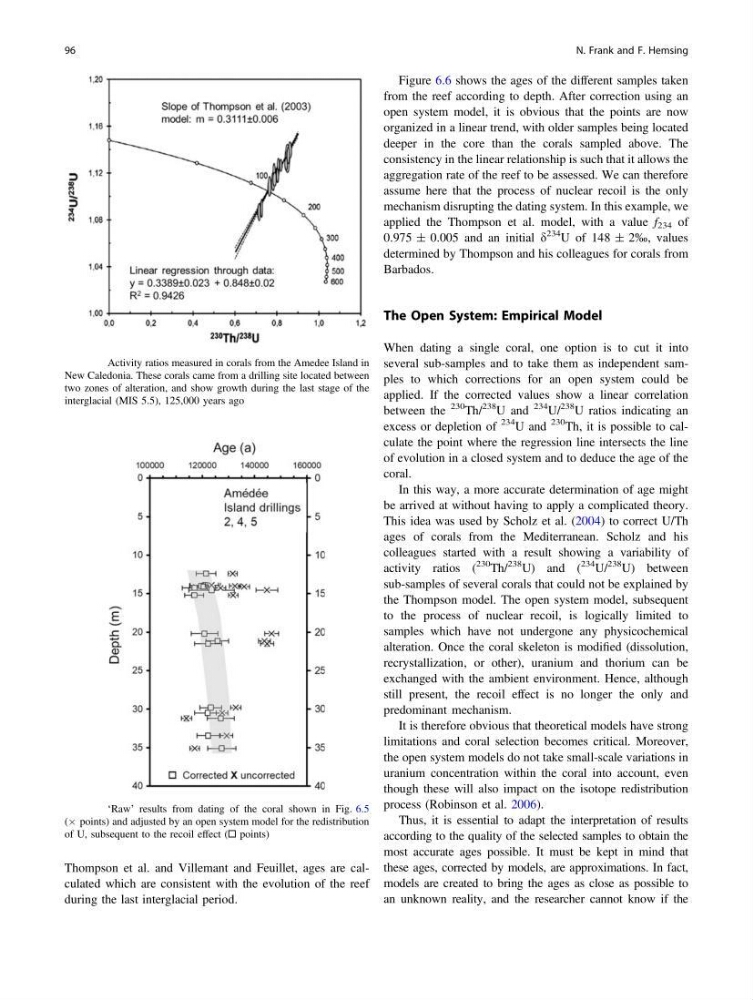
Fig. 6.5 Activity ratios measured in corals from the Amedee Island in
New Caledonia. These corals came from a drilling site located between
two zones of alteration, and show growth during the last stage of the
interglacial (MIS 5.5), 125,000 years ago
Fig. 6.6 ‘Raw’ results from dating of the coral shown in Fig. 6.5
(Â points) and adjusted by an open system model for the redistribution
of U, subsequent to the recoil effect (□ points)
96
N. Frank and F. Hemsing
during the last interglacial period.
Figure 6.6 shows the ages of the different samples taken
from the reef according to depth. After correction using an
open system model, it is obvious that the points are now
organized in a linear trend, with older samples being located
deeper in the core than the corals sampled above. The
consistency in the linear relationship is such that it allows the
aggregation rate of the reef to be assessed. We can therefore
assume here that the process of nuclear recoil is the only
mechanism disrupting the dating system. In this example, we
applied the Thompson et al. model, with a value f 234 of
0.975 ± 0.005 and an initial d
234 U of 148 ± 2‰, values
determined by Thompson and his colleagues for corals from
Barbados.
The Open System: Empirical Model
When dating a single coral, one option is to cut it into
several sub-samples and to take them as independent samples to which corrections for an open system could be
applied. If the corrected values show a linear correlation
between the
230 Th/
238 U and
234 U/
238 U ratios indicating an
excess or depletion of
234 U and
230 Th, it is possible to calculate the point where the regression line intersects the line
of evolution in a closed system and to deduce the age of the
coral.
In this way, a more accurate determination of age might
be arrived at without having to apply a complicated theory.
This idea was used by Scholz et al. (2004) to correct U/Th
ages of corals from the Mediterranean. Scholz and his
colleagues started with a result showing a variability of
activity ratios (
230 Th/
238 U) and (
234 U/
238 U) between
sub-samples of several corals that could not be explained by
the Thompson model. The open system model, subsequent
to the process of nuclear recoil, is logically limited to
samples which have not undergone any physicochemical
alteration. Once the coral skeleton is modified (dissolution,
recrystallization, or other), uranium and thorium can be
exchanged with the ambient environment. Hence, although
still present, the recoil effect is no longer the only and
predominant mechanism.
It is therefore obvious that theoretical models have strong
limitations and coral selection becomes critical. Moreover,
the open system models do not take small-scale variations in
uranium concentration within the coral into account, even
though these will also impact on the isotope redistribution
process (Robinson et al. 2006).
Thus, it is essential to adapt the interpretation of results
according to the quality of the selected samples to obtain the
most accurate ages possible. It must be kept in mind that
these ages, corrected by models, are approximations. In fact,
models are created to bring the ages as close as possible to
an unknown reality, and the researcher cannot know if the
Fig. 6.5 Activity ratios measured in corals from the Amedee Island in
New Caledonia. These corals came from a drilling site located between
two zones of alteration, and show growth during the last stage of the
interglacial (MIS 5.5), 125,000 years ago
Fig. 6.6 ‘Raw’ results from dating of the coral shown in Fig. 6.5
(Â points) and adjusted by an open system model for the redistribution
of U, subsequent to the recoil effect (□ points)
96
N. Frank and F. Hemsing