

60
V. P. Drachev et al.
cos φ =
hh
+ kk
+ ll
√
h 2 + k 2 + l 2
√
h 2 + k 2 + l 2
(3.4)
In which:
a
∗
=
1
a
Using these equations [53] the calculated interplanar distances and then angles
were able to be deduced. These equations were used to code a simple Mathematica
program that would output both interplanar distances as well as angles.
The analysis of the TEM images showed and confirmed the likely structure of
cobalt. Though, a large amount of the images had planes and angles that were inconclusive the data definitely points most directly at hexagonal close packed to be the
average crystalline phase of the particles. The large amount of inconclusive interplanar angles are likely due to surface deformities, as well as, small and unpredictable
tilts in the particles. This would allow for the interplanar angles and distances to be
skew, reduced in the case of the interplanar distances and increased up to 180° in the
case of the interplanar angles. In general, cobalt should not be found in face-centered
cubic crystalline phase below 400 °C. However, some nanoparticles in our case did
show possible indications of being in this phase.
3.5 Magnetic Response
Magnetic properties of Co-NP embedded into poly(methyl methacrylate) (PMMA)
host matrix were measured using direct current (DC) option of 7 Tesla SQUID
magnetometer (Magnetic Property Measurement Device, Quantum Design Inc.).
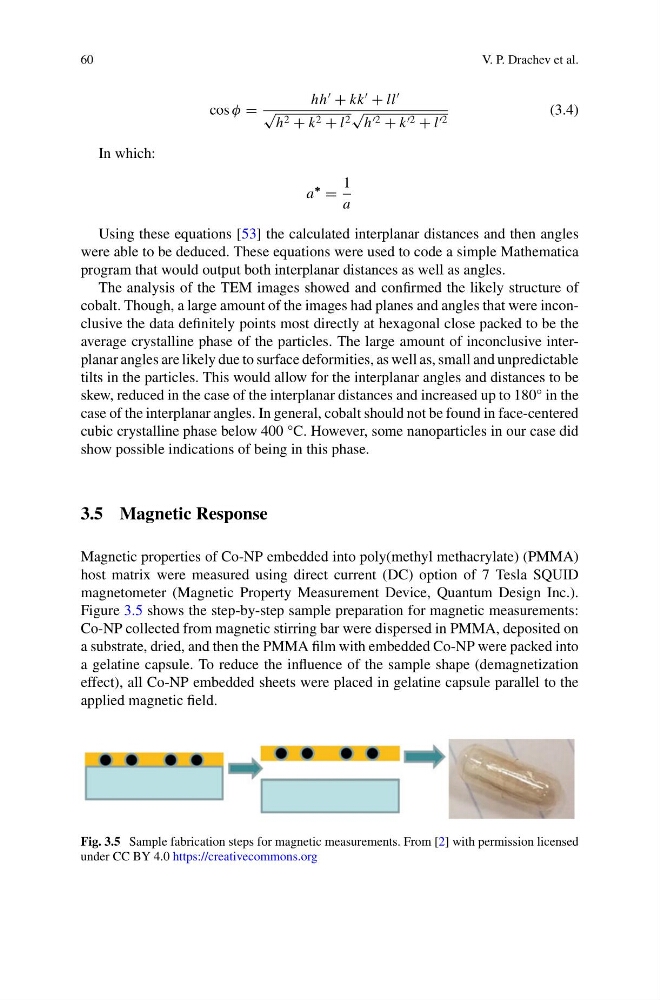
Figure 3.5 shows the step-by-step sample preparation for magnetic measurements:
Co-NP collected from magnetic stirring bar were dispersed in PMMA, deposited on
a substrate, dried, and then the PMMA film with embedded Co-NP were packed into
a gelatine capsule. To reduce the influence of the sample shape (demagnetization
effect), all Co-NP embedded sheets were placed in gelatine capsule parallel to the
applied magnetic field.
Fig. 3.5 Sample fabrication steps for magnetic measurements. From [2] with permission licensed
under CC BY 4.0 https://creativecommons.org
V. P. Drachev et al.
cos φ =
hh
+ kk
+ ll
√
h 2 + k 2 + l 2
√
h 2 + k 2 + l 2
(3.4)
In which:
a
∗
=
1
a
Using these equations [53] the calculated interplanar distances and then angles
were able to be deduced. These equations were used to code a simple Mathematica
program that would output both interplanar distances as well as angles.
The analysis of the TEM images showed and confirmed the likely structure of
cobalt. Though, a large amount of the images had planes and angles that were inconclusive the data definitely points most directly at hexagonal close packed to be the
average crystalline phase of the particles. The large amount of inconclusive interplanar angles are likely due to surface deformities, as well as, small and unpredictable
tilts in the particles. This would allow for the interplanar angles and distances to be
skew, reduced in the case of the interplanar distances and increased up to 180° in the
case of the interplanar angles. In general, cobalt should not be found in face-centered
cubic crystalline phase below 400 °C. However, some nanoparticles in our case did
show possible indications of being in this phase.
3.5 Magnetic Response
Magnetic properties of Co-NP embedded into poly(methyl methacrylate) (PMMA)
host matrix were measured using direct current (DC) option of 7 Tesla SQUID
magnetometer (Magnetic Property Measurement Device, Quantum Design Inc.).
Figure 3.5 shows the step-by-step sample preparation for magnetic measurements:
Co-NP collected from magnetic stirring bar were dispersed in PMMA, deposited on
a substrate, dried, and then the PMMA film with embedded Co-NP were packed into
a gelatine capsule. To reduce the influence of the sample shape (demagnetization
effect), all Co-NP embedded sheets were placed in gelatine capsule parallel to the
applied magnetic field.
Fig. 3.5 Sample fabrication steps for magnetic measurements. From [2] with permission licensed
under CC BY 4.0 https://creativecommons.org