

538
E. Kamenetskii
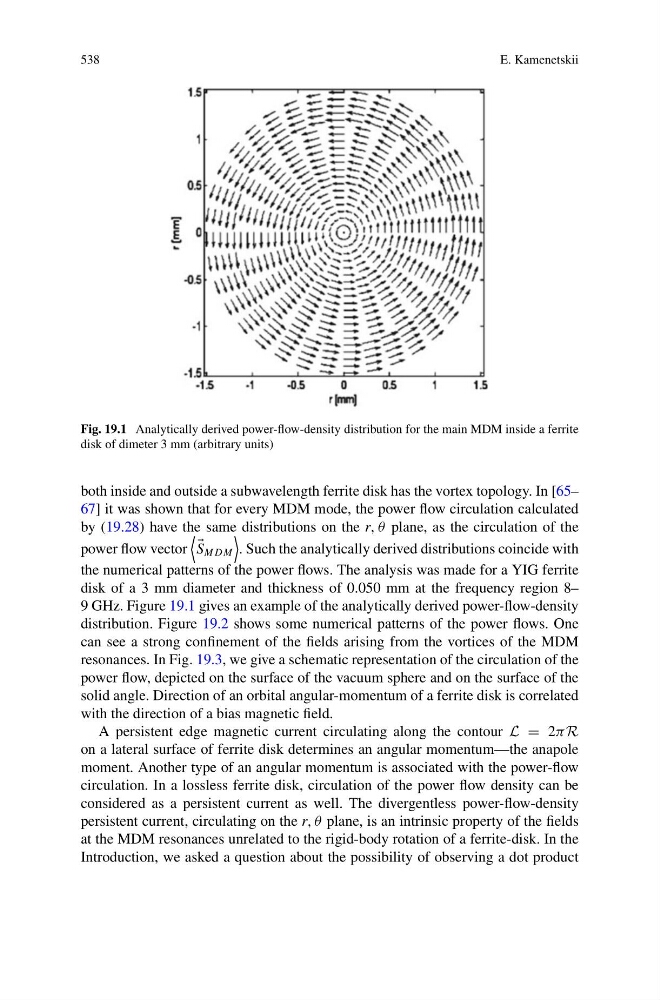
Fig. 19.1 Analytically derived power-flow-density distribution for the main MDM inside a ferrite
disk of dimeter 3 mm (arbitrary units)
both inside and outside a subwavelength ferrite disk has the vortex topology. In [65–
67] it was shown that for every MDM mode, the power flow circulation calculated
by (19.28) have the same distributions on the r, θ plane, as the circulation of the
power flow vector
S M DM
. Such the analytically derived distributions coincide with
the numerical patterns of the power flows. The analysis was made for a YIG ferrite
disk of a 3 mm diameter and thickness of 0.050 mm at the frequency region 8–
9 GHz. Figure 19.1 gives an example of the analytically derived power-flow-density
distribution. Figure 19.2 shows some numerical patterns of the power flows. One
can see a strong confinement of the fields arising from the vortices of the MDM
resonances. In Fig. 19.3, we give a schematic representation of the circulation of the
power flow, depicted on the surface of the vacuum sphere and on the surface of the
solid angle. Direction of an orbital angular-momentum of a ferrite disk is correlated
with the direction of a bias magnetic field.
A persistent edge magnetic current circulating along the contour L = 2π R
on a lateral surface of ferrite disk determines an angular momentum—the anapole
moment. Another type of an angular momentum is associated with the power-flow
circulation. In a lossless ferrite disk, circulation of the power flow density can be
considered as a persistent current as well. The divergentless power-flow-density
persistent current, circulating on the r, θ plane, is an intrinsic property of the fields
at the MDM resonances unrelated to the rigid-body rotation of a ferrite-disk. In the
Introduction, we asked a question about the possibility of observing a dot product
E. Kamenetskii
Fig. 19.1 Analytically derived power-flow-density distribution for the main MDM inside a ferrite
disk of dimeter 3 mm (arbitrary units)
both inside and outside a subwavelength ferrite disk has the vortex topology. In [65–
67] it was shown that for every MDM mode, the power flow circulation calculated
by (19.28) have the same distributions on the r, θ plane, as the circulation of the
power flow vector
S M DM
. Such the analytically derived distributions coincide with
the numerical patterns of the power flows. The analysis was made for a YIG ferrite
disk of a 3 mm diameter and thickness of 0.050 mm at the frequency region 8–
9 GHz. Figure 19.1 gives an example of the analytically derived power-flow-density
distribution. Figure 19.2 shows some numerical patterns of the power flows. One
can see a strong confinement of the fields arising from the vortices of the MDM
resonances. In Fig. 19.3, we give a schematic representation of the circulation of the
power flow, depicted on the surface of the vacuum sphere and on the surface of the
solid angle. Direction of an orbital angular-momentum of a ferrite disk is correlated
with the direction of a bias magnetic field.
A persistent edge magnetic current circulating along the contour L = 2π R
on a lateral surface of ferrite disk determines an angular momentum—the anapole
moment. Another type of an angular momentum is associated with the power-flow
circulation. In a lossless ferrite disk, circulation of the power flow density can be
considered as a persistent current as well. The divergentless power-flow-density
persistent current, circulating on the r, θ plane, is an intrinsic property of the fields
at the MDM resonances unrelated to the rigid-body rotation of a ferrite-disk. In the
Introduction, we asked a question about the possibility of observing a dot product