

380
X. S. Wang and X. R. Wang
(a)
(b)
(c)
(d)
Bloch
Néel
Bloch
Néel
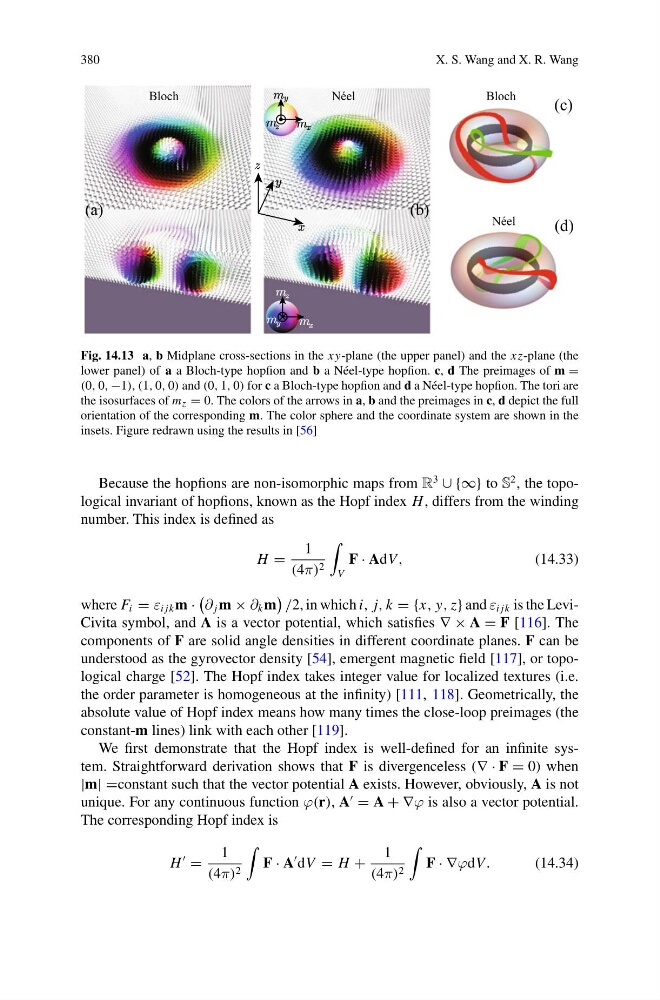
Fig. 14.13 a, b Midplane cross-sections in the xy-plane (the upper panel) and the xz-plane (the
lower panel) of a a Bloch-type hopfion and b a Néel-type hopfion. c, d The preimages of m =
(0, 0, −1), (1, 0, 0) and (0, 1, 0) for c a Bloch-type hopfion and d a Néel-type hopfion. The tori are
the isosurfaces of m z = 0. The colors of the arrows in a, b and the preimages in c, d depict the full
orientation of the corresponding m. The color sphere and the coordinate system are shown in the
insets. Figure redrawn using the results in [56]
Because the hopfions are non-isomorphic maps from R
3
∪ {∞} to S
2 , the topological invariant of hopfions, known as the Hopf index H , differs from the winding
number. This index is defined as
H =
1
(4π) 2
V
F · AdV,
(14.33)
where F i = ε i jk m ·
∂ j m × ∂ k m
/2, in which i, j, k = {x, y, z} and ε i jk is the LeviCivita symbol, and A is a vector potential, which satisfies ∇ × A = F [116]. The
components of F are solid angle densities in different coordinate planes. F can be
understood as the gyrovector density [54], emergent magnetic field [117], or topological charge [52]. The Hopf index takes integer value for localized textures (i.e.
the order parameter is homogeneous at the infinity) [111, 118]. Geometrically, the
absolute value of Hopf index means how many times the close-loop preimages (the
constant-m lines) link with each other [119].
We first demonstrate that the Hopf index is well-defined for an infinite system. Straightforward derivation shows that F is divergenceless (∇ · F = 0) when
|m| =constant such that the vector potential A exists. However, obviously, A is not
unique. For any continuous function ϕ(r), A
= A + ∇ϕ is also a vector potential.
The corresponding Hopf index is
H
=
1
(4π) 2
F · A
dV = H +
1
(4π) 2
F · ∇ϕdV.
(14.34)
X. S. Wang and X. R. Wang
(a)
(b)
(c)
(d)
Bloch
Néel
Bloch
Néel
Fig. 14.13 a, b Midplane cross-sections in the xy-plane (the upper panel) and the xz-plane (the
lower panel) of a a Bloch-type hopfion and b a Néel-type hopfion. c, d The preimages of m =
(0, 0, −1), (1, 0, 0) and (0, 1, 0) for c a Bloch-type hopfion and d a Néel-type hopfion. The tori are
the isosurfaces of m z = 0. The colors of the arrows in a, b and the preimages in c, d depict the full
orientation of the corresponding m. The color sphere and the coordinate system are shown in the
insets. Figure redrawn using the results in [56]
Because the hopfions are non-isomorphic maps from R
3
∪ {∞} to S
2 , the topological invariant of hopfions, known as the Hopf index H , differs from the winding
number. This index is defined as
H =
1
(4π) 2
V
F · AdV,
(14.33)
where F i = ε i jk m ·
∂ j m × ∂ k m
/2, in which i, j, k = {x, y, z} and ε i jk is the LeviCivita symbol, and A is a vector potential, which satisfies ∇ × A = F [116]. The
components of F are solid angle densities in different coordinate planes. F can be
understood as the gyrovector density [54], emergent magnetic field [117], or topological charge [52]. The Hopf index takes integer value for localized textures (i.e.
the order parameter is homogeneous at the infinity) [111, 118]. Geometrically, the
absolute value of Hopf index means how many times the close-loop preimages (the
constant-m lines) link with each other [119].
We first demonstrate that the Hopf index is well-defined for an infinite system. Straightforward derivation shows that F is divergenceless (∇ · F = 0) when
|m| =constant such that the vector potential A exists. However, obviously, A is not
unique. For any continuous function ϕ(r), A
= A + ∇ϕ is also a vector potential.
The corresponding Hopf index is
H
=
1
(4π) 2
F · A
dV = H +
1
(4π) 2
F · ∇ϕdV.
(14.34)