

276
M. Sato
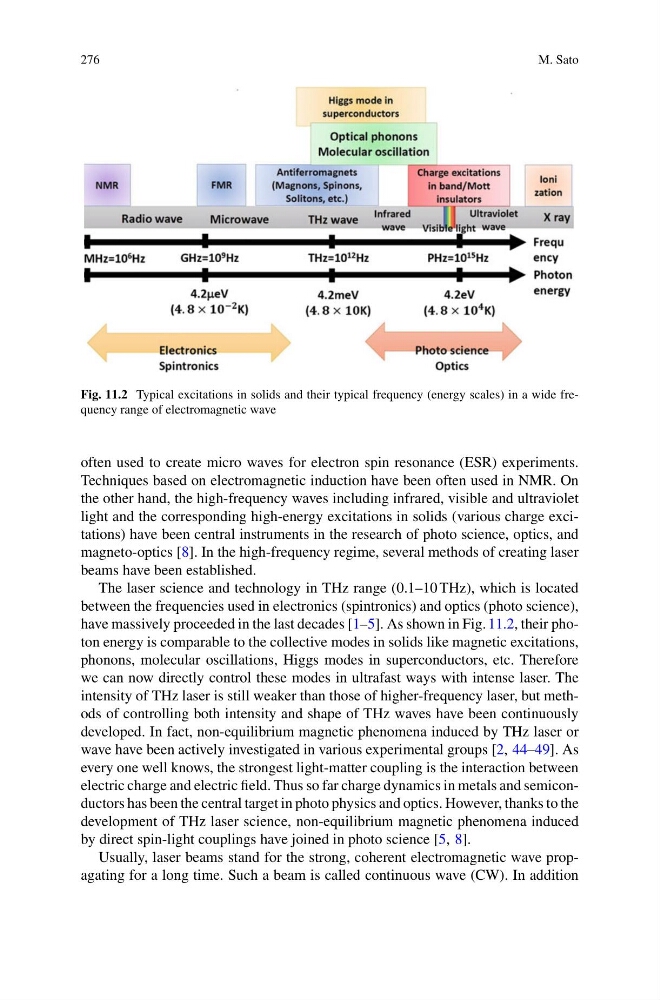
Fig. 11.2 Typical excitations in solids and their typical frequency (energy scales) in a wide frequency range of electromagnetic wave
often used to create micro waves for electron spin resonance (ESR) experiments.
Techniques based on electromagnetic induction have been often used in NMR. On
the other hand, the high-frequency waves including infrared, visible and ultraviolet
light and the corresponding high-energy excitations in solids (various charge excitations) have been central instruments in the research of photo science, optics, and
magneto-optics [8]. In the high-frequency regime, several methods of creating laser
beams have been established.
The laser science and technology in THz range (0.1–10 THz), which is located
between the frequencies used in electronics (spintronics) and optics (photo science),
have massively proceeded in the last decades [1–5]. As shown in Fig. 11.2, their photon energy is comparable to the collective modes in solids like magnetic excitations,
phonons, molecular oscillations, Higgs modes in superconductors, etc. Therefore
we can now directly control these modes in ultrafast ways with intense laser. The
intensity of THz laser is still weaker than those of higher-frequency laser, but methods of controlling both intensity and shape of THz waves have been continuously
developed. In fact, non-equilibrium magnetic phenomena induced by THz laser or
wave have been actively investigated in various experimental groups [2, 44–49]. As
every one well knows, the strongest light-matter coupling is the interaction between
electric charge and electric field. Thus so far charge dynamics in metals and semiconductors has been the central target in photo physics and optics. However, thanks to the
development of THz laser science, non-equilibrium magnetic phenomena induced
by direct spin-light couplings have joined in photo science [5, 8].
Usually, laser beams stand for the strong, coherent electromagnetic wave propagating for a long time. Such a beam is called continuous wave (CW). In addition
M. Sato
Fig. 11.2 Typical excitations in solids and their typical frequency (energy scales) in a wide frequency range of electromagnetic wave
often used to create micro waves for electron spin resonance (ESR) experiments.
Techniques based on electromagnetic induction have been often used in NMR. On
the other hand, the high-frequency waves including infrared, visible and ultraviolet
light and the corresponding high-energy excitations in solids (various charge excitations) have been central instruments in the research of photo science, optics, and
magneto-optics [8]. In the high-frequency regime, several methods of creating laser
beams have been established.
The laser science and technology in THz range (0.1–10 THz), which is located
between the frequencies used in electronics (spintronics) and optics (photo science),
have massively proceeded in the last decades [1–5]. As shown in Fig. 11.2, their photon energy is comparable to the collective modes in solids like magnetic excitations,
phonons, molecular oscillations, Higgs modes in superconductors, etc. Therefore
we can now directly control these modes in ultrafast ways with intense laser. The
intensity of THz laser is still weaker than those of higher-frequency laser, but methods of controlling both intensity and shape of THz waves have been continuously
developed. In fact, non-equilibrium magnetic phenomena induced by THz laser or
wave have been actively investigated in various experimental groups [2, 44–49]. As
every one well knows, the strongest light-matter coupling is the interaction between
electric charge and electric field. Thus so far charge dynamics in metals and semiconductors has been the central target in photo physics and optics. However, thanks to the
development of THz laser science, non-equilibrium magnetic phenomena induced
by direct spin-light couplings have joined in photo science [5, 8].
Usually, laser beams stand for the strong, coherent electromagnetic wave propagating for a long time. Such a beam is called continuous wave (CW). In addition