

248
Y. Yang et al.
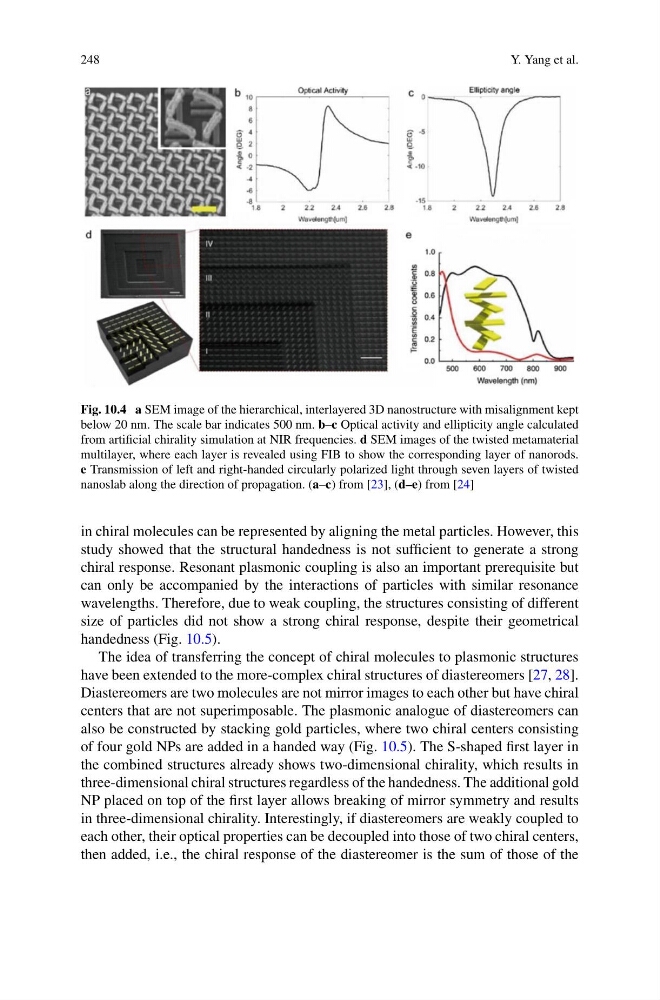
Fig. 10.4 a SEM image of the hierarchical, interlayered 3D nanostructure with misalignment kept
below 20 nm. The scale bar indicates 500 nm. b–c Optical activity and ellipticity angle calculated
from artificial chirality simulation at NIR frequencies. d SEM images of the twisted metamaterial
multilayer, where each layer is revealed using FIB to show the corresponding layer of nanorods.
e Transmission of left and right-handed circularly polarized light through seven layers of twisted
nanoslab along the direction of propagation. (a–c) from [23], (d–e) from [24]
in chiral molecules can be represented by aligning the metal particles. However, this
study showed that the structural handedness is not sufficient to generate a strong
chiral response. Resonant plasmonic coupling is also an important prerequisite but
can only be accompanied by the interactions of particles with similar resonance
wavelengths. Therefore, due to weak coupling, the structures consisting of different
size of particles did not show a strong chiral response, despite their geometrical
handedness (Fig. 10.5).
The idea of transferring the concept of chiral molecules to plasmonic structures
have been extended to the more-complex chiral structures of diastereomers [27, 28].
Diastereomers are two molecules are not mirror images to each other but have chiral
centers that are not superimposable. The plasmonic analogue of diastereomers can
also be constructed by stacking gold particles, where two chiral centers consisting
of four gold NPs are added in a handed way (Fig. 10.5). The S-shaped first layer in
the combined structures already shows two-dimensional chirality, which results in
three-dimensional chiral structures regardless of the handedness. The additional gold
NP placed on top of the first layer allows breaking of mirror symmetry and results
in three-dimensional chirality. Interestingly, if diastereomers are weakly coupled to
each other, their optical properties can be decoupled into those of two chiral centers,
then added, i.e., the chiral response of the diastereomer is the sum of those of the
Y. Yang et al.
Fig. 10.4 a SEM image of the hierarchical, interlayered 3D nanostructure with misalignment kept
below 20 nm. The scale bar indicates 500 nm. b–c Optical activity and ellipticity angle calculated
from artificial chirality simulation at NIR frequencies. d SEM images of the twisted metamaterial
multilayer, where each layer is revealed using FIB to show the corresponding layer of nanorods.
e Transmission of left and right-handed circularly polarized light through seven layers of twisted
nanoslab along the direction of propagation. (a–c) from [23], (d–e) from [24]
in chiral molecules can be represented by aligning the metal particles. However, this
study showed that the structural handedness is not sufficient to generate a strong
chiral response. Resonant plasmonic coupling is also an important prerequisite but
can only be accompanied by the interactions of particles with similar resonance
wavelengths. Therefore, due to weak coupling, the structures consisting of different
size of particles did not show a strong chiral response, despite their geometrical
handedness (Fig. 10.5).
The idea of transferring the concept of chiral molecules to plasmonic structures
have been extended to the more-complex chiral structures of diastereomers [27, 28].
Diastereomers are two molecules are not mirror images to each other but have chiral
centers that are not superimposable. The plasmonic analogue of diastereomers can
also be constructed by stacking gold particles, where two chiral centers consisting
of four gold NPs are added in a handed way (Fig. 10.5). The S-shaped first layer in
the combined structures already shows two-dimensional chirality, which results in
three-dimensional chiral structures regardless of the handedness. The additional gold
NP placed on top of the first layer allows breaking of mirror symmetry and results
in three-dimensional chirality. Interestingly, if diastereomers are weakly coupled to
each other, their optical properties can be decoupled into those of two chiral centers,
then added, i.e., the chiral response of the diastereomer is the sum of those of the