

5 Light–Nanomatter Chiral Interaction in Optical-Force Effects
121
induced by the manipulation light [49]. Consequently, although both the incident
lights have the same spin angular momentum, the rotation direction of the manipulation light becomes opposite to that of the pump light. Therefore, their rotational
forces (dissipative forces) eliminate each other and, hence, the optical force to rotate
the NP is not induced, although the spin directions of both the lights are parallel.
Subsequently, we examined the case in which the LCP pump light has different spin
angular momenta. In this case, the rotational forces reinforce each other. Therefore,
the rotational force of the NP was realized as depicted in Fig. 5.7c. Notably, we can
avoid pointing the optical force outward by slightly red-detuning the manipulationlight energy to the resonance of the 0–1 transition (see Appendix 2). This rotational
force is sufficiently strong because of the LSP. Therefore, one can realize the rotational manipulation at the nanometer scale and can selectively control the rotational
direction by switching the pump light.
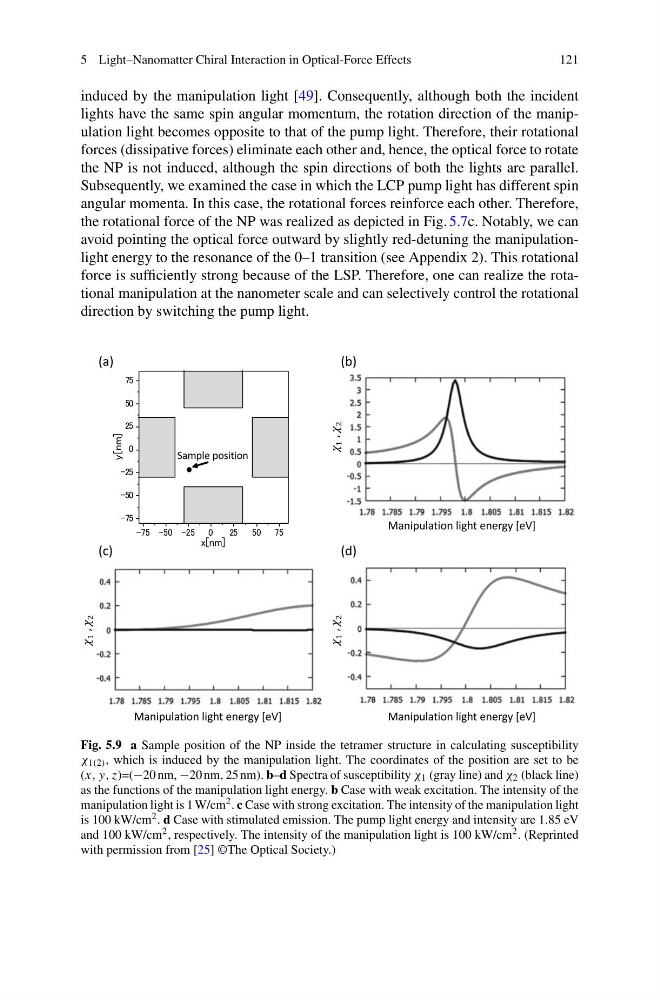
Fig. 5.9 a Sample position of the NP inside the tetramer structure in calculating susceptibility
χ 1(2) , which is induced by the manipulation light. The coordinates of the position are set to be
(x, y, z)=(−20 nm, −20 nm, 25 nm). b–d Spectra of susceptibility χ 1 (gray line) and χ 2 (black line)
as the functions of the manipulation light energy. b Case with weak excitation. The intensity of the
manipulation light is 1 W/cm 2 . c Case with strong excitation. The intensity of the manipulation light
is 100 kW/cm 2 . d Case with stimulated emission. The pump light energy and intensity are 1.85 eV
and 100 kW/cm 2 , respectively. The intensity of the manipulation light is 100 kW/cm 2 . (Reprinted
with permission from [25] ©The Optical Society.)
121
induced by the manipulation light [49]. Consequently, although both the incident
lights have the same spin angular momentum, the rotation direction of the manipulation light becomes opposite to that of the pump light. Therefore, their rotational
forces (dissipative forces) eliminate each other and, hence, the optical force to rotate
the NP is not induced, although the spin directions of both the lights are parallel.
Subsequently, we examined the case in which the LCP pump light has different spin
angular momenta. In this case, the rotational forces reinforce each other. Therefore,
the rotational force of the NP was realized as depicted in Fig. 5.7c. Notably, we can
avoid pointing the optical force outward by slightly red-detuning the manipulationlight energy to the resonance of the 0–1 transition (see Appendix 2). This rotational
force is sufficiently strong because of the LSP. Therefore, one can realize the rotational manipulation at the nanometer scale and can selectively control the rotational
direction by switching the pump light.
Fig. 5.9 a Sample position of the NP inside the tetramer structure in calculating susceptibility
χ 1(2) , which is induced by the manipulation light. The coordinates of the position are set to be
(x, y, z)=(−20 nm, −20 nm, 25 nm). b–d Spectra of susceptibility χ 1 (gray line) and χ 2 (black line)
as the functions of the manipulation light energy. b Case with weak excitation. The intensity of the
manipulation light is 1 W/cm 2 . c Case with strong excitation. The intensity of the manipulation light
is 100 kW/cm 2 . d Case with stimulated emission. The pump light energy and intensity are 1.85 eV
and 100 kW/cm 2 , respectively. The intensity of the manipulation light is 100 kW/cm 2 . (Reprinted
with permission from [25] ©The Optical Society.)