

116
H. Ishihara et al.
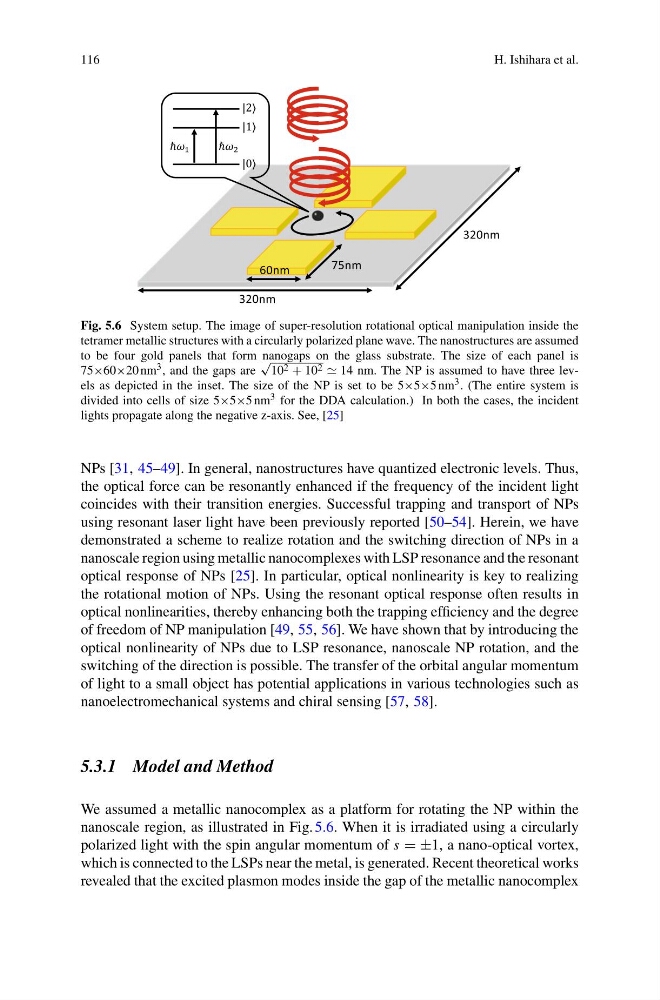
Fig. 5.6 System setup. The image of super-resolution rotational optical manipulation inside the
tetramer metallic structures with a circularly polarized plane wave. The nanostructures are assumed
to be four gold panels that form nanogaps on the glass substrate. The size of each panel is
75×60×20 nm 3 , and the gaps are
√
10 2 + 10 2 14 nm. The NP is assumed to have three levels as depicted in the inset. The size of the NP is set to be 5×5×5 nm 3 . (The entire system is
divided into cells of size 5×5×5 nm 3 for the DDA calculation.) In both the cases, the incident
lights propagate along the negative z-axis. See, [25]
NPs [31, 45–49]. In general, nanostructures have quantized electronic levels. Thus,
the optical force can be resonantly enhanced if the frequency of the incident light
coincides with their transition energies. Successful trapping and transport of NPs
using resonant laser light have been previously reported [50–54]. Herein, we have
demonstrated a scheme to realize rotation and the switching direction of NPs in a
nanoscale region using metallic nanocomplexes with LSP resonance and the resonant
optical response of NPs [25]. In particular, optical nonlinearity is key to realizing
the rotational motion of NPs. Using the resonant optical response often results in
optical nonlinearities, thereby enhancing both the trapping efficiency and the degree
of freedom of NP manipulation [49, 55, 56]. We have shown that by introducing the
optical nonlinearity of NPs due to LSP resonance, nanoscale NP rotation, and the
switching of the direction is possible. The transfer of the orbital angular momentum
of light to a small object has potential applications in various technologies such as
nanoelectromechanical systems and chiral sensing [57, 58].
5.3.1 Model and Method
We assumed a metallic nanocomplex as a platform for rotating the NP within the
nanoscale region, as illustrated in Fig. 5.6. When it is irradiated using a circularly
polarized light with the spin angular momentum of s = ±1, a nano-optical vortex,
which is connected to the LSPs near the metal, is generated. Recent theoretical works
revealed that the excited plasmon modes inside the gap of the metallic nanocomplex
H. Ishihara et al.
Fig. 5.6 System setup. The image of super-resolution rotational optical manipulation inside the
tetramer metallic structures with a circularly polarized plane wave. The nanostructures are assumed
to be four gold panels that form nanogaps on the glass substrate. The size of each panel is
75×60×20 nm 3 , and the gaps are
√
10 2 + 10 2 14 nm. The NP is assumed to have three levels as depicted in the inset. The size of the NP is set to be 5×5×5 nm 3 . (The entire system is
divided into cells of size 5×5×5 nm 3 for the DDA calculation.) In both the cases, the incident
lights propagate along the negative z-axis. See, [25]
NPs [31, 45–49]. In general, nanostructures have quantized electronic levels. Thus,
the optical force can be resonantly enhanced if the frequency of the incident light
coincides with their transition energies. Successful trapping and transport of NPs
using resonant laser light have been previously reported [50–54]. Herein, we have
demonstrated a scheme to realize rotation and the switching direction of NPs in a
nanoscale region using metallic nanocomplexes with LSP resonance and the resonant
optical response of NPs [25]. In particular, optical nonlinearity is key to realizing
the rotational motion of NPs. Using the resonant optical response often results in
optical nonlinearities, thereby enhancing both the trapping efficiency and the degree
of freedom of NP manipulation [49, 55, 56]. We have shown that by introducing the
optical nonlinearity of NPs due to LSP resonance, nanoscale NP rotation, and the
switching of the direction is possible. The transfer of the orbital angular momentum
of light to a small object has potential applications in various technologies such as
nanoelectromechanical systems and chiral sensing [57, 58].
5.3.1 Model and Method
We assumed a metallic nanocomplex as a platform for rotating the NP within the
nanoscale region, as illustrated in Fig. 5.6. When it is irradiated using a circularly
polarized light with the spin angular momentum of s = ±1, a nano-optical vortex,
which is connected to the LSPs near the metal, is generated. Recent theoretical works
revealed that the excited plasmon modes inside the gap of the metallic nanocomplex