

67
flux, from the maternal district to the fetal and vice-versa, is constant, as are the
temperature, pH, dissolved gas, and pressure of perfusion (Fig. 3.5). For an
exhaustive description, see the works of May and coworkers (2009) and that of
Grafmueller et al. (2013).
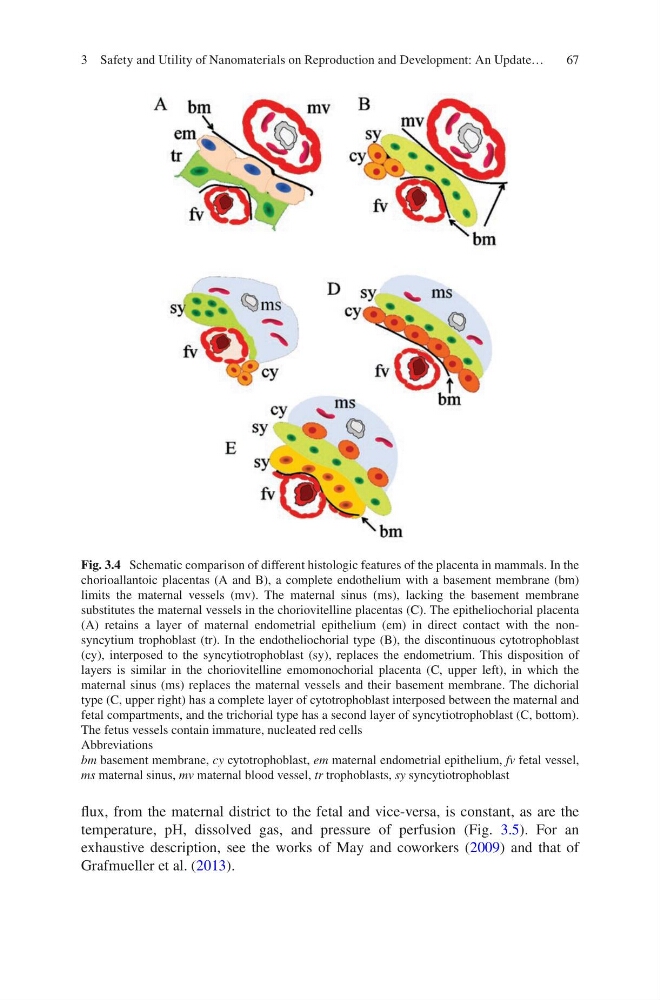
Fig. 3.4 Schematic comparison of different histologic features of the placenta in mammals. In the
chorioallantoic placentas (A and B), a complete endothelium with a basement membrane (bm)
limits the maternal vessels (mv). The maternal sinus (ms), lacking the basement membrane
substitutes the maternal vessels in the choriovitelline placentas (C). The epitheliochorial placenta
(A) retains a layer of maternal endometrial epithelium (em) in direct contact with the nonsyncytium trophoblast (tr). In the endotheliochorial type (B), the discontinuous cytotrophoblast
(cy), interposed to the syncytiotrophoblast (sy), replaces the endometrium. This disposition of
layers is similar in the choriovitelline emomonochorial placenta (C, upper left), in which the
maternal sinus (ms) replaces the maternal vessels and their basement membrane. The dichorial
type (C, upper right) has a complete layer of cytotrophoblast interposed between the maternal and
fetal compartments, and the trichorial type has a second layer of syncytiotrophoblast (C, bottom).
The fetus vessels contain immature, nucleated red cells
Abbreviations
bm basement membrane, cy cytotrophoblast, em maternal endometrial epithelium, fv fetal vessel,
ms maternal sinus, mv maternal blood vessel, tr trophoblasts, sy syncytiotrophoblast
3 Safety and Utility of Nanomaterials on Reproduction and Development: An Update…
flux, from the maternal district to the fetal and vice-versa, is constant, as are the
temperature, pH, dissolved gas, and pressure of perfusion (Fig. 3.5). For an
exhaustive description, see the works of May and coworkers (2009) and that of
Grafmueller et al. (2013).
Fig. 3.4 Schematic comparison of different histologic features of the placenta in mammals. In the
chorioallantoic placentas (A and B), a complete endothelium with a basement membrane (bm)
limits the maternal vessels (mv). The maternal sinus (ms), lacking the basement membrane
substitutes the maternal vessels in the choriovitelline placentas (C). The epitheliochorial placenta
(A) retains a layer of maternal endometrial epithelium (em) in direct contact with the nonsyncytium trophoblast (tr). In the endotheliochorial type (B), the discontinuous cytotrophoblast
(cy), interposed to the syncytiotrophoblast (sy), replaces the endometrium. This disposition of
layers is similar in the choriovitelline emomonochorial placenta (C, upper left), in which the
maternal sinus (ms) replaces the maternal vessels and their basement membrane. The dichorial
type (C, upper right) has a complete layer of cytotrophoblast interposed between the maternal and
fetal compartments, and the trichorial type has a second layer of syncytiotrophoblast (C, bottom).
The fetus vessels contain immature, nucleated red cells
Abbreviations
bm basement membrane, cy cytotrophoblast, em maternal endometrial epithelium, fv fetal vessel,
ms maternal sinus, mv maternal blood vessel, tr trophoblasts, sy syncytiotrophoblast
3 Safety and Utility of Nanomaterials on Reproduction and Development: An Update…