

263
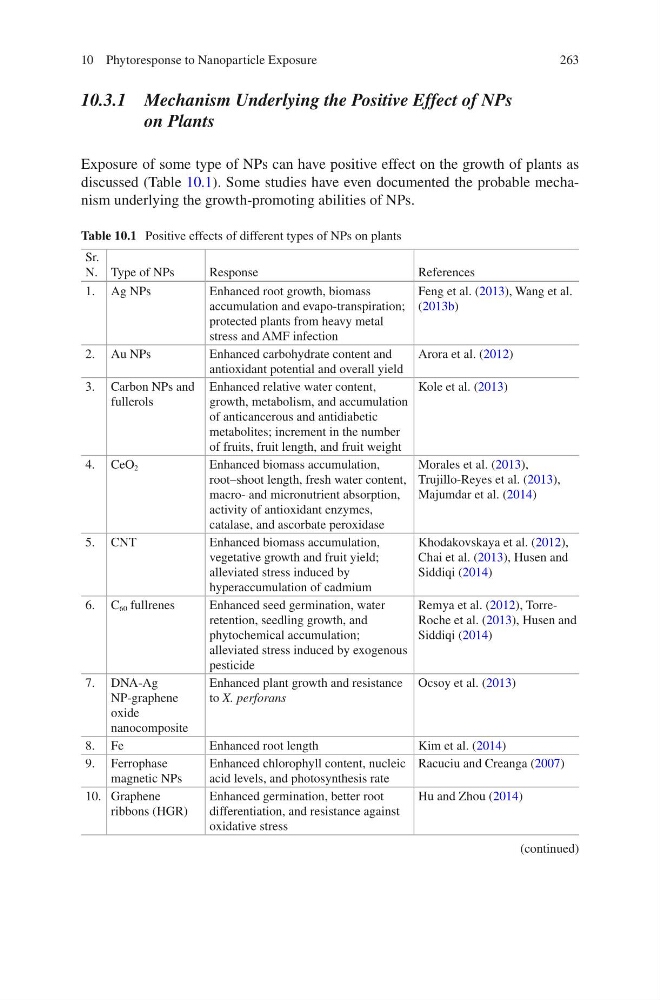
Table 10.1 Positive effects of different types of NPs on plants
Sr.
N. Type of NPs
Response
References
1. Ag NPs
Enhanced root growth, biomass
accumulation and evapo-transpiration;
protected plants from heavy metal
stress and AMF infection
Feng et al. (2013), Wang et al.
(2013b)
2. Au NPs
Enhanced carbohydrate content and
antioxidant potential and overall yield
Arora et al. (2012)
3. Carbon NPs and
fullerols
Enhanced relative water content,
growth, metabolism, and accumulation
of anticancerous and antidiabetic
metabolites; increment in the number
of fruits, fruit length, and fruit weight
Kole et al. (2013)
4. CeO 2
Enhanced biomass accumulation,
root–shoot length, fresh water content,
macro- and micronutrient absorption,
activity of antioxidant enzymes,
catalase, and ascorbate peroxidase
Morales et al. (2013),
Trujillo-Reyes et al. (2013),
Majumdar et al. (2014)
5. CNT
Enhanced biomass accumulation,
vegetative growth and fruit yield;
alleviated stress induced by
hyperaccumulation of cadmium
Khodakovskaya et al. (2012),
Chai et al. (2013), Husen and
Siddiqi (2014)
6. C 60 fullrenes
Enhanced seed germination, water
retention, seedling growth, and
phytochemical accumulation;
alleviated stress induced by exogenous
pesticide
Remya et al. (2012), TorreRoche et al. (2013), Husen and
Siddiqi (2014)
7. DNA-Ag
NP-graphene
oxide
nanocomposite
Enhanced plant growth and resistance
to X. perforans
Ocsoy et al. (2013)
8. Fe
Enhanced root length
Kim et al. (2014)
9. Ferrophase
magnetic NPs
Enhanced chlorophyll content, nucleic
acid levels, and photosynthesis rate
Racuciu and Creanga (2007)
10. Graphene
ribbons (HGR)
Enhanced germination, better root
differentiation, and resistance against
oxidative stress
Hu and Zhou (2014)
(continued)
10.3.1 Mechanism Underlying the Positive Effect of NPs
on Plants
Exposure of some type of NPs can have positive effect on the growth of plants as
discussed (Table 10.1). Some studies have even documented the probable mechanism underlying the growth-promoting abilities of NPs.
10 Phytoresponse to Nanoparticle Exposure
Table 10.1 Positive effects of different types of NPs on plants
Sr.
N. Type of NPs
Response
References
1. Ag NPs
Enhanced root growth, biomass
accumulation and evapo-transpiration;
protected plants from heavy metal
stress and AMF infection
Feng et al. (2013), Wang et al.
(2013b)
2. Au NPs
Enhanced carbohydrate content and
antioxidant potential and overall yield
Arora et al. (2012)
3. Carbon NPs and
fullerols
Enhanced relative water content,
growth, metabolism, and accumulation
of anticancerous and antidiabetic
metabolites; increment in the number
of fruits, fruit length, and fruit weight
Kole et al. (2013)
4. CeO 2
Enhanced biomass accumulation,
root–shoot length, fresh water content,
macro- and micronutrient absorption,
activity of antioxidant enzymes,
catalase, and ascorbate peroxidase
Morales et al. (2013),
Trujillo-Reyes et al. (2013),
Majumdar et al. (2014)
5. CNT
Enhanced biomass accumulation,
vegetative growth and fruit yield;
alleviated stress induced by
hyperaccumulation of cadmium
Khodakovskaya et al. (2012),
Chai et al. (2013), Husen and
Siddiqi (2014)
6. C 60 fullrenes
Enhanced seed germination, water
retention, seedling growth, and
phytochemical accumulation;
alleviated stress induced by exogenous
pesticide
Remya et al. (2012), TorreRoche et al. (2013), Husen and
Siddiqi (2014)
7. DNA-Ag
NP-graphene
oxide
nanocomposite
Enhanced plant growth and resistance
to X. perforans
Ocsoy et al. (2013)
8. Fe
Enhanced root length
Kim et al. (2014)
9. Ferrophase
magnetic NPs
Enhanced chlorophyll content, nucleic
acid levels, and photosynthesis rate
Racuciu and Creanga (2007)
10. Graphene
ribbons (HGR)
Enhanced germination, better root
differentiation, and resistance against
oxidative stress
Hu and Zhou (2014)
(continued)
10.3.1 Mechanism Underlying the Positive Effect of NPs
on Plants
Exposure of some type of NPs can have positive effect on the growth of plants as
discussed (Table 10.1). Some studies have even documented the probable mechanism underlying the growth-promoting abilities of NPs.
10 Phytoresponse to Nanoparticle Exposure