

219
widely established technique yet, so one simple way to prevent contamination is by
choosing, promoting, and maintaining endotoxin-free NMs production processes
(Peters et al. 2017; Du et al. 2017).
Also, unlike raw materials, NM preparations are often complex mixtures that
may contain different populations that are present in various manners ranging from
pristine forms to surface-modified systems, agglomerates, and/or aggregates
(Benetti et al. 2014). The presence of these different populations impacts the mediation and promotion of the biological effects of NMs. Depending on its form, the
same NM can show different safety and toxicological profiles (Stone et al. 2009;
Teeguarden et al. 2007; Mahler et al. 2012).
The referred factors can also interfere with in vitro testing (Table 8.3), causing
artifacts and unreliable results (Dobrovolskaia et al. 2016; Doak et al. 2009). That is
one of the several reasons why recently research have been also focusing on overcoming the difficulties in the adaptation of in vitro common assays for conventional
chemicals to evaluate NMs (Love et al. 2012; Monteiro-Riviere et al. 2009; Stone
et al. 2009; Sharifi et al. 2012).
Most commonly, in vitro assays outputs are obtained by optical detection of
specific molecular probes by absorbance, fluorescence, or luminescence analysis.
However, it is also known that NMs can cause optical interferences as they may
scatter or absorb light within these tests spectral range (Love et al. 2012; Stone et al.
2009; Dobrovolskaia et al. 2010, 2016; Doak et al. 2009; Powell et al. 2010;
Oberdörster 2004). These type of interferences were observed in the testing of several nanosystems such as metallic and inorganic nanoparticles, as well as singlewall carbon nanotubes (Knuschke et al. 2013; Dobrovolskaia et al. 2016; Doak et al.
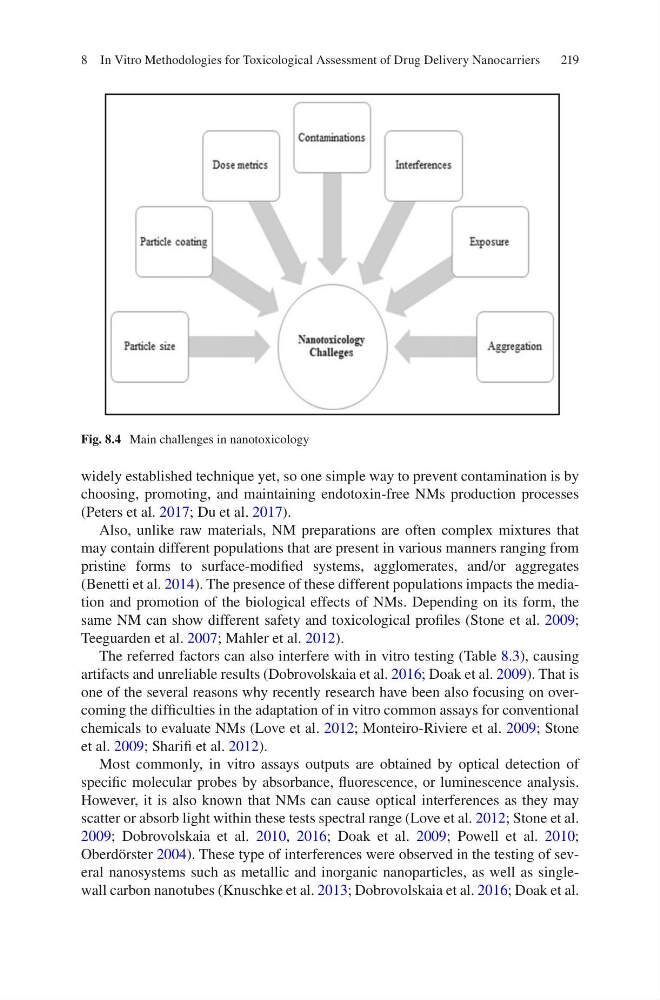
Fig. 8.4 Main challenges in nanotoxicology
8 In Vitro Methodologies for Toxicological Assessment of Drug Delivery Nanocarriers
widely established technique yet, so one simple way to prevent contamination is by
choosing, promoting, and maintaining endotoxin-free NMs production processes
(Peters et al. 2017; Du et al. 2017).
Also, unlike raw materials, NM preparations are often complex mixtures that
may contain different populations that are present in various manners ranging from
pristine forms to surface-modified systems, agglomerates, and/or aggregates
(Benetti et al. 2014). The presence of these different populations impacts the mediation and promotion of the biological effects of NMs. Depending on its form, the
same NM can show different safety and toxicological profiles (Stone et al. 2009;
Teeguarden et al. 2007; Mahler et al. 2012).
The referred factors can also interfere with in vitro testing (Table 8.3), causing
artifacts and unreliable results (Dobrovolskaia et al. 2016; Doak et al. 2009). That is
one of the several reasons why recently research have been also focusing on overcoming the difficulties in the adaptation of in vitro common assays for conventional
chemicals to evaluate NMs (Love et al. 2012; Monteiro-Riviere et al. 2009; Stone
et al. 2009; Sharifi et al. 2012).
Most commonly, in vitro assays outputs are obtained by optical detection of
specific molecular probes by absorbance, fluorescence, or luminescence analysis.
However, it is also known that NMs can cause optical interferences as they may
scatter or absorb light within these tests spectral range (Love et al. 2012; Stone et al.
2009; Dobrovolskaia et al. 2010, 2016; Doak et al. 2009; Powell et al. 2010;
Oberdörster 2004). These type of interferences were observed in the testing of several nanosystems such as metallic and inorganic nanoparticles, as well as singlewall carbon nanotubes (Knuschke et al. 2013; Dobrovolskaia et al. 2016; Doak et al.
Fig. 8.4 Main challenges in nanotoxicology
8 In Vitro Methodologies for Toxicological Assessment of Drug Delivery Nanocarriers