

156
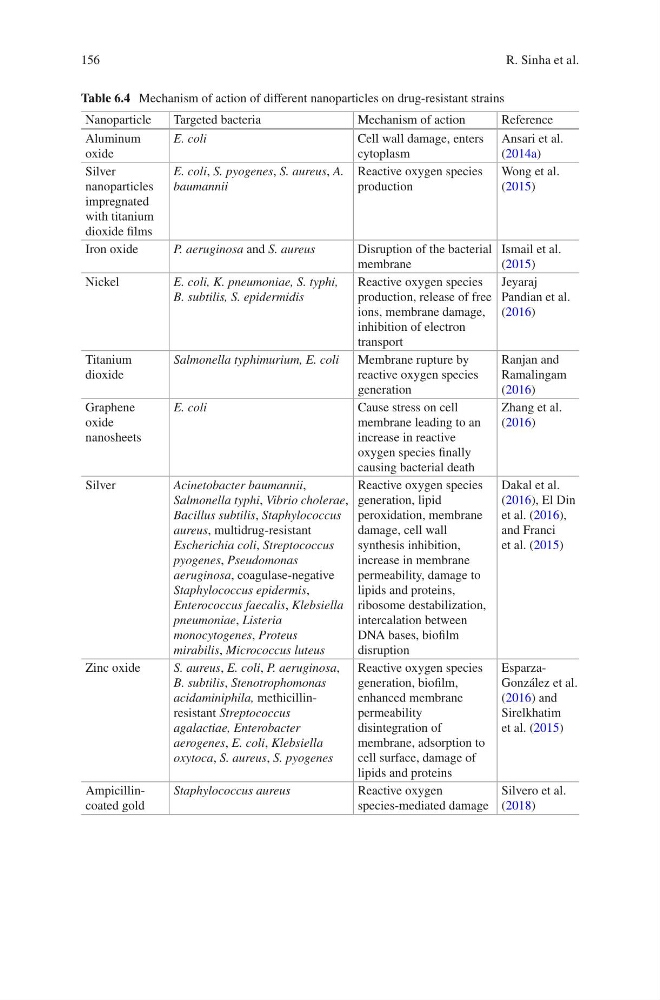
Table 6.4 Mechanism of action of different nanoparticles on drug-resistant strains
Nanoparticle
Targeted bacteria
Mechanism of action
Reference
Aluminum
oxide
E. coli
Cell wall damage, enters
cytoplasm
Ansari et al.
(2014a)
Silver
nanoparticles
impregnated
with titanium
dioxide films
E. coli, S. pyogenes, S. aureus, A.
baumannii
Reactive oxygen species
production
Wong et al.
(2015)
Iron oxide
P. aeruginosa and S. aureus
Disruption of the bacterial
membrane
Ismail et al.
(2015)
Nickel
E. coli, K. pneumoniae, S. typhi,
B. subtilis, S. epidermidis
Reactive oxygen species
production, release of free
ions, membrane damage,
inhibition of electron
transport
Jeyaraj
Pandian et al.
(2016)
Titanium
dioxide
Salmonella typhimurium, E. coli Membrane rupture by
reactive oxygen species
generation
Ranjan and
Ramalingam
(2016)
Graphene
oxide
nanosheets
E. coli
Cause stress on cell
membrane leading to an
increase in reactive
oxygen species finally
causing bacterial death
Zhang et al.
(2016)
Silver
Acinetobacter baumannii,
Salmonella typhi, Vibrio cholerae,
Bacillus subtilis, Staphylococcus
aureus, multidrug-resistant
Escherichia coli, Streptococcus
pyogenes, Pseudomonas
aeruginosa, coagulase-negative
Staphylococcus epidermis,
Enterococcus faecalis, Klebsiella
pneumoniae, Listeria
monocytogenes, Proteus
mirabilis, Micrococcus luteus
Reactive oxygen species
generation, lipid
peroxidation, membrane
damage, cell wall
synthesis inhibition,
increase in membrane
permeability, damage to
lipids and proteins,
ribosome destabilization,
intercalation between
DNA bases, biofilm
disruption
Dakal et al.
(2016), El Din
et al. (2016),
and Franci
et al. (2015)
Zinc oxide
S. aureus, E. coli, P. aeruginosa,
B. subtilis, Stenotrophomonas
acidaminiphila, methicillinresistant Streptococcus
agalactiae, Enterobacter
aerogenes, E. coli, Klebsiella
oxytoca, S. aureus, S. pyogenes
Reactive oxygen species
generation, biofilm,
enhanced membrane
permeability
disintegration of
membrane, adsorption to
cell surface, damage of
lipids and proteins
EsparzaGonzález et al.
(2016) and
Sirelkhatim
et al. (2015)
Ampicillincoated gold
Staphylococcus aureus
Reactive oxygen
species-mediated damage
Silvero et al.
(2018)
R. Sinha et al.
Table 6.4 Mechanism of action of different nanoparticles on drug-resistant strains
Nanoparticle
Targeted bacteria
Mechanism of action
Reference
Aluminum
oxide
E. coli
Cell wall damage, enters
cytoplasm
Ansari et al.
(2014a)
Silver
nanoparticles
impregnated
with titanium
dioxide films
E. coli, S. pyogenes, S. aureus, A.
baumannii
Reactive oxygen species
production
Wong et al.
(2015)
Iron oxide
P. aeruginosa and S. aureus
Disruption of the bacterial
membrane
Ismail et al.
(2015)
Nickel
E. coli, K. pneumoniae, S. typhi,
B. subtilis, S. epidermidis
Reactive oxygen species
production, release of free
ions, membrane damage,
inhibition of electron
transport
Jeyaraj
Pandian et al.
(2016)
Titanium
dioxide
Salmonella typhimurium, E. coli Membrane rupture by
reactive oxygen species
generation
Ranjan and
Ramalingam
(2016)
Graphene
oxide
nanosheets
E. coli
Cause stress on cell
membrane leading to an
increase in reactive
oxygen species finally
causing bacterial death
Zhang et al.
(2016)
Silver
Acinetobacter baumannii,
Salmonella typhi, Vibrio cholerae,
Bacillus subtilis, Staphylococcus
aureus, multidrug-resistant
Escherichia coli, Streptococcus
pyogenes, Pseudomonas
aeruginosa, coagulase-negative
Staphylococcus epidermis,
Enterococcus faecalis, Klebsiella
pneumoniae, Listeria
monocytogenes, Proteus
mirabilis, Micrococcus luteus
Reactive oxygen species
generation, lipid
peroxidation, membrane
damage, cell wall
synthesis inhibition,
increase in membrane
permeability, damage to
lipids and proteins,
ribosome destabilization,
intercalation between
DNA bases, biofilm
disruption
Dakal et al.
(2016), El Din
et al. (2016),
and Franci
et al. (2015)
Zinc oxide
S. aureus, E. coli, P. aeruginosa,
B. subtilis, Stenotrophomonas
acidaminiphila, methicillinresistant Streptococcus
agalactiae, Enterobacter
aerogenes, E. coli, Klebsiella
oxytoca, S. aureus, S. pyogenes
Reactive oxygen species
generation, biofilm,
enhanced membrane
permeability
disintegration of
membrane, adsorption to
cell surface, damage of
lipids and proteins
EsparzaGonzález et al.
(2016) and
Sirelkhatim
et al. (2015)
Ampicillincoated gold
Staphylococcus aureus
Reactive oxygen
species-mediated damage
Silvero et al.
(2018)
R. Sinha et al.