

382
M. Hattab et al.
Evaporation
(water content
changes)
Suction
development
Volumetric strain
(void ratio
decreases)
Capillary cohesion
development
Tensile Strength
development
Shrinkage depending on the
compressibility of the soil
Could be placed in
the Formal
Framework of
continuous media
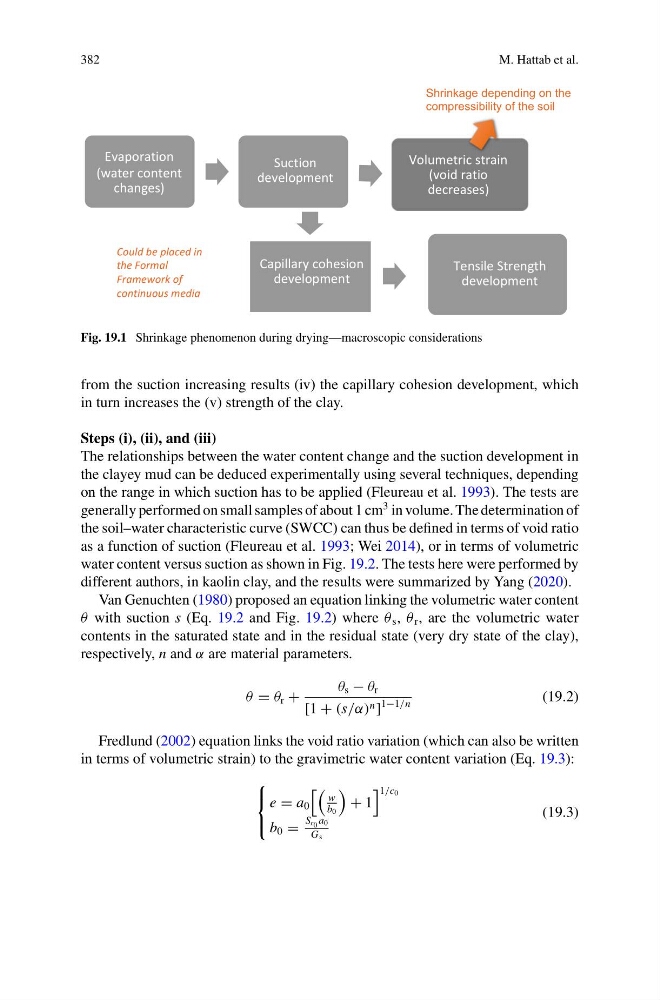
Fig. 19.1 Shrinkage phenomenon during drying—macroscopic considerations
from the suction increasing results (iv) the capillary cohesion development, which
in turn increases the (v) strength of the clay.
Steps (i), (ii), and (iii)
The relationships between the water content change and the suction development in
the clayey mud can be deduced experimentally using several techniques, depending
on the range in which suction has to be applied (Fleureau et al. 1993). The tests are
generally performed on small samples of about 1 cm
3 in volume. The determination of
the soil–water characteristic curve (SWCC) can thus be defined in terms of void ratio
as a function of suction (Fleureau et al. 1993; Wei 2014), or in terms of volumetric
water content versus suction as shown in Fig. 19.2. The tests here were performed by
different authors, in kaolin clay, and the results were summarized by Yang (2020).
Van Genuchten (1980) proposed an equation linking the volumetric water content
θ with suction s (Eq. 19.2 and Fig. 19.2) where θ s , θ r , are the volumetric water
contents in the saturated state and in the residual state (very dry state of the clay),
respectively, n and α are material parameters.
θ = θ r +
θ s − θ r
[1 + (s/α) n ]
1−1/n
(19.2)
Fredlund (2002) equation links the void ratio variation (which can also be written
in terms of volumetric strain) to the gravimetric water content variation (Eq. 19.3):
⎧
⎨
⎩
e = a 0
w
b 0
+ 1
1/c 0
b 0 =
S r 0 a 0
G s
(19.3)
M. Hattab et al.
Evaporation
(water content
changes)
Suction
development
Volumetric strain
(void ratio
decreases)
Capillary cohesion
development
Tensile Strength
development
Shrinkage depending on the
compressibility of the soil
Could be placed in
the Formal
Framework of
continuous media
Fig. 19.1 Shrinkage phenomenon during drying—macroscopic considerations
from the suction increasing results (iv) the capillary cohesion development, which
in turn increases the (v) strength of the clay.
Steps (i), (ii), and (iii)
The relationships between the water content change and the suction development in
the clayey mud can be deduced experimentally using several techniques, depending
on the range in which suction has to be applied (Fleureau et al. 1993). The tests are
generally performed on small samples of about 1 cm
3 in volume. The determination of
the soil–water characteristic curve (SWCC) can thus be defined in terms of void ratio
as a function of suction (Fleureau et al. 1993; Wei 2014), or in terms of volumetric
water content versus suction as shown in Fig. 19.2. The tests here were performed by
different authors, in kaolin clay, and the results were summarized by Yang (2020).
Van Genuchten (1980) proposed an equation linking the volumetric water content
θ with suction s (Eq. 19.2 and Fig. 19.2) where θ s , θ r , are the volumetric water
contents in the saturated state and in the residual state (very dry state of the clay),
respectively, n and α are material parameters.
θ = θ r +
θ s − θ r
[1 + (s/α) n ]
1−1/n
(19.2)
Fredlund (2002) equation links the void ratio variation (which can also be written
in terms of volumetric strain) to the gravimetric water content variation (Eq. 19.3):
⎧
⎨
⎩
e = a 0
w
b 0
+ 1
1/c 0
b 0 =
S r 0 a 0
G s
(19.3)