

360
R. dell’Erba
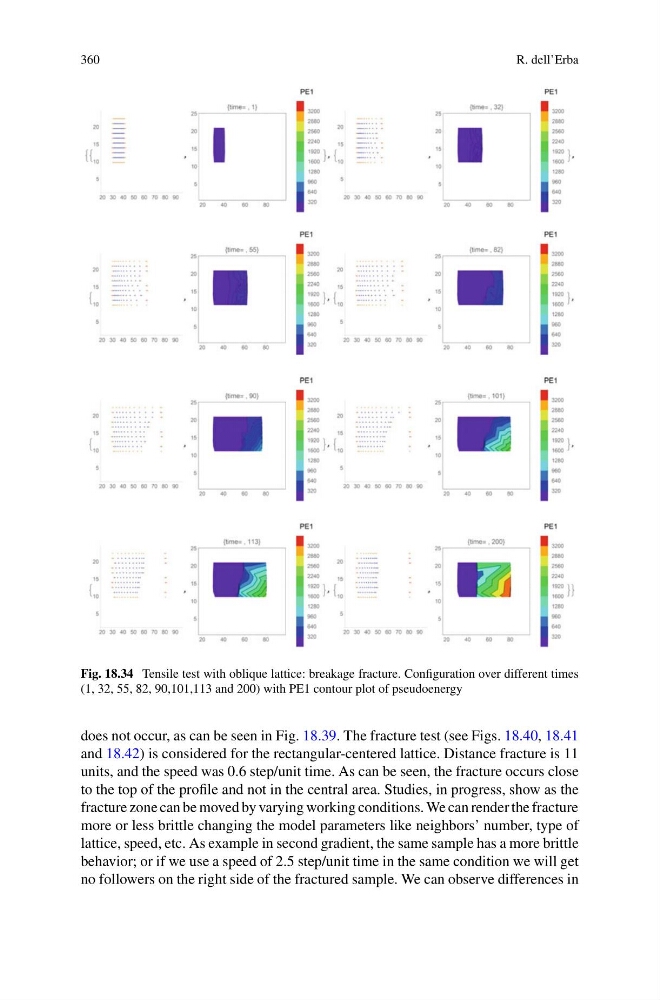
Fig. 18.34 Tensile test with oblique lattice: breakage fracture. Configuration over different times
(1, 32, 55, 82, 90,101,113 and 200) with PE1 contour plot of pseudoenergy
does not occur, as can be seen in Fig. 18.39. The fracture test (see Figs. 18.40, 18.41
and 18.42) is considered for the rectangular-centered lattice. Distance fracture is 11
units, and the speed was 0.6 step/unit time. As can be seen, the fracture occurs close
to the top of the profile and not in the central area. Studies, in progress, show as the
fracture zone can be moved by varying working conditions. We can render the fracture
more or less brittle changing the model parameters like neighbors’ number, type of
lattice, speed, etc. As example in second gradient, the same sample has a more brittle
behavior; or if we use a speed of 2.5 step/unit time in the same condition we will get
no followers on the right side of the fractured sample. We can observe differences in
R. dell’Erba
Fig. 18.34 Tensile test with oblique lattice: breakage fracture. Configuration over different times
(1, 32, 55, 82, 90,101,113 and 200) with PE1 contour plot of pseudoenergy
does not occur, as can be seen in Fig. 18.39. The fracture test (see Figs. 18.40, 18.41
and 18.42) is considered for the rectangular-centered lattice. Distance fracture is 11
units, and the speed was 0.6 step/unit time. As can be seen, the fracture occurs close
to the top of the profile and not in the central area. Studies, in progress, show as the
fracture zone can be moved by varying working conditions. We can render the fracture
more or less brittle changing the model parameters like neighbors’ number, type of
lattice, speed, etc. As example in second gradient, the same sample has a more brittle
behavior; or if we use a speed of 2.5 step/unit time in the same condition we will get
no followers on the right side of the fractured sample. We can observe differences in