

334
R. dell’Erba
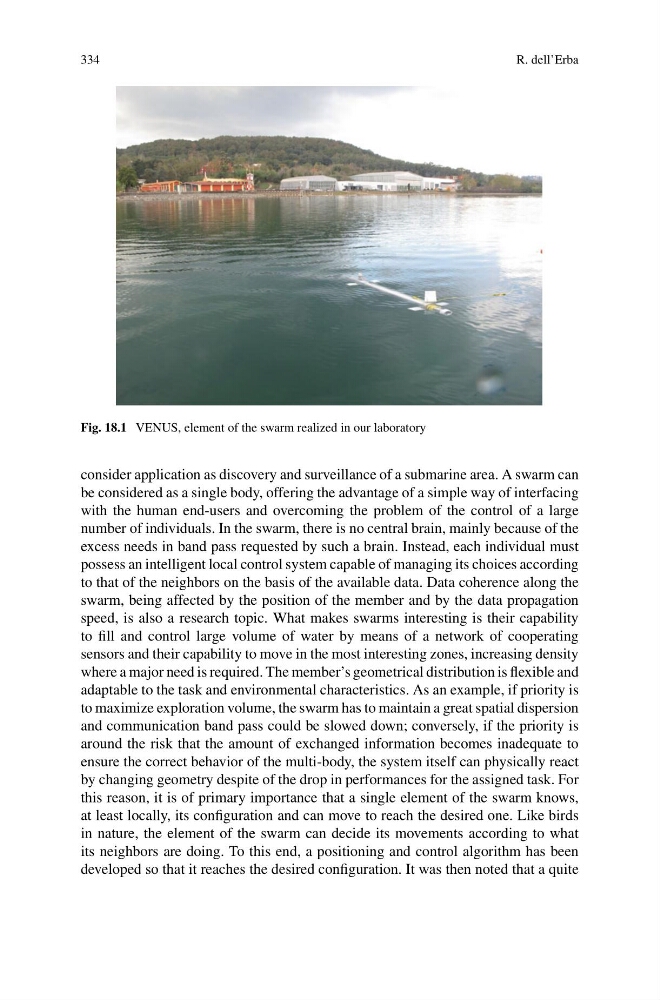
Fig. 18.1 VENUS, element of the swarm realized in our laboratory
consider application as discovery and surveillance of a submarine area. A swarm can
be considered as a single body, offering the advantage of a simple way of interfacing
with the human end-users and overcoming the problem of the control of a large
number of individuals. In the swarm, there is no central brain, mainly because of the
excess needs in band pass requested by such a brain. Instead, each individual must
possess an intelligent local control system capable of managing its choices according
to that of the neighbors on the basis of the available data. Data coherence along the
swarm, being affected by the position of the member and by the data propagation
speed, is also a research topic. What makes swarms interesting is their capability
to fill and control large volume of water by means of a network of cooperating
sensors and their capability to move in the most interesting zones, increasing density
where a major need is required. The member’s geometrical distribution is flexible and
adaptable to the task and environmental characteristics. As an example, if priority is
to maximize exploration volume, the swarm has to maintain a great spatial dispersion
and communication band pass could be slowed down; conversely, if the priority is
around the risk that the amount of exchanged information becomes inadequate to
ensure the correct behavior of the multi-body, the system itself can physically react
by changing geometry despite of the drop in performances for the assigned task. For
this reason, it is of primary importance that a single element of the swarm knows,
at least locally, its configuration and can move to reach the desired one. Like birds
in nature, the element of the swarm can decide its movements according to what
its neighbors are doing. To this end, a positioning and control algorithm has been
developed so that it reaches the desired configuration. It was then noted that a quite
R. dell’Erba
Fig. 18.1 VENUS, element of the swarm realized in our laboratory
consider application as discovery and surveillance of a submarine area. A swarm can
be considered as a single body, offering the advantage of a simple way of interfacing
with the human end-users and overcoming the problem of the control of a large
number of individuals. In the swarm, there is no central brain, mainly because of the
excess needs in band pass requested by such a brain. Instead, each individual must
possess an intelligent local control system capable of managing its choices according
to that of the neighbors on the basis of the available data. Data coherence along the
swarm, being affected by the position of the member and by the data propagation
speed, is also a research topic. What makes swarms interesting is their capability
to fill and control large volume of water by means of a network of cooperating
sensors and their capability to move in the most interesting zones, increasing density
where a major need is required. The member’s geometrical distribution is flexible and
adaptable to the task and environmental characteristics. As an example, if priority is
to maximize exploration volume, the swarm has to maintain a great spatial dispersion
and communication band pass could be slowed down; conversely, if the priority is
around the risk that the amount of exchanged information becomes inadequate to
ensure the correct behavior of the multi-body, the system itself can physically react
by changing geometry despite of the drop in performances for the assigned task. For
this reason, it is of primary importance that a single element of the swarm knows,
at least locally, its configuration and can move to reach the desired one. Like birds
in nature, the element of the swarm can decide its movements according to what
its neighbors are doing. To this end, a positioning and control algorithm has been
developed so that it reaches the desired configuration. It was then noted that a quite