

C hapTer 11 nanomaterials and nanotechnologies
492
that need to be removed from the air. Common catalytic converters
in vehicles are tailored to remove undesirable byproducts, such as
carbon monoxide, nitrogen oxides, and unburned hydrocarbons,
from the exhaust of a combustion engine. Adsorption and absorption technologies target combustion byproducts emanating into
the atmosphere. Chemical absorption, for example, has been used
to sequester carbon dioxide from coal-burning facilities. The air
within the buildings we occupy is increasingly subject to cleansing
through various means. In this architectural domain, purification
technology has typically targeted airborne odors, dust, toxic chemical fumes, noxious gases, VOCs, microbes and viruses, and various
allergens. There are at least six primary methods of air purification in use in various scales today: catalytic, filtration, adsorption,
absorption, electrostatic means, and the use of UV light.
In catalytic processes, the form of a contaminant is changed into
a benign form through a process that we have seen several times
before (e.g., Section 10.2 and the preceding discussion in relation
to water purification). Applications are designed with a particular target substance in mind. Traditional catalytic converters use a
reduction catalyst of materials such as platinum or rhodium. Photocatalytic UV technology involves the activation of catalytic particles in a medium to attract airborne particles. The most widely cited
contribution of nanotechnology currently in use for the purposes
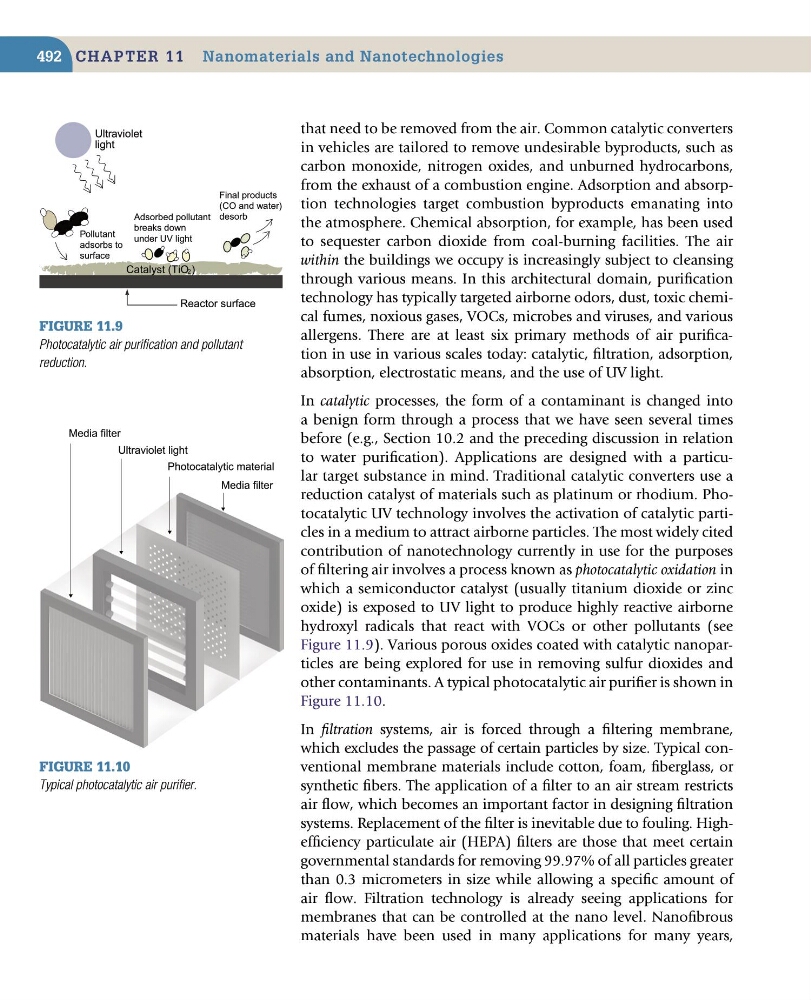
of filtering air involves a process known as photocatalytic oxidation in
which a semiconductor catalyst (usually titanium dioxide or zinc
oxide) is exposed to UV light to produce highly reactive airborne
hydroxyl radicals that react with VOCs or other pollutants (see
Figure 11.9). Various porous oxides coated with catalytic nanoparticles are being explored for use in removing sulfur dioxides and
other contaminants. A typical photocatalytic air purifier is shown in
Figure 11.10.
In filtration systems, air is forced through a filtering membrane,
which excludes the passage of certain particles by size. Typical conventional membrane materials include cotton, foam, fiberglass, or
synthetic fibers. The application of a filter to an air stream restricts
air flow, which becomes an important factor in designing filtration
systems. Replacement of the filter is inevitable due to fouling. Highefficiency particulate air (HEPA) filters are those that meet certain
governmental standards for removing 99.97% of all particles greater
than 0.3 micrometers in size while allowing a specific amount of
air flow. Filtration technology is already seeing applications for
membranes that can be controlled at the nano level. Nanofibrous
materials have been used in many applications for many years,
Figure 11.9
Photocatalytic air purification and pollutant
reduction.
Catalyst (TiO )
Reactor surface
Adsorbed pollutant
breaks down
under UV light
Final products
(CO and water)
desorb
Ultraviolet
light
Pollutant
adsorbs to
surface
2
Figure 11.10
Typical photocatalytic air purifier.
492
that need to be removed from the air. Common catalytic converters
in vehicles are tailored to remove undesirable byproducts, such as
carbon monoxide, nitrogen oxides, and unburned hydrocarbons,
from the exhaust of a combustion engine. Adsorption and absorption technologies target combustion byproducts emanating into
the atmosphere. Chemical absorption, for example, has been used
to sequester carbon dioxide from coal-burning facilities. The air
within the buildings we occupy is increasingly subject to cleansing
through various means. In this architectural domain, purification
technology has typically targeted airborne odors, dust, toxic chemical fumes, noxious gases, VOCs, microbes and viruses, and various
allergens. There are at least six primary methods of air purification in use in various scales today: catalytic, filtration, adsorption,
absorption, electrostatic means, and the use of UV light.
In catalytic processes, the form of a contaminant is changed into
a benign form through a process that we have seen several times
before (e.g., Section 10.2 and the preceding discussion in relation
to water purification). Applications are designed with a particular target substance in mind. Traditional catalytic converters use a
reduction catalyst of materials such as platinum or rhodium. Photocatalytic UV technology involves the activation of catalytic particles in a medium to attract airborne particles. The most widely cited
contribution of nanotechnology currently in use for the purposes
of filtering air involves a process known as photocatalytic oxidation in
which a semiconductor catalyst (usually titanium dioxide or zinc
oxide) is exposed to UV light to produce highly reactive airborne
hydroxyl radicals that react with VOCs or other pollutants (see
Figure 11.9). Various porous oxides coated with catalytic nanoparticles are being explored for use in removing sulfur dioxides and
other contaminants. A typical photocatalytic air purifier is shown in
Figure 11.10.
In filtration systems, air is forced through a filtering membrane,
which excludes the passage of certain particles by size. Typical conventional membrane materials include cotton, foam, fiberglass, or
synthetic fibers. The application of a filter to an air stream restricts
air flow, which becomes an important factor in designing filtration
systems. Replacement of the filter is inevitable due to fouling. Highefficiency particulate air (HEPA) filters are those that meet certain
governmental standards for removing 99.97% of all particles greater
than 0.3 micrometers in size while allowing a specific amount of
air flow. Filtration technology is already seeing applications for
membranes that can be controlled at the nano level. Nanofibrous
materials have been used in many applications for many years,
Figure 11.9
Photocatalytic air purification and pollutant
reduction.
Catalyst (TiO )
Reactor surface
Adsorbed pollutant
breaks down
under UV light
Final products
(CO and water)
desorb
Ultraviolet
light
Pollutant
adsorbs to
surface
2
Figure 11.10
Typical photocatalytic air purifier.