

C hapter 10 nanomaterial product Forms and Functions
456
woven textiles can be enhanced via the use of nanoadhesives of
the type previously discussed or by enhancing cohesion induced
during bonding processes.
self-cleaning, antimicrobial,
and other surface characteristics
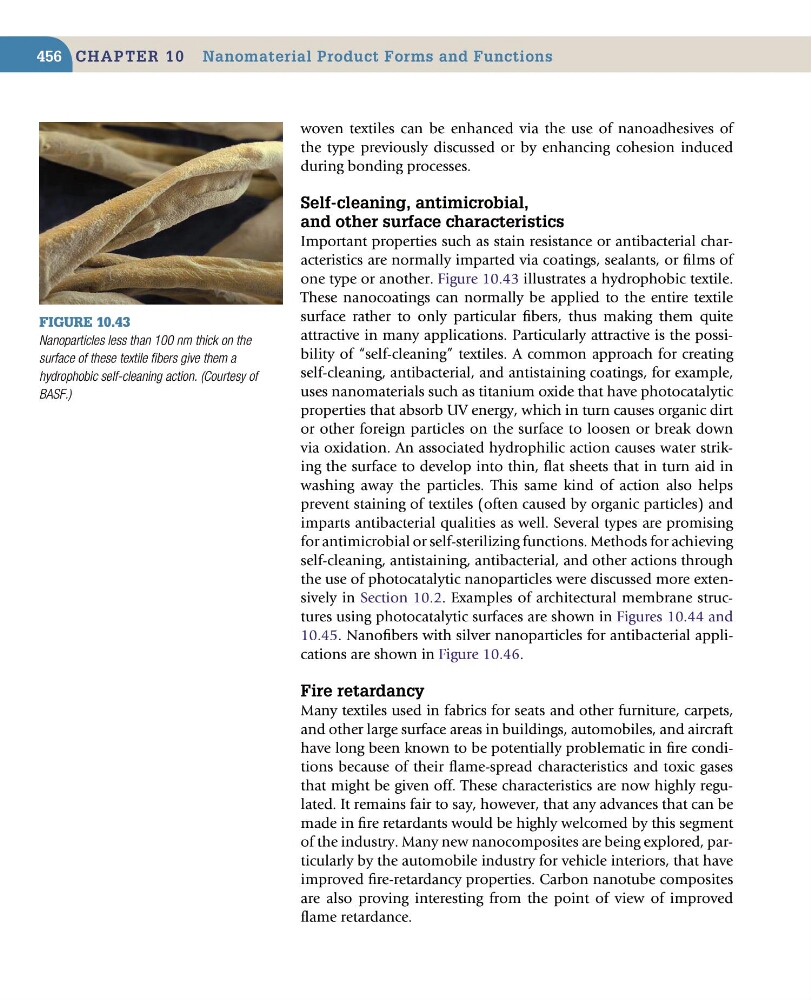
Important properties such as stain resistance or antibacterial characteristics are normally imparted via coatings, sealants, or films of
one type or another. Figure 10.43 illustrates a hydrophobic textile.
These nanocoatings can normally be applied to the entire textile
surface rather to only particular fibers, thus making them quite
attractive in many applications. Particularly attractive is the possibility of “self-cleaning” textiles. A common approach for creating
self-cleaning, antibacterial, and antistaining coatings, for example,
uses nanomaterials such as titanium oxide that have photocatalytic
properties that absorb UV energy, which in turn causes organic dirt
or other foreign particles on the surface to loosen or break down
via oxidation. An associated hydrophilic action causes water striking the surface to develop into thin, flat sheets that in turn aid in
washing away the particles. This same kind of action also helps
prevent staining of textiles (often caused by organic particles) and
imparts antibacterial qualities as well. Several types are promising
for antimicrobial or self-sterilizing functions. Methods for achieving
self-cleaning, antistaining, antibacterial, and other actions through
the use of photocatalytic nanoparticles were discussed more extensively in Section 10.2. Examples of architectural membrane structures using photocatalytic surfaces are shown in Figures 10.44 and
10.45. Nanofibers with silver nanoparticles for antibacterial applications are shown in Figure 10.46.
Fire retardancy
Many textiles used in fabrics for seats and other furniture, carpets,
and other large surface areas in buildings, automobiles, and aircraft
have long been known to be potentially problematic in fire conditions because of their flame-spread characteristics and toxic gases
that might be given off. These characteristics are now highly regulated. It remains fair to say, however, that any advances that can be
made in fire retardants would be highly welcomed by this segment
of the industry. Many new nanocomposites are being explored, particularly by the automobile industry for vehicle interiors, that have
improved fire-retardancy properties. Carbon nanotube composites
are also proving interesting from the point of view of improved
flame retardance.
Figure 10.43
Nanoparticles less than 100 nm thick on the
surface of these textile fibers give them a
hydrophobic self-cleaning action. (Courtesy of
BASF.)
456
woven textiles can be enhanced via the use of nanoadhesives of
the type previously discussed or by enhancing cohesion induced
during bonding processes.
self-cleaning, antimicrobial,
and other surface characteristics
Important properties such as stain resistance or antibacterial characteristics are normally imparted via coatings, sealants, or films of
one type or another. Figure 10.43 illustrates a hydrophobic textile.
These nanocoatings can normally be applied to the entire textile
surface rather to only particular fibers, thus making them quite
attractive in many applications. Particularly attractive is the possibility of “self-cleaning” textiles. A common approach for creating
self-cleaning, antibacterial, and antistaining coatings, for example,
uses nanomaterials such as titanium oxide that have photocatalytic
properties that absorb UV energy, which in turn causes organic dirt
or other foreign particles on the surface to loosen or break down
via oxidation. An associated hydrophilic action causes water striking the surface to develop into thin, flat sheets that in turn aid in
washing away the particles. This same kind of action also helps
prevent staining of textiles (often caused by organic particles) and
imparts antibacterial qualities as well. Several types are promising
for antimicrobial or self-sterilizing functions. Methods for achieving
self-cleaning, antistaining, antibacterial, and other actions through
the use of photocatalytic nanoparticles were discussed more extensively in Section 10.2. Examples of architectural membrane structures using photocatalytic surfaces are shown in Figures 10.44 and
10.45. Nanofibers with silver nanoparticles for antibacterial applications are shown in Figure 10.46.
Fire retardancy
Many textiles used in fabrics for seats and other furniture, carpets,
and other large surface areas in buildings, automobiles, and aircraft
have long been known to be potentially problematic in fire conditions because of their flame-spread characteristics and toxic gases
that might be given off. These characteristics are now highly regulated. It remains fair to say, however, that any advances that can be
made in fire retardants would be highly welcomed by this segment
of the industry. Many new nanocomposites are being explored, particularly by the automobile industry for vehicle interiors, that have
improved fire-retardancy properties. Carbon nanotube composites
are also proving interesting from the point of view of improved
flame retardance.
Figure 10.43
Nanoparticles less than 100 nm thick on the
surface of these textile fibers give them a
hydrophobic self-cleaning action. (Courtesy of
BASF.)