

C haptEr 9 design Environments and systems
354
Electrochromic materials are particularly interesting in relation to
active control systems. Electrochromism is broadly defined as a reversible color change of a material caused by the application of an electric current or potential. Electrochromic glasses can dim to a darker
color while still remaining transparent. Electrochromic behaviors
form the basis of many products found in architecture and in a host
of products found in both consumer and industrial use, including
in displays and glazings. They have an advantage over photochromics in that they can be electronically or manually controlled and
hence can find much wider applications in everything from electrochromic inks to electrochromic windows in architecture.
The electrochromic color change process is completely reversible and
is electrically controlled and hence can be integrated into complex
sensor-based systems. Chromogenically switchable windows and
glazing systems have been the primary focus of many research
efforts directed toward dynamically controlling daylight and solar
heat gain, not only in buildings but in vehicles, aircraft, and ships
as well. Thus they can be important ways of managing lighting and
heating levels in relation to energy systems. Simple visual control is
possible as well, but large-scale electrochromic glazing systems do
not go completely opaque.
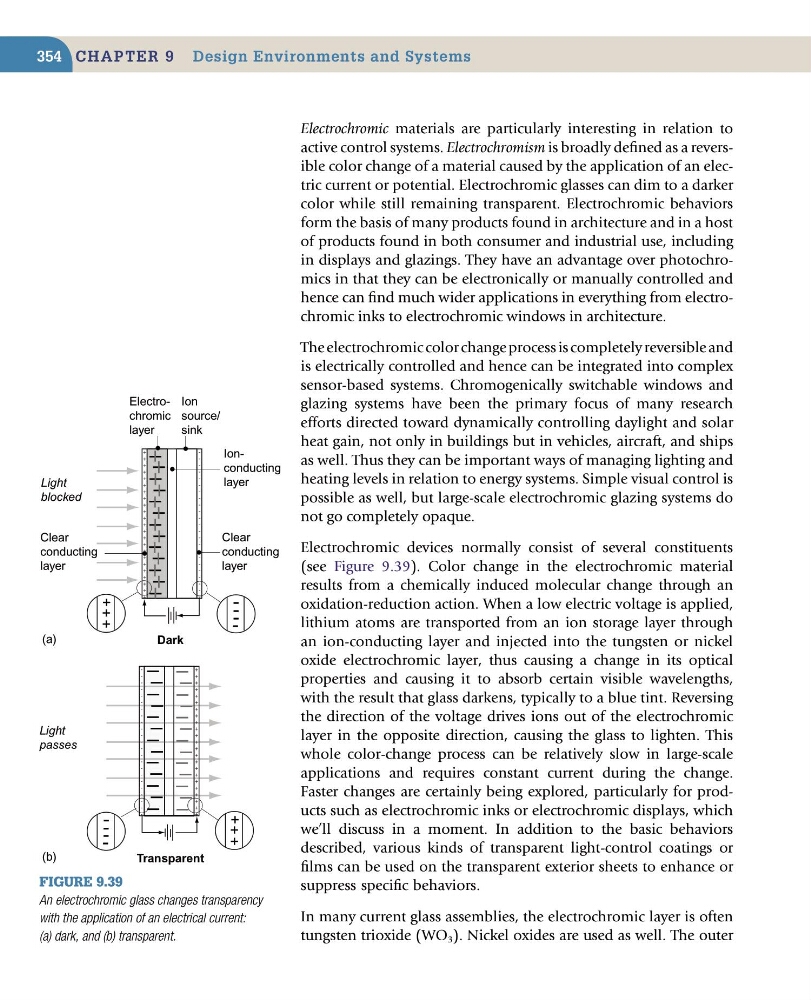
Electrochromic devices normally consist of several constituents
(see Figure 9.39). Color change in the electrochromic material
results from a chemically induced molecular change through an
oxidation-reduction action. When a low electric voltage is applied,
lithium atoms are transported from an ion storage layer through
an ion-conducting layer and injected into the tungsten or nickel
oxide electrochromic layer, thus causing a change in its optical
properties and causing it to absorb certain visible wavelengths,
with the result that glass darkens, typically to a blue tint. Reversing
the direction of the voltage drives ions out of the electrochromic
layer in the opposite direction, causing the glass to lighten. This
whole color-change process can be relatively slow in large-scale
applications and requires constant current during the change.
Faster changes are certainly being explored, particularly for products such as electrochromic inks or electrochromic displays, which
we’ll discuss in a moment. In addition to the basic behaviors
described, various kinds of transparent light-control coatings or
films can be used on the transparent exterior sheets to enhance or
suppress specific behaviors.
In many current glass assemblies, the electrochromic layer is often
tungsten trioxide (WO 3 ). Nickel oxides are used as well. The outer
Figure 9.39
An electrochromic glass changes transparency
with the application of an electrical current:
(a) dark, and (b) transparent.
+
+
+
+
+
+
+
+
+
+
+
+
+
+
+
+
+
+
+
+
+
+
+
-
-
-
-
-
-
-
-
-
-
-
-
-
-
-
-
-
-
-
-
-
-
-
+
+
+
+
+
+
+
+
+
+
+
+
+
+
+
+
+
+
+
+
+
+
+
-
-
-
-
-
-
-
-
-
-
-
-
-
-
-
-
-
-
-
-
-
-
-
Dark
(a)
(b)
Clear
conducting
layer
Clear
conducting
layer
Electrochromic
layer
Ion
source/
sink
Ionconducting
layer
+
+
+
-
-
-
-
Transparent
+
+
+
-
-
-
-
Light
blocked
Light
passes
354
Electrochromic materials are particularly interesting in relation to
active control systems. Electrochromism is broadly defined as a reversible color change of a material caused by the application of an electric current or potential. Electrochromic glasses can dim to a darker
color while still remaining transparent. Electrochromic behaviors
form the basis of many products found in architecture and in a host
of products found in both consumer and industrial use, including
in displays and glazings. They have an advantage over photochromics in that they can be electronically or manually controlled and
hence can find much wider applications in everything from electrochromic inks to electrochromic windows in architecture.
The electrochromic color change process is completely reversible and
is electrically controlled and hence can be integrated into complex
sensor-based systems. Chromogenically switchable windows and
glazing systems have been the primary focus of many research
efforts directed toward dynamically controlling daylight and solar
heat gain, not only in buildings but in vehicles, aircraft, and ships
as well. Thus they can be important ways of managing lighting and
heating levels in relation to energy systems. Simple visual control is
possible as well, but large-scale electrochromic glazing systems do
not go completely opaque.
Electrochromic devices normally consist of several constituents
(see Figure 9.39). Color change in the electrochromic material
results from a chemically induced molecular change through an
oxidation-reduction action. When a low electric voltage is applied,
lithium atoms are transported from an ion storage layer through
an ion-conducting layer and injected into the tungsten or nickel
oxide electrochromic layer, thus causing a change in its optical
properties and causing it to absorb certain visible wavelengths,
with the result that glass darkens, typically to a blue tint. Reversing
the direction of the voltage drives ions out of the electrochromic
layer in the opposite direction, causing the glass to lighten. This
whole color-change process can be relatively slow in large-scale
applications and requires constant current during the change.
Faster changes are certainly being explored, particularly for products such as electrochromic inks or electrochromic displays, which
we’ll discuss in a moment. In addition to the basic behaviors
described, various kinds of transparent light-control coatings or
films can be used on the transparent exterior sheets to enhance or
suppress specific behaviors.
In many current glass assemblies, the electrochromic layer is often
tungsten trioxide (WO 3 ). Nickel oxides are used as well. The outer
Figure 9.39
An electrochromic glass changes transparency
with the application of an electrical current:
(a) dark, and (b) transparent.
+
+
+
+
+
+
+
+
+
+
+
+
+
+
+
+
+
+
+
+
+
+
+
-
-
-
-
-
-
-
-
-
-
-
-
-
-
-
-
-
-
-
-
-
-
-
+
+
+
+
+
+
+
+
+
+
+
+
+
+
+
+
+
+
+
+
+
+
+
-
-
-
-
-
-
-
-
-
-
-
-
-
-
-
-
-
-
-
-
-
-
-
Dark
(a)
(b)
Clear
conducting
layer
Clear
conducting
layer
Electrochromic
layer
Ion
source/
sink
Ionconducting
layer
+
+
+
-
-
-
-
Transparent
+
+
+
-
-
-
-
Light
blocked
Light
passes