

351
thought out. Figure 9.36 illustrates a well-done example by James
Carpenter.
Polymeric products termed radiant color films exhibit similar angularly dependent color effects and are made up of multiple layers of
depositions with differing reflective, absorption, and transmission
properties. These materials may be easily cut or embossed or given
adhesive backings for easy application to other surfaces. They are
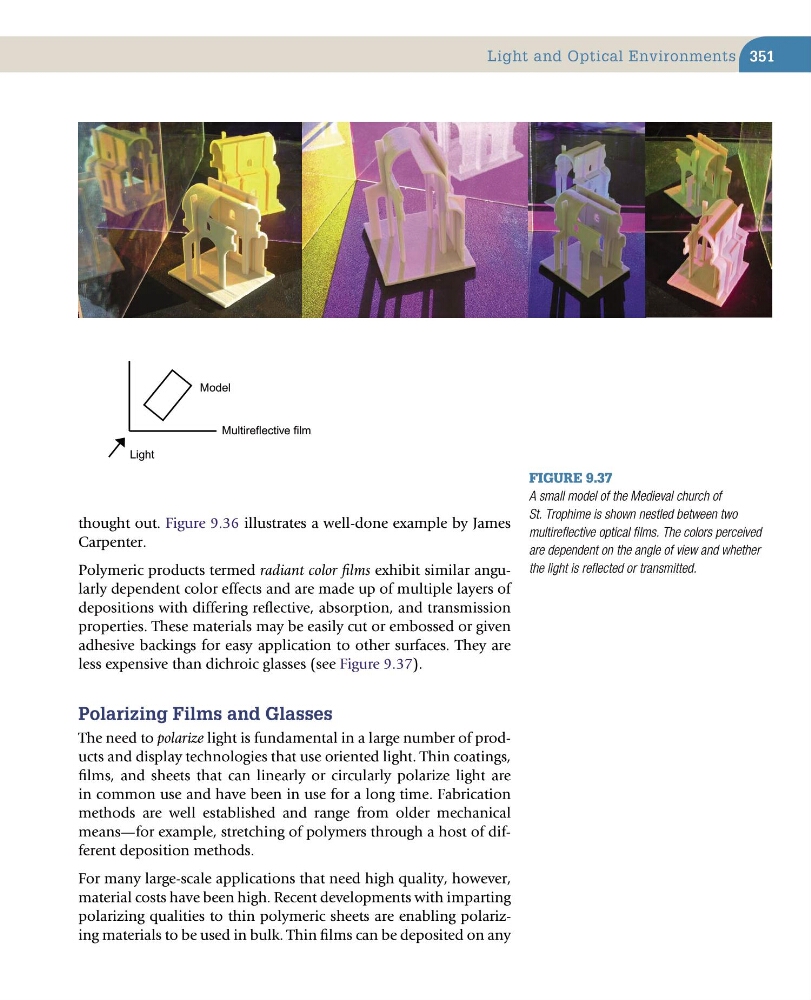
less expensive than dichroic glasses (see Figure 9.37).
polarizing Films and glasses
The need to polarize light is fundamental in a large number of products and display technologies that use oriented light. Thin coatings,
films, and sheets that can linearly or circularly polarize light are
in common use and have been in use for a long time. Fabrication
methods are well established and range from older mechanical
means—for example, stretching of polymers through a host of different deposition methods.
For many large-scale applications that need high quality, however,
material costs have been high. Recent developments with imparting
polarizing qualities to thin polymeric sheets are enabling polarizing materials to be used in bulk. Thin films can be deposited on any
Figure 9.37
A small model of the Medieval church of
St. Trophime is shown nestled between two
multireflective optical films. The colors perceived
are dependent on the angle of view and whether
the light is reflected or transmitted.
Light
Multireflective film
Model
Light and Optical Environments
thought out. Figure 9.36 illustrates a well-done example by James
Carpenter.
Polymeric products termed radiant color films exhibit similar angularly dependent color effects and are made up of multiple layers of
depositions with differing reflective, absorption, and transmission
properties. These materials may be easily cut or embossed or given
adhesive backings for easy application to other surfaces. They are
less expensive than dichroic glasses (see Figure 9.37).
polarizing Films and glasses
The need to polarize light is fundamental in a large number of products and display technologies that use oriented light. Thin coatings,
films, and sheets that can linearly or circularly polarize light are
in common use and have been in use for a long time. Fabrication
methods are well established and range from older mechanical
means—for example, stretching of polymers through a host of different deposition methods.
For many large-scale applications that need high quality, however,
material costs have been high. Recent developments with imparting
polarizing qualities to thin polymeric sheets are enabling polarizing materials to be used in bulk. Thin films can be deposited on any
Figure 9.37
A small model of the Medieval church of
St. Trophime is shown nestled between two
multireflective optical films. The colors perceived
are dependent on the angle of view and whether
the light is reflected or transmitted.
Light
Multireflective film
Model
Light and Optical Environments