

Synthesis of Nanoscale Materials and Structures 265
their interatomic bonds. Disorder disrupts this comfortable seating
arrangement, stretching some bonds and squeezing others. Liquids
are disordered because heat shakes the atoms so violently that they
are sprung from their low-energy, crystalline arrangement. The
melting point is the temperature at which this disruption occurs;
below it the thermal shaking is too weak to disrupt bonds, and the
liquid crystallizes.
Cooled at normal rates, most liquids solidify to give solids with
large crystals, or “grains.” The trick in making nanocrystalline or
amorphous materials by casting them is to deprive the material of
the time or the means to transform from liquid to solid. Some materials, of which window glass is one, are easily duped into retaining
their glassy structure—their high viscosity when liquid slows the
rearrangement of the molecules to form crystals. Many polymers,
too, are “glassy” because their tangled molecules cannot reorganize
in any normal timeframe to form the crystal they would like to be.
Metals and ceramics, by contrast, crystallize at the drop of a hat. It
takes extreme measures to make them retain their liquidlike structure or adopt a structure with exceedingly small grains.
The first step is to mix in elements with different-sized atoms, each
preferring a different atomic spacing and crystal structure, making
crystallization difficult. The second step is to cool quickly, leaving
little or no time for crystallization. Early alloys required precipitous
cooling rates exceeding 1,000,000°C/sec, limiting the form to thin
wires and ribbons from which heat can be conducted quickly.
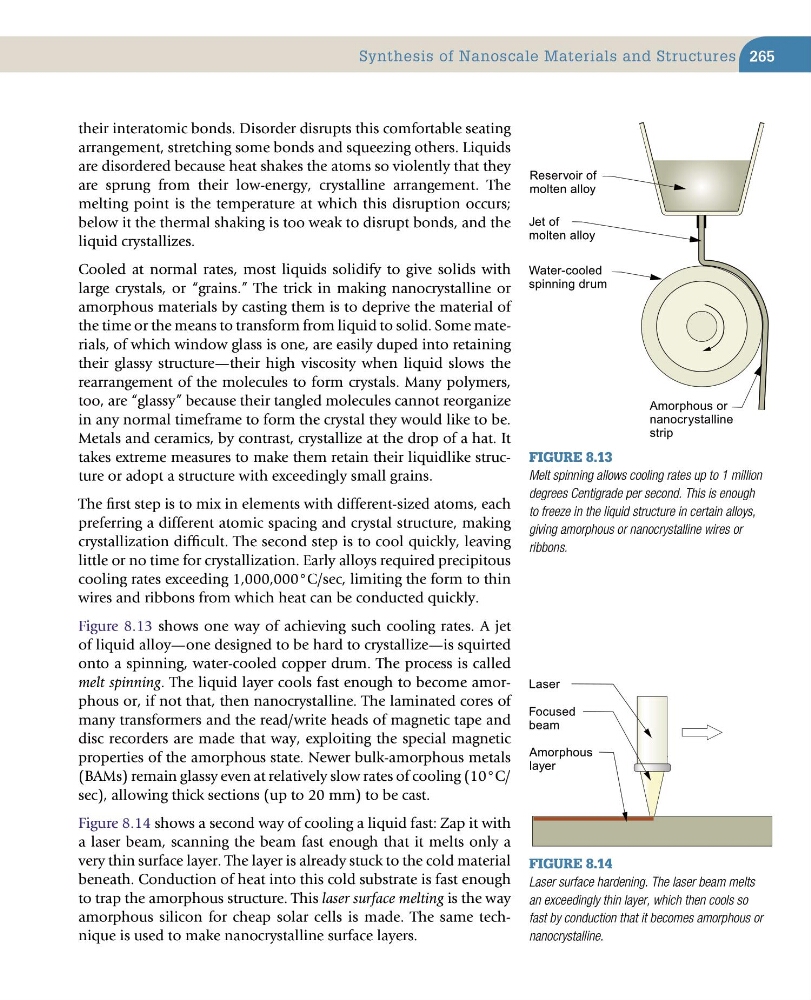
Figure 8.13 shows one way of achieving such cooling rates. A jet
of liquid alloy—one designed to be hard to crystallize—is squirted
onto a spinning, water-cooled copper drum. The process is called
melt spinning. The liquid layer cools fast enough to become amorphous or, if not that, then nanocrystalline. The laminated cores of
many transformers and the read/write heads of magnetic tape and
disc recorders are made that way, exploiting the special magnetic
properties of the amorphous state. Newer bulk-amorphous metals
(BAMs) remain glassy even at relatively slow rates of cooling (10°C/
sec), allowing thick sections (up to 20 mm) to be cast.
Figure 8.14 shows a second way of cooling a liquid fast: Zap it with
a laser beam, scanning the beam fast enough that it melts only a
very thin surface layer. The layer is already stuck to the cold material
beneath. Conduction of heat into this cold substrate is fast enough
to trap the amorphous structure. This laser surface melting is the way
amorphous silicon for cheap solar cells is made. The same technique is used to make nanocrystalline surface layers.
Figure 8.13
Melt spinning allows cooling rates up to 1 million
degrees Centigrade per second. This is enough
to freeze in the liquid structure in certain alloys,
giving amorphous or nanocrystalline wires or
ribbons.
Water-cooled
spinning drum
Reservoir of
molten alloy
Jet of
molten alloy
Amorphous or
nanocrystalline
strip
Figure 8.14
Laser surface hardening. The laser beam melts
an exceedingly thin layer, which then cools so
fast by conduction that it becomes amorphous or
nanocrystalline.
Amorphous
layer
Focused
beam
Laser
their interatomic bonds. Disorder disrupts this comfortable seating
arrangement, stretching some bonds and squeezing others. Liquids
are disordered because heat shakes the atoms so violently that they
are sprung from their low-energy, crystalline arrangement. The
melting point is the temperature at which this disruption occurs;
below it the thermal shaking is too weak to disrupt bonds, and the
liquid crystallizes.
Cooled at normal rates, most liquids solidify to give solids with
large crystals, or “grains.” The trick in making nanocrystalline or
amorphous materials by casting them is to deprive the material of
the time or the means to transform from liquid to solid. Some materials, of which window glass is one, are easily duped into retaining
their glassy structure—their high viscosity when liquid slows the
rearrangement of the molecules to form crystals. Many polymers,
too, are “glassy” because their tangled molecules cannot reorganize
in any normal timeframe to form the crystal they would like to be.
Metals and ceramics, by contrast, crystallize at the drop of a hat. It
takes extreme measures to make them retain their liquidlike structure or adopt a structure with exceedingly small grains.
The first step is to mix in elements with different-sized atoms, each
preferring a different atomic spacing and crystal structure, making
crystallization difficult. The second step is to cool quickly, leaving
little or no time for crystallization. Early alloys required precipitous
cooling rates exceeding 1,000,000°C/sec, limiting the form to thin
wires and ribbons from which heat can be conducted quickly.
Figure 8.13 shows one way of achieving such cooling rates. A jet
of liquid alloy—one designed to be hard to crystallize—is squirted
onto a spinning, water-cooled copper drum. The process is called
melt spinning. The liquid layer cools fast enough to become amorphous or, if not that, then nanocrystalline. The laminated cores of
many transformers and the read/write heads of magnetic tape and
disc recorders are made that way, exploiting the special magnetic
properties of the amorphous state. Newer bulk-amorphous metals
(BAMs) remain glassy even at relatively slow rates of cooling (10°C/
sec), allowing thick sections (up to 20 mm) to be cast.
Figure 8.14 shows a second way of cooling a liquid fast: Zap it with
a laser beam, scanning the beam fast enough that it melts only a
very thin surface layer. The layer is already stuck to the cold material
beneath. Conduction of heat into this cold substrate is fast enough
to trap the amorphous structure. This laser surface melting is the way
amorphous silicon for cheap solar cells is made. The same technique is used to make nanocrystalline surface layers.
Figure 8.13
Melt spinning allows cooling rates up to 1 million
degrees Centigrade per second. This is enough
to freeze in the liquid structure in certain alloys,
giving amorphous or nanocrystalline wires or
ribbons.
Water-cooled
spinning drum
Reservoir of
molten alloy
Jet of
molten alloy
Amorphous or
nanocrystalline
strip
Figure 8.14
Laser surface hardening. The laser beam melts
an exceedingly thin layer, which then cools so
fast by conduction that it becomes amorphous or
nanocrystalline.
Amorphous
layer
Focused
beam
Laser