

4 O-(S-)group Transfer Reactions of a M-P Moiety
Various group transfer reactions occurring at a phosphide-metal moiety involving a
new type of metal-ligand cooperativity have been recently investigated by the Lee
group [39–41]. In a (PPP)Ni scaffold (PPP
–
¼
– P{2-P
i Pr 2 -C 6 H 4 } 2 ) shown in
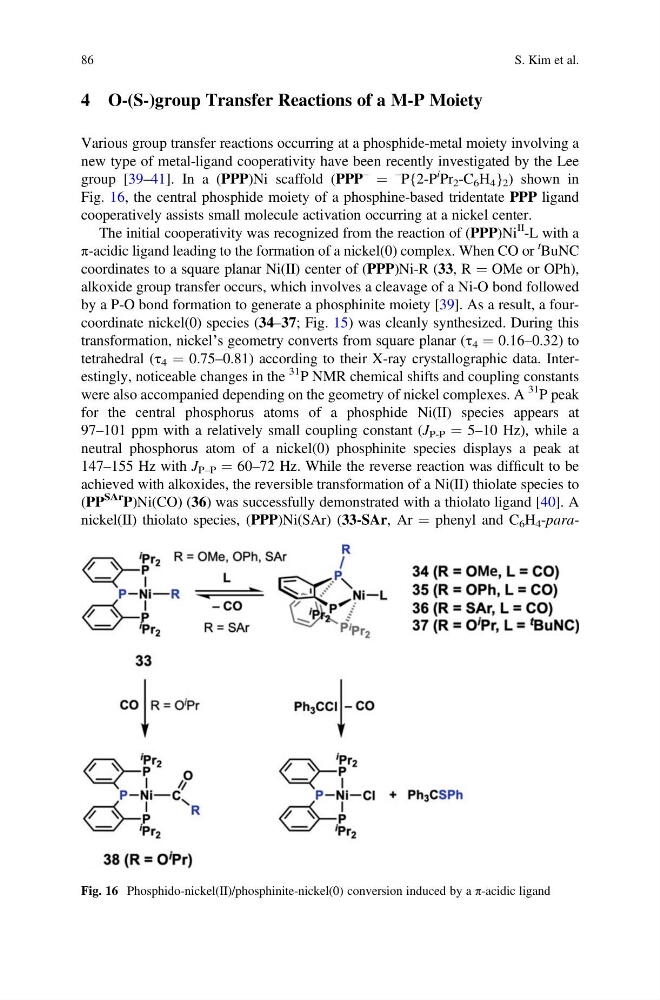
Fig. 16, the central phosphide moiety of a phosphine-based tridentate PPP ligand
cooperatively assists small molecule activation occurring at a nickel center.
The initial cooperativity was recognized from the reaction of (PPP)Ni
II -L with a
π-acidic ligand leading to the formation of a nickel(0) complex. When CO or
t BuNC
coordinates to a square planar Ni(II) center of (PPP)Ni-R (33, R ¼ OMe or OPh),
alkoxide group transfer occurs, which involves a cleavage of a Ni-O bond followed
by a P-O bond formation to generate a phosphinite moiety [39]. As a result, a fourcoordinate nickel(0) species (34–37; Fig. 15) was cleanly synthesized. During this
transformation, nickel’s geometry converts from square planar (τ 4 ¼ 0.16–0.32) to
tetrahedral (τ 4 ¼ 0.75–0.81) according to their X-ray crystallographic data. Interestingly, noticeable changes in the
31 P NMR chemical shifts and coupling constants
were also accompanied depending on the geometry of nickel complexes. A
31 P peak
for the central phosphorus atoms of a phosphide Ni(II) species appears at
97–101 ppm with a relatively small coupling constant (J P-P ¼ 5–10 Hz), while a
neutral phosphorus atom of a nickel(0) phosphinite species displays a peak at
147–155 Hz with J P–P ¼ 60–72 Hz. While the reverse reaction was difficult to be
achieved with alkoxides, the reversible transformation of a Ni(II) thiolate species to
(PP
SAr P)Ni(CO) (36) was successfully demonstrated with a thiolato ligand [40]. A
nickel(II) thiolato species, (PPP)Ni(SAr) (33-SAr, Ar ¼ phenyl and C 6 H 4 -paraFig. 16 Phosphido-nickel(II)/phosphinite-nickel(0) conversion induced by a π-acidic ligand
86
S. Kim et al.
Various group transfer reactions occurring at a phosphide-metal moiety involving a
new type of metal-ligand cooperativity have been recently investigated by the Lee
group [39–41]. In a (PPP)Ni scaffold (PPP
–
¼
– P{2-P
i Pr 2 -C 6 H 4 } 2 ) shown in
Fig. 16, the central phosphide moiety of a phosphine-based tridentate PPP ligand
cooperatively assists small molecule activation occurring at a nickel center.
The initial cooperativity was recognized from the reaction of (PPP)Ni
II -L with a
π-acidic ligand leading to the formation of a nickel(0) complex. When CO or
t BuNC
coordinates to a square planar Ni(II) center of (PPP)Ni-R (33, R ¼ OMe or OPh),
alkoxide group transfer occurs, which involves a cleavage of a Ni-O bond followed
by a P-O bond formation to generate a phosphinite moiety [39]. As a result, a fourcoordinate nickel(0) species (34–37; Fig. 15) was cleanly synthesized. During this
transformation, nickel’s geometry converts from square planar (τ 4 ¼ 0.16–0.32) to
tetrahedral (τ 4 ¼ 0.75–0.81) according to their X-ray crystallographic data. Interestingly, noticeable changes in the
31 P NMR chemical shifts and coupling constants
were also accompanied depending on the geometry of nickel complexes. A
31 P peak
for the central phosphorus atoms of a phosphide Ni(II) species appears at
97–101 ppm with a relatively small coupling constant (J P-P ¼ 5–10 Hz), while a
neutral phosphorus atom of a nickel(0) phosphinite species displays a peak at
147–155 Hz with J P–P ¼ 60–72 Hz. While the reverse reaction was difficult to be
achieved with alkoxides, the reversible transformation of a Ni(II) thiolate species to
(PP
SAr P)Ni(CO) (36) was successfully demonstrated with a thiolato ligand [40]. A
nickel(II) thiolato species, (PPP)Ni(SAr) (33-SAr, Ar ¼ phenyl and C 6 H 4 -paraFig. 16 Phosphido-nickel(II)/phosphinite-nickel(0) conversion induced by a π-acidic ligand
86
S. Kim et al.