

the primary amides. Using either more or less water resulted in lower yields of the
amides. Based on the stoichiometric reactions between on the one hand the catalyst
and nitrile and on the other hand the catalyst with amide, they proposed the
following mechanism (Scheme 51): (a) activation of the C N bond via MLC
leading to addition of the nitrile to form the ketimido complex I in which the
nitrogen is bound to the ruthenium and the carbon atom to the carbon atom of one
of the side arms; (b) nucleophilic attack at the carbon atom of the ketimido adduct by
water, likely assisted by hydrogen bonding with a second molecule of water (TS);
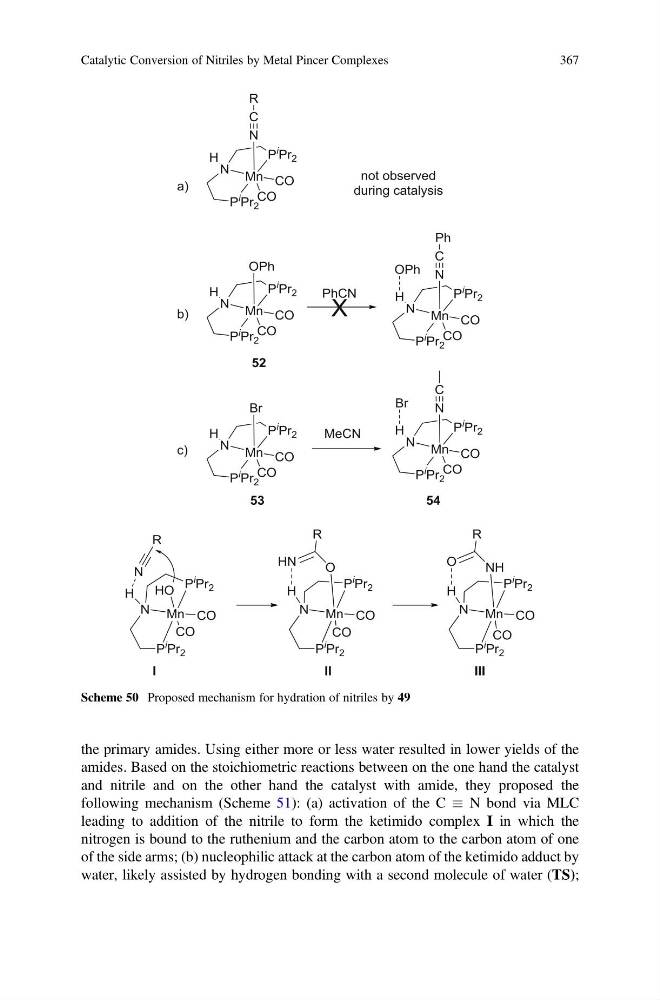
Scheme 50 Proposed mechanism for hydration of nitriles by 49
Catalytic Conversion of Nitriles by Metal Pincer Complexes
367
amides. Based on the stoichiometric reactions between on the one hand the catalyst
and nitrile and on the other hand the catalyst with amide, they proposed the
following mechanism (Scheme 51): (a) activation of the C N bond via MLC
leading to addition of the nitrile to form the ketimido complex I in which the
nitrogen is bound to the ruthenium and the carbon atom to the carbon atom of one
of the side arms; (b) nucleophilic attack at the carbon atom of the ketimido adduct by
water, likely assisted by hydrogen bonding with a second molecule of water (TS);
Scheme 50 Proposed mechanism for hydration of nitriles by 49
Catalytic Conversion of Nitriles by Metal Pincer Complexes
367