

products were obtained in excellent yields and turnover numbers up to 2000 were
achieved (Scheme 44) [81, 82].
The same group reported a dimeric nickel-PCN complex 44 which showed good
activity in the oxa-Michael addition of aliphatic alcohols and phenols to acrylonitrile
[83]. During the substrate scope investigation, the author found that the reaction rate
is depending on the alcohol acidity (m-cresol > BnOH > aliphatic alcohols) and
very sensitive to the steric hindrance (crotonitrile and methacrylonitrile <5% yields
and reaction rate: MeOH > EtOH > n-PrOH >
i PrOH) (Table 15).
In later research, the same group found that the reactivity of the Ni pincer
complex 42 (X ¼ O) in the oxa/aza-Michael additions could be significantly
increased by adding Et 3 N [84, 85]. This was particularly true for reactions with
phenols and anilines. To some extent, water had the same effect.
Liu, Imamoto, Zhang and co-workers prepared a series of chiral PXP Ni pincer
complexes. Complex 45 was successfully applied in the hydroamination of
methacrylonitrile, crotonitrile and other α- and β-substituted acrylonitriles
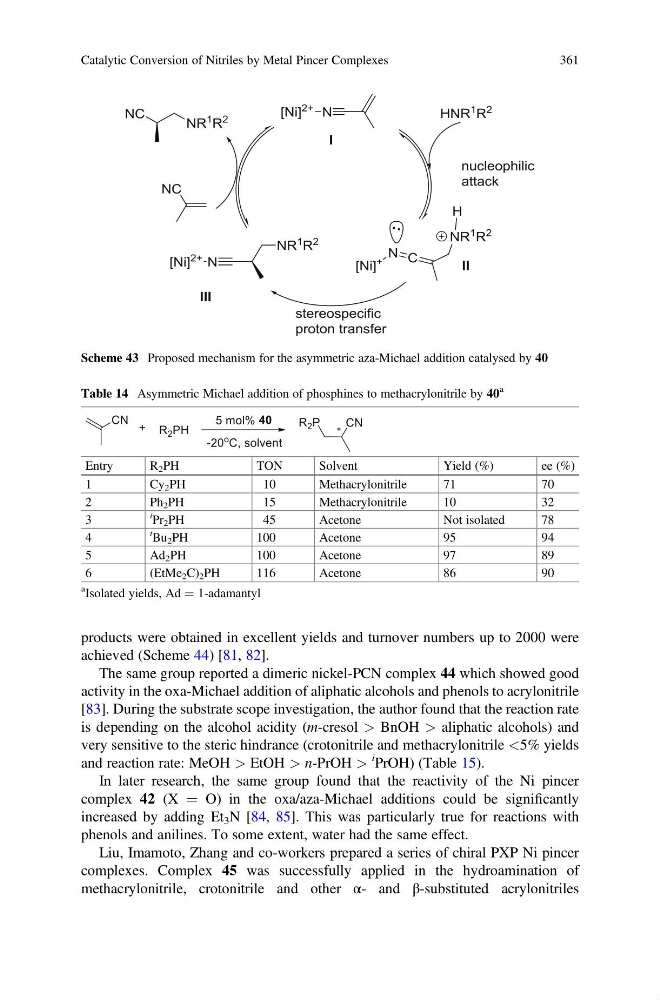
Scheme 43 Proposed mechanism for the asymmetric aza-Michael addition catalysed by 40
Table 14 Asymmetric Michael addition of phosphines to methacrylonitrile by 40
a
Entry
R 2 PH
TON
Solvent
Yield (%)
ee (%)
1
C y 2 PH
10
Methacrylonitrile
71
70
2
P h 2 PH
15
Methacrylonitrile
10
32
3
i
Pr 2 PH
45
Acetone
Not isolated
78
4
t
Bu 2 PH
100
Acetone
95
94
5
A d 2 PH
100
Acetone
97
89
6
(EtMe 2 C) 2 PH
116
Acetone
86
90
a Isolated yields, Ad ¼ 1-adamantyl
Catalytic Conversion of Nitriles by Metal Pincer Complexes
361
achieved (Scheme 44) [81, 82].
The same group reported a dimeric nickel-PCN complex 44 which showed good
activity in the oxa-Michael addition of aliphatic alcohols and phenols to acrylonitrile
[83]. During the substrate scope investigation, the author found that the reaction rate
is depending on the alcohol acidity (m-cresol > BnOH > aliphatic alcohols) and
very sensitive to the steric hindrance (crotonitrile and methacrylonitrile <5% yields
and reaction rate: MeOH > EtOH > n-PrOH >
i PrOH) (Table 15).
In later research, the same group found that the reactivity of the Ni pincer
complex 42 (X ¼ O) in the oxa/aza-Michael additions could be significantly
increased by adding Et 3 N [84, 85]. This was particularly true for reactions with
phenols and anilines. To some extent, water had the same effect.
Liu, Imamoto, Zhang and co-workers prepared a series of chiral PXP Ni pincer
complexes. Complex 45 was successfully applied in the hydroamination of
methacrylonitrile, crotonitrile and other α- and β-substituted acrylonitriles
Scheme 43 Proposed mechanism for the asymmetric aza-Michael addition catalysed by 40
Table 14 Asymmetric Michael addition of phosphines to methacrylonitrile by 40
a
Entry
R 2 PH
TON
Solvent
Yield (%)
ee (%)
1
C y 2 PH
10
Methacrylonitrile
71
70
2
P h 2 PH
15
Methacrylonitrile
10
32
3
i
Pr 2 PH
45
Acetone
Not isolated
78
4
t
Bu 2 PH
100
Acetone
95
94
5
A d 2 PH
100
Acetone
97
89
6
(EtMe 2 C) 2 PH
116
Acetone
86
90
a Isolated yields, Ad ¼ 1-adamantyl
Catalytic Conversion of Nitriles by Metal Pincer Complexes
361