

ruthenium [50]. This unusual structure is still capable of activating the CN bond
via metal-ligand cooperation. Under the influence of base, the methylene group in
the side arm is deprotonated, and the ensuing negative charge is delocalised across
the pyridine ring. This negatively charged species can react with nitriles as before
leading to ketimido adduct 27 (Scheme 26). This adduct was used as catalyst for the
double Michael reaction of benzyl cyanide on ethyl acrylate (2 eq.). If only one
equivalent of ethyl acrylate was used, a mixture of mono- and dialkylated benzyl
cyanide was obtained.
3.4 α-Deuteration of Nitriles
Gunanathan reported the selective deuterium labelling of aliphatic nitriles at the
α-position using D 2 O as deuterium source [51]. With 2 eq. of base relative to catalyst
and D 2 O as solvent, ruthenium-MACHO complex 19 catalysed the α-deuteration of
nitriles resulting in 50–96.5% labelling (Scheme 27). Remarkably, a broad range of
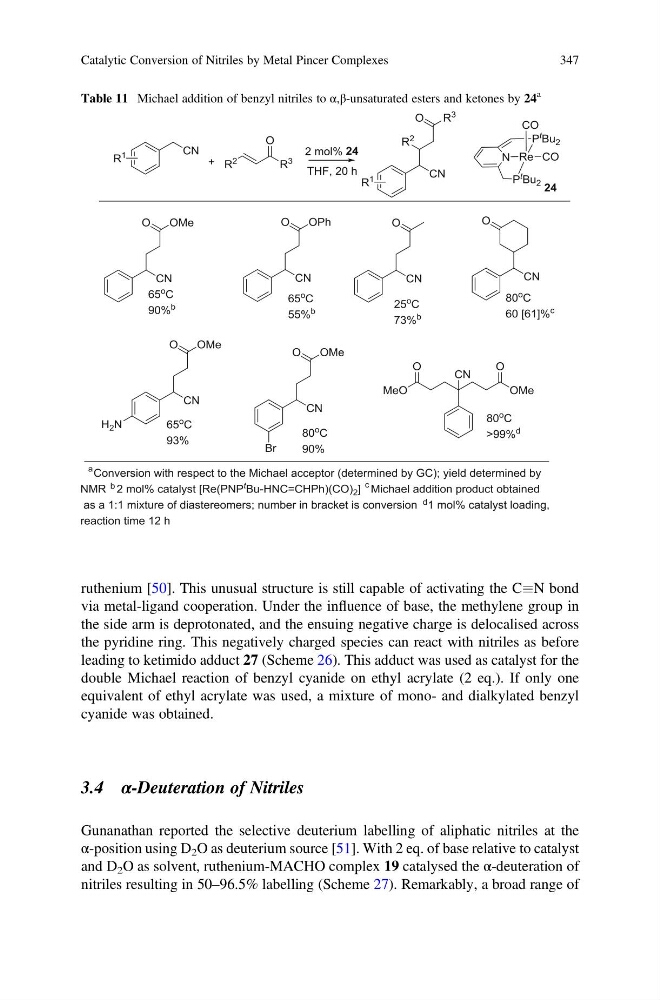
Table 11 Michael addition of benzyl nitriles to α,β-unsaturated esters and ketones by 24
a
Catalytic Conversion of Nitriles by Metal Pincer Complexes
347
via metal-ligand cooperation. Under the influence of base, the methylene group in
the side arm is deprotonated, and the ensuing negative charge is delocalised across
the pyridine ring. This negatively charged species can react with nitriles as before
leading to ketimido adduct 27 (Scheme 26). This adduct was used as catalyst for the
double Michael reaction of benzyl cyanide on ethyl acrylate (2 eq.). If only one
equivalent of ethyl acrylate was used, a mixture of mono- and dialkylated benzyl
cyanide was obtained.
3.4 α-Deuteration of Nitriles
Gunanathan reported the selective deuterium labelling of aliphatic nitriles at the
α-position using D 2 O as deuterium source [51]. With 2 eq. of base relative to catalyst
and D 2 O as solvent, ruthenium-MACHO complex 19 catalysed the α-deuteration of
nitriles resulting in 50–96.5% labelling (Scheme 27). Remarkably, a broad range of
Table 11 Michael addition of benzyl nitriles to α,β-unsaturated esters and ketones by 24
a
Catalytic Conversion of Nitriles by Metal Pincer Complexes
347