

aldehydes or ketones by β-hydride elimination leading to the dihydride complex IV,
which can lose hydrogen to reform II. Next, a Knoevenagel reaction between the
nitriles and the in situ-formed aldehydes or ketones takes place catalysed by the extra
base or by the Mn catalyst, which occurs via proton abstraction by the amide group
in the activated complex. This latter mechanism, proposed by Milstein, was put in
doubt by Sola, Poater and co-workers, who published an alternative version, based
on DFT calculations, in which the activated complex II reacts with benzyl cyanide
to form a (2-phenylvinylidene)amide manganese complex V, which is the nucleophile in the aldol condensation reaction leading to complex VI, which eliminates
the nitrile (Scheme 22, bottom) [47].
Balaraman used manganese catalyst (6b) based on the MACHO ligand for the
olefination of substituted and unsubstituted benzyl cyanides using mostly cyclic
secondary alcohols such as cyclohexanol (Scheme 23) [48]. A total of 36
α, β-unsaturated nitriles were synthesised in this way with yields ranging from
20 to 88%.
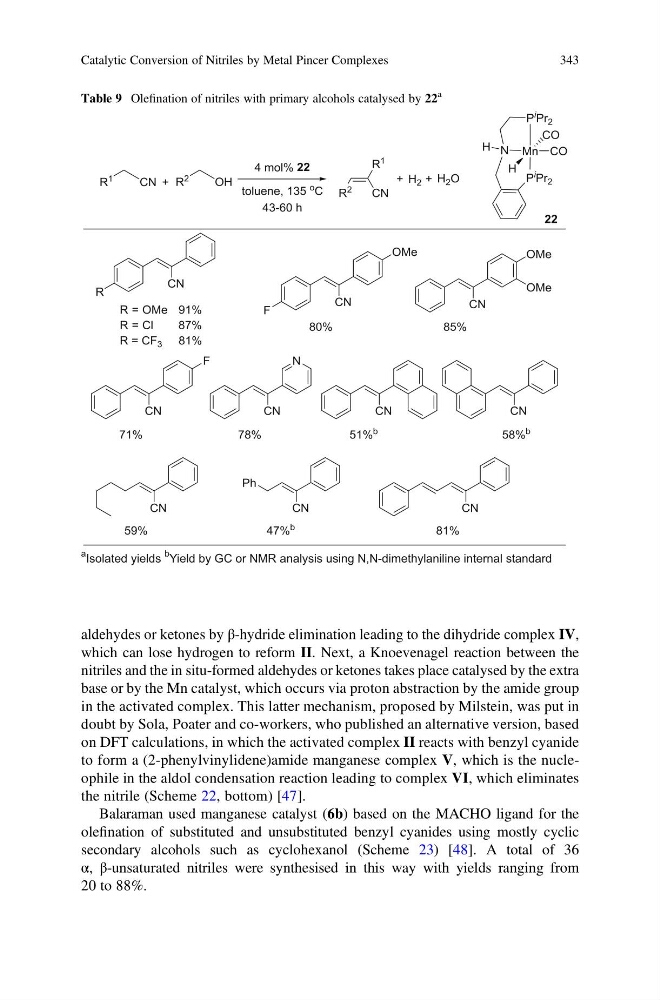
Table 9 Olefination of nitriles with primary alcohols catalysed by 22
a
a Isolated yields
b Yield by GC or NMR analysis using N,N-dimethylaniline internal standard
Catalytic Conversion of Nitriles by Metal Pincer Complexes
343
which can lose hydrogen to reform II. Next, a Knoevenagel reaction between the
nitriles and the in situ-formed aldehydes or ketones takes place catalysed by the extra
base or by the Mn catalyst, which occurs via proton abstraction by the amide group
in the activated complex. This latter mechanism, proposed by Milstein, was put in
doubt by Sola, Poater and co-workers, who published an alternative version, based
on DFT calculations, in which the activated complex II reacts with benzyl cyanide
to form a (2-phenylvinylidene)amide manganese complex V, which is the nucleophile in the aldol condensation reaction leading to complex VI, which eliminates
the nitrile (Scheme 22, bottom) [47].
Balaraman used manganese catalyst (6b) based on the MACHO ligand for the
olefination of substituted and unsubstituted benzyl cyanides using mostly cyclic
secondary alcohols such as cyclohexanol (Scheme 23) [48]. A total of 36
α, β-unsaturated nitriles were synthesised in this way with yields ranging from
20 to 88%.
Table 9 Olefination of nitriles with primary alcohols catalysed by 22
a
a Isolated yields
b Yield by GC or NMR analysis using N,N-dimethylaniline internal standard
Catalytic Conversion of Nitriles by Metal Pincer Complexes
343