

bonds are intact during the hydrogenation, α,β-unsaturated ketones typically give
saturated alcohols as the major or sole products. Hydrogenation of
R
0 COCH 2 CH 2 CO 2 Me provides γ-butyrolactones, although a higher loading of
[
iPr
Re(CO) 3 ]
+ (5 mol%) and KO
t Bu (10 mol%) is needed. Using the chiral
precatalyst [
R*
Re(CO) 3 ]
+ results in low ee for hydrogenating acetophenone and
moderate ee for hydrogenating cyclohexyl methyl ketone [58]. This level of
enantioselectivity is lower than that achieved with the manganese analog but comparable to the ruthenium- and iron-based catalytic systems.
8 Summary and Outlook
The use of the
R PN
H P ligands to design hydrogenation catalysts has been a fruitful
patch in the field of homogeneous catalysis. As shown in this chapter, transition
metal complexes supported by these ligands along with strong-field ligands such as
CO, NO, and isocyanides have been so extensively studied that most of the mid- and
late-transition metals have been involved. Some of the hydrogenation processes do
not require the NH moiety. Examples include hydrogenation of weakly polarized
C¼C bonds and hydrogenation of CO 2 to formate. However, metal-ligand
cooperativity enabled by the NH functionality does have advantage for the more
challenging hydrogenation processes such as CO 2 hydrogenation to methanol and
amide hydrogenation.
We envision that interests in using
R PN
H P ligated complexes for catalytic hydrogenation reactions will continue to grow in the future. In particular, group 5 and
group 11 metals have not been explored to build PNP-type complexes specifically
for hydrogenation reactions. A recent computation study focusing on (
iPr
PN
H P)M
(NO) 2 H (M ¼ V, Nb, Ta; see Fig. 6) suggests that they are promising catalysts
[165]. Inspired by the structure of the active site of [Fe]-hydrogenase, Yang has
computationally designed PNP-type complexes of iron [166] and cobalt [167] that
contain acylmethylpyridinol as the ancillary ligand. These molecules present significant synthetic challenges but may provide a path for synthetic chemists to identify
more robust and active hydrogenation catalysts.
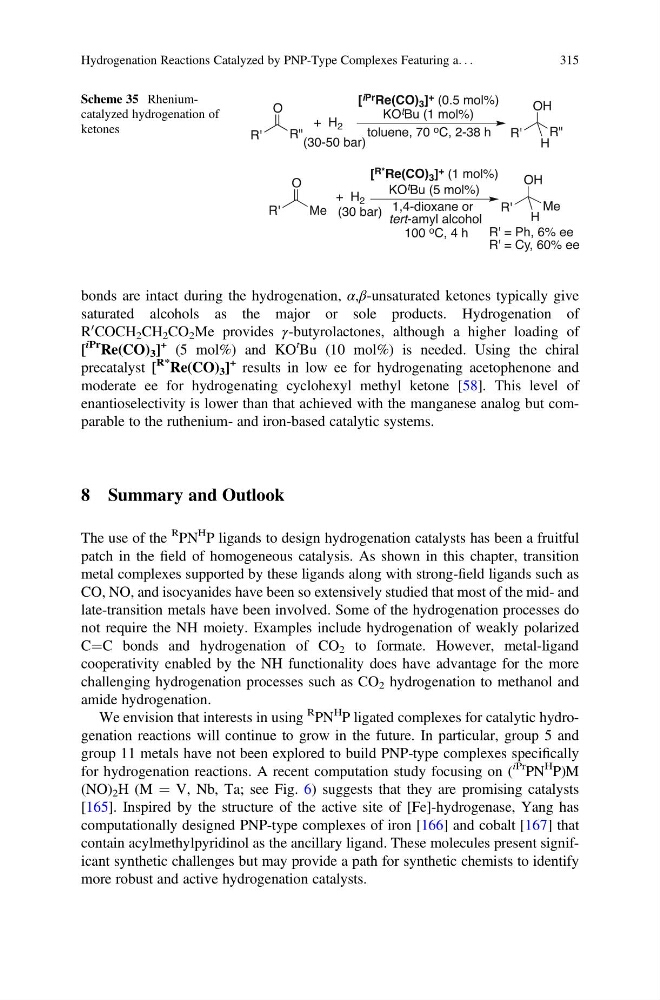
Scheme 35 Rheniumcatalyzed hydrogenation of
ketones
Hydrogenation Reactions Catalyzed by PNP-Type Complexes Featuring a. . .
315
saturated alcohols as the major or sole products. Hydrogenation of
R
0 COCH 2 CH 2 CO 2 Me provides γ-butyrolactones, although a higher loading of
[
iPr
Re(CO) 3 ]
+ (5 mol%) and KO
t Bu (10 mol%) is needed. Using the chiral
precatalyst [
R*
Re(CO) 3 ]
+ results in low ee for hydrogenating acetophenone and
moderate ee for hydrogenating cyclohexyl methyl ketone [58]. This level of
enantioselectivity is lower than that achieved with the manganese analog but comparable to the ruthenium- and iron-based catalytic systems.
8 Summary and Outlook
The use of the
R PN
H P ligands to design hydrogenation catalysts has been a fruitful
patch in the field of homogeneous catalysis. As shown in this chapter, transition
metal complexes supported by these ligands along with strong-field ligands such as
CO, NO, and isocyanides have been so extensively studied that most of the mid- and
late-transition metals have been involved. Some of the hydrogenation processes do
not require the NH moiety. Examples include hydrogenation of weakly polarized
C¼C bonds and hydrogenation of CO 2 to formate. However, metal-ligand
cooperativity enabled by the NH functionality does have advantage for the more
challenging hydrogenation processes such as CO 2 hydrogenation to methanol and
amide hydrogenation.
We envision that interests in using
R PN
H P ligated complexes for catalytic hydrogenation reactions will continue to grow in the future. In particular, group 5 and
group 11 metals have not been explored to build PNP-type complexes specifically
for hydrogenation reactions. A recent computation study focusing on (
iPr
PN
H P)M
(NO) 2 H (M ¼ V, Nb, Ta; see Fig. 6) suggests that they are promising catalysts
[165]. Inspired by the structure of the active site of [Fe]-hydrogenase, Yang has
computationally designed PNP-type complexes of iron [166] and cobalt [167] that
contain acylmethylpyridinol as the ancillary ligand. These molecules present significant synthetic challenges but may provide a path for synthetic chemists to identify
more robust and active hydrogenation catalysts.
Scheme 35 Rheniumcatalyzed hydrogenation of
ketones
Hydrogenation Reactions Catalyzed by PNP-Type Complexes Featuring a. . .
315