

Mg 2 SiO 4 þ CO 2 ! MgSiO 3 þ MgCO 3
ð6:12aÞ
CaSiO 3 þ CO 2 ! CaCO 3 þ SiO 2
ð6:12bÞ
Several technologies have been developed to fasten such reactions that naturally
occur on the timescale of centuries. Dissolution of rocks and precipitation of carbonates is an approach that, on the other side, might imply some environmental
impact (see DI6.2). The use of basic industrial slag is an interesting approach as it
would reach two targets: utilization of a waste and fixation of CO 2 into long-lasting
materials. The production of mineral carbonates is a costly process with issues
relevant to the cost of chemicals used and their recovery, production of liquid waste
(cost of its treatment and fate of residues), end use of products, and environmental
impact (if natural rocks are used). In order to avoid the use of chemicals and water,
high-temperature gas-phase processes have been tested (see DI6.2).
An alternative approach to CO 2 storage into inorganic materials is the
low-voltage electrochemical conversion of NaCl into NaHCO 3 or Na 2 CO 3 . Such
process appears quite promising and economically and energetically viable.
The actual market of inorganic carbonates is around 200 Mt/y, with CaCO 3
leading with 113.9 Mt/y, followed by Na 2 CO 3 (ca. 50 Mt/y), K 2 CO 3 , and other
element carbonates (Ba, Sr, Cu, Fe).
Carbonates find application in several areas: CaCO 3 has large application as a
filler in the paper and plastic industries, potassium carbonate is a component of soil
additives, and several other carbonates find application in the production of special
glasses. However, “purity” is one of the key requisites for an added value application of carbonates. Therefore, the quality of the starting materials is an issue.
Industrial slag may contain elements that may affect human health and, thus, their
separation is essential in order to avoid that they may enter the food chain, are
swallowed/inhaled, or even get in touch with the person. For doing that, chemical
technologies that may trap trace elements are necessary that increase the production
cost (that should, instead, be as low as possible). Selective trapping of trace
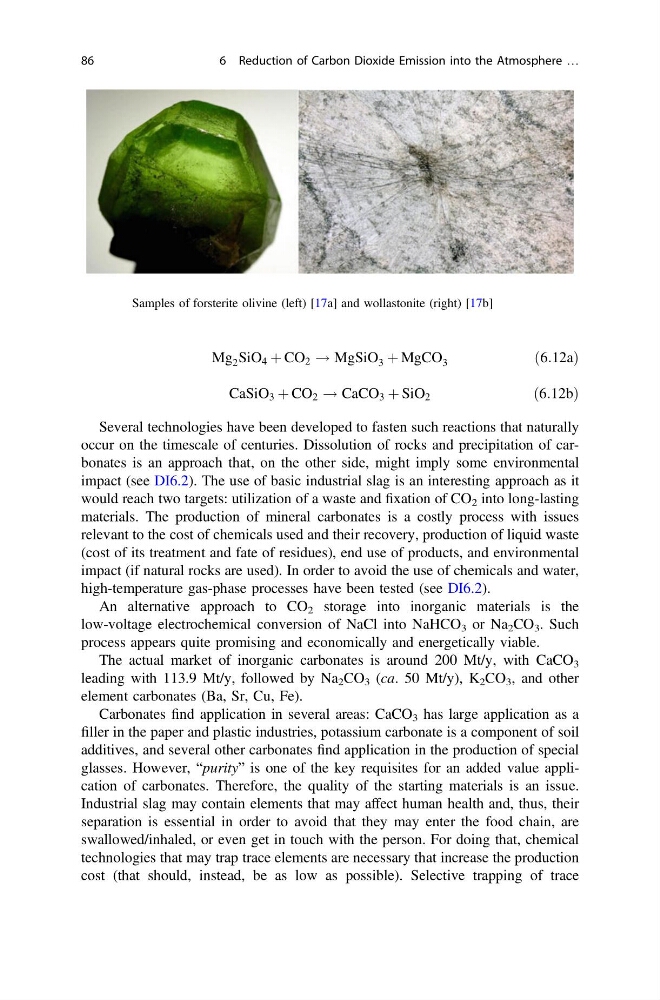
Fig. 6.7 Samples of forsterite olivine (left) [17a] and wollastonite (right) [17b]
86
6 Reduction of Carbon Dioxide Emission into the Atmosphere …
ð6:12aÞ
CaSiO 3 þ CO 2 ! CaCO 3 þ SiO 2
ð6:12bÞ
Several technologies have been developed to fasten such reactions that naturally
occur on the timescale of centuries. Dissolution of rocks and precipitation of carbonates is an approach that, on the other side, might imply some environmental
impact (see DI6.2). The use of basic industrial slag is an interesting approach as it
would reach two targets: utilization of a waste and fixation of CO 2 into long-lasting
materials. The production of mineral carbonates is a costly process with issues
relevant to the cost of chemicals used and their recovery, production of liquid waste
(cost of its treatment and fate of residues), end use of products, and environmental
impact (if natural rocks are used). In order to avoid the use of chemicals and water,
high-temperature gas-phase processes have been tested (see DI6.2).
An alternative approach to CO 2 storage into inorganic materials is the
low-voltage electrochemical conversion of NaCl into NaHCO 3 or Na 2 CO 3 . Such
process appears quite promising and economically and energetically viable.
The actual market of inorganic carbonates is around 200 Mt/y, with CaCO 3
leading with 113.9 Mt/y, followed by Na 2 CO 3 (ca. 50 Mt/y), K 2 CO 3 , and other
element carbonates (Ba, Sr, Cu, Fe).
Carbonates find application in several areas: CaCO 3 has large application as a
filler in the paper and plastic industries, potassium carbonate is a component of soil
additives, and several other carbonates find application in the production of special
glasses. However, “purity” is one of the key requisites for an added value application of carbonates. Therefore, the quality of the starting materials is an issue.
Industrial slag may contain elements that may affect human health and, thus, their
separation is essential in order to avoid that they may enter the food chain, are
swallowed/inhaled, or even get in touch with the person. For doing that, chemical
technologies that may trap trace elements are necessary that increase the production
cost (that should, instead, be as low as possible). Selective trapping of trace
Fig. 6.7 Samples of forsterite olivine (left) [17a] and wollastonite (right) [17b]
86
6 Reduction of Carbon Dioxide Emission into the Atmosphere …