

sealants etc. [64]. These days, the tendency is to shift from fossil-C-based monomers to bio-sourced molecules, using polyols and amines derived from biomass.
Such move has a key role for the sustainability of the chemical and polymer
industry and opens the way to an extensive carbon recycling, including the
exploitation of CCU.
References
1. https://www.CO2.earth/
2. (a) Aresta M, Galatola M (2001) Life cycle analysis applied to the assessment of the
environmental impact of alternative synthetic processes. J Cleaner Prod 7:181–193;
(b) Aresta M, Caroppo A, Dibenedetto A, Narracci M (2002) Life Cycle Assessment
(LCA) applied to the synthesis of methanol. Comparison of the use of syngas with the use of
CO 2 and dihydrogen produced from renewables. In: Maroto-Valer M (ed) Envrironmental
challenges and greenhouse gas control for fossil fuel utilization in the 21st century. Kluwer
Academic/Plenum Publishers, New York; (c) Artz J, Müller TE, Thenert K, Kleinekorte J,
Meys R, Sternberg A, Bardow A, Leitner W (2018) Sustainable conversion of carbon dioxide:
an integrated review of catalysis and life cycle assessment. Chem Rev 118(2),:434–504
O
P
O
C
O -
O
- O
O
-
a
O
P
O
C
O -
O
X
X
b
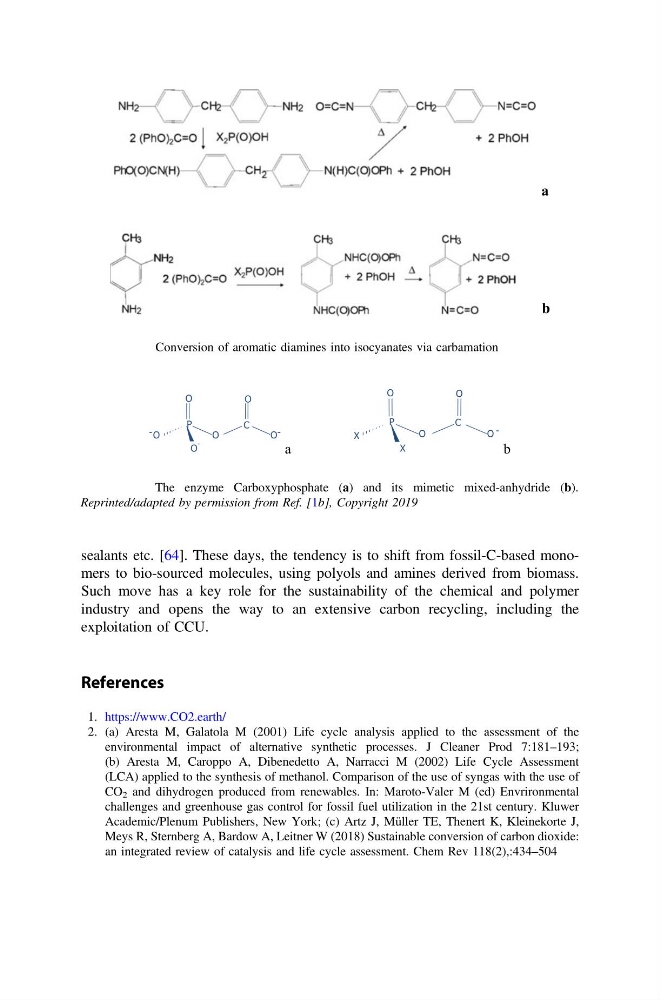
Scheme 9.7 The enzyme Carboxyphosphate (a) and its mimetic mixed-anhydride (b).
Reprinted/adapted by permission from Ref. [1b], Copyright 2019
a
b
Scheme 9.6 Conversion of aromatic diamines into isocyanates via carbamation
Such move has a key role for the sustainability of the chemical and polymer
industry and opens the way to an extensive carbon recycling, including the
exploitation of CCU.
References
1. https://www.CO2.earth/
2. (a) Aresta M, Galatola M (2001) Life cycle analysis applied to the assessment of the
environmental impact of alternative synthetic processes. J Cleaner Prod 7:181–193;
(b) Aresta M, Caroppo A, Dibenedetto A, Narracci M (2002) Life Cycle Assessment
(LCA) applied to the synthesis of methanol. Comparison of the use of syngas with the use of
CO 2 and dihydrogen produced from renewables. In: Maroto-Valer M (ed) Envrironmental
challenges and greenhouse gas control for fossil fuel utilization in the 21st century. Kluwer
Academic/Plenum Publishers, New York; (c) Artz J, Müller TE, Thenert K, Kleinekorte J,
Meys R, Sternberg A, Bardow A, Leitner W (2018) Sustainable conversion of carbon dioxide:
an integrated review of catalysis and life cycle assessment. Chem Rev 118(2),:434–504
O
P
O
C
O -
O
- O
O
-
a
O
P
O
C
O -
O
X
X
b
Scheme 9.7 The enzyme Carboxyphosphate (a) and its mimetic mixed-anhydride (b).
Reprinted/adapted by permission from Ref. [1b], Copyright 2019
a
b
Scheme 9.6 Conversion of aromatic diamines into isocyanates via carbamation