

Methanol, besides a potential use as fuel in thermal motors or in fuel cells, has a
widespread use as chemical.
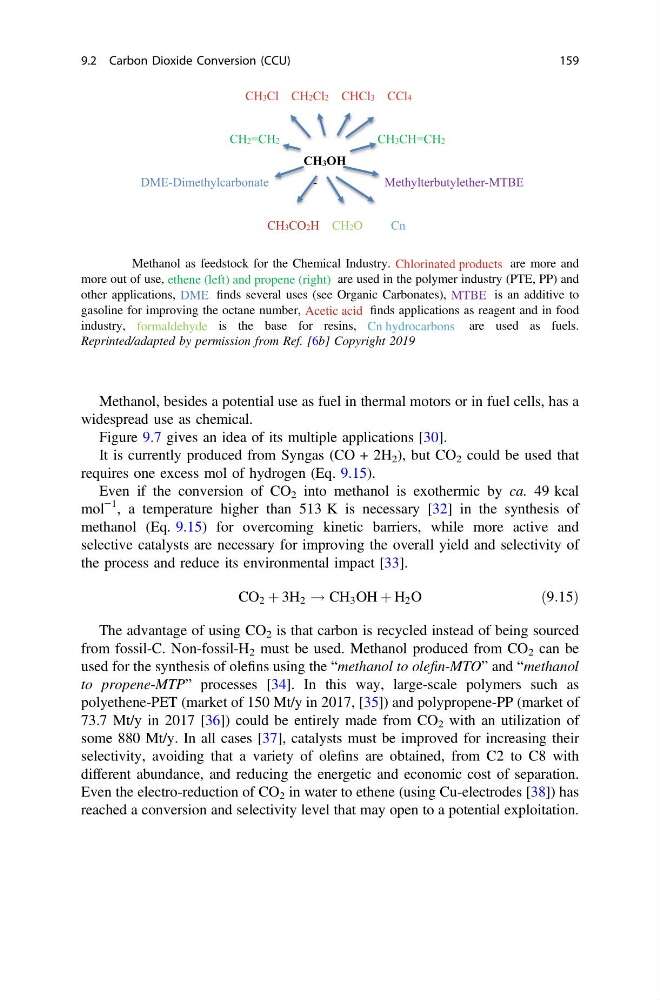
Figure 9.7 gives an idea of its multiple applications [30].
It is currently produced from Syngas (CO + 2H 2 ), but CO 2 could be used that
requires one excess mol of hydrogen (Eq. 9.15).
Even if the conversion of CO 2 into methanol is exothermic by ca. 49 kcal
mol
−1 , a temperature higher than 513 K is necessary [32] in the synthesis of
methanol (Eq. 9.15) for overcoming kinetic barriers, while more active and
selective catalysts are necessary for improving the overall yield and selectivity of
the process and reduce its environmental impact [33].
CO 2 þ 3H 2 ! CH 3 OH þ H 2 O
ð9:15Þ
The advantage of using CO 2 is that carbon is recycled instead of being sourced
from fossil-C. Non-fossil-H 2 must be used. Methanol produced from CO 2 can be
used for the synthesis of olefins using the “methanol to olefin-MTO” and “methanol
to propene-MTP” processes [34]. In this way, large-scale polymers such as
polyethene-PET (market of 150 Mt/y in 2017, [35]) and polypropene-PP (market of
73.7 Mt/y in 2017 [36]) could be entirely made from CO 2 with an utilization of
some 880 Mt/y. In all cases [37], catalysts must be improved for increasing their
selectivity, avoiding that a variety of olefins are obtained, from C2 to C8 with
different abundance, and reducing the energetic and economic cost of separation.
Even the electro-reduction of CO 2 in water to ethene (using Cu-electrodes [38]) has
reached a conversion and selectivity level that may open to a potential exploitation.
CH3Cl CH2Cl2 CHCl3 CCl4
CH2=CH2
CH3CH=CH2
CH3OH
DME-Dimethylcarbonate
-
Methylterbutylether-MTBE
CH3CO2H CH2O
Cn
Fig. 9.7 Methanol as feedstock for the Chemical Industry. Chlorinated products are more and
more out of use, ethene (left) and propene (right) are used in the polymer industry (PTE, PP) and
other applications, DME finds several uses (see Organic Carbonates), MTBE is an additive to
gasoline for improving the octane number, Acetic acid finds applications as reagent and in food
industry, formaldehyde is the base for resins, Cn hydrocarbons are used as fuels.
Reprinted/adapted by permission from Ref. [6b] Copyright 2019
9.2 Carbon Dioxide Conversion (CCU)
159
widespread use as chemical.
Figure 9.7 gives an idea of its multiple applications [30].
It is currently produced from Syngas (CO + 2H 2 ), but CO 2 could be used that
requires one excess mol of hydrogen (Eq. 9.15).
Even if the conversion of CO 2 into methanol is exothermic by ca. 49 kcal
mol
−1 , a temperature higher than 513 K is necessary [32] in the synthesis of
methanol (Eq. 9.15) for overcoming kinetic barriers, while more active and
selective catalysts are necessary for improving the overall yield and selectivity of
the process and reduce its environmental impact [33].
CO 2 þ 3H 2 ! CH 3 OH þ H 2 O
ð9:15Þ
The advantage of using CO 2 is that carbon is recycled instead of being sourced
from fossil-C. Non-fossil-H 2 must be used. Methanol produced from CO 2 can be
used for the synthesis of olefins using the “methanol to olefin-MTO” and “methanol
to propene-MTP” processes [34]. In this way, large-scale polymers such as
polyethene-PET (market of 150 Mt/y in 2017, [35]) and polypropene-PP (market of
73.7 Mt/y in 2017 [36]) could be entirely made from CO 2 with an utilization of
some 880 Mt/y. In all cases [37], catalysts must be improved for increasing their
selectivity, avoiding that a variety of olefins are obtained, from C2 to C8 with
different abundance, and reducing the energetic and economic cost of separation.
Even the electro-reduction of CO 2 in water to ethene (using Cu-electrodes [38]) has
reached a conversion and selectivity level that may open to a potential exploitation.
CH3Cl CH2Cl2 CHCl3 CCl4
CH2=CH2
CH3CH=CH2
CH3OH
DME-Dimethylcarbonate
-
Methylterbutylether-MTBE
CH3CO2H CH2O
Cn
Fig. 9.7 Methanol as feedstock for the Chemical Industry. Chlorinated products are more and
more out of use, ethene (left) and propene (right) are used in the polymer industry (PTE, PP) and
other applications, DME finds several uses (see Organic Carbonates), MTBE is an additive to
gasoline for improving the octane number, Acetic acid finds applications as reagent and in food
industry, formaldehyde is the base for resins, Cn hydrocarbons are used as fuels.
Reprinted/adapted by permission from Ref. [6b] Copyright 2019
9.2 Carbon Dioxide Conversion (CCU)
159