

The extraction phase is replaced by the dismantling of the used goods, that in a
sense is a kind of mining from a different environment than Nature, maintaining the
same complexity and the same issues of working natural raw materials, if not
representing a new challenge, because of the higher level of complexity. This is the
case of recovering all single elements that are present in a handphone, which can
contain up to some 28 different elements [1]. Such a matrix is not at all simpler than
a natural ore! Mining single elements from billions handphones (there are more
handphones than people on the Earth!) means to recover tonnes of different elements. One billion handphones contains, just to cite the most abundant: 15 000 t Cu ,
3 000 t Al , 3 000 t Fe , 2 000 t Ni , 1 000 t Sn , 100 t Au , 20 t Pd,In,Ta .
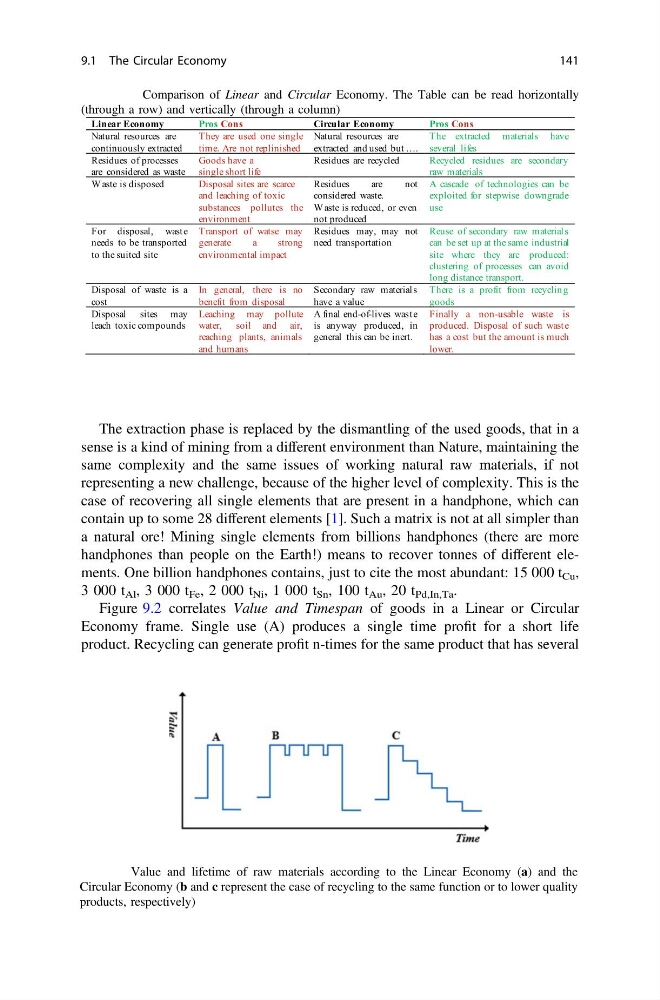
Figure 9.2 correlates Value and Timespan of goods in a Linear or Circular
Economy frame. Single use (A) produces a single time profit for a short life
product. Recycling can generate profit n-times for the same product that has several
Table 9.1 Comparison of Linear and Circular Economy. The Table can be read horizontally
(through a row) and vertically (through a column)
Fig. 9.2 Value and lifetime of raw materials according to the Linear Economy (a) and the
Circular Economy (b and c represent the case of recycling to the same function or to lower quality
products, respectively)
9.1 The Circular Economy
141
sense is a kind of mining from a different environment than Nature, maintaining the
same complexity and the same issues of working natural raw materials, if not
representing a new challenge, because of the higher level of complexity. This is the
case of recovering all single elements that are present in a handphone, which can
contain up to some 28 different elements [1]. Such a matrix is not at all simpler than
a natural ore! Mining single elements from billions handphones (there are more
handphones than people on the Earth!) means to recover tonnes of different elements. One billion handphones contains, just to cite the most abundant: 15 000 t Cu ,
3 000 t Al , 3 000 t Fe , 2 000 t Ni , 1 000 t Sn , 100 t Au , 20 t Pd,In,Ta .
Figure 9.2 correlates Value and Timespan of goods in a Linear or Circular
Economy frame. Single use (A) produces a single time profit for a short life
product. Recycling can generate profit n-times for the same product that has several
Table 9.1 Comparison of Linear and Circular Economy. The Table can be read horizontally
(through a row) and vertically (through a column)
Fig. 9.2 Value and lifetime of raw materials according to the Linear Economy (a) and the
Circular Economy (b and c represent the case of recycling to the same function or to lower quality
products, respectively)
9.1 The Circular Economy
141