

However, the two dipole vectors have equal magnitude and point in opposite
directions, cancelling each other due to the linear geometry of the molecule that,
thus, has no permanent electric dipole and is apolar (Fig. 7.1).
Anyway, the two dipoles originate a non-zero (−4.3 Â 10
−26 esu/cm
2 ) electric
quadrupole [3a, g] that originates significant intermolecular interactions, which may
account for the formation of neutral clusters (CO 2 ) n (2
n
5) observed via
mass spectrometry [3b, d]. The intermolecular interaction can be reinforced if a
molecule of CO 2 bears a positive or negative charge producing very stable charged
aggregates (CO 2 ) n
+(−) (2
n
10), models for CO 2 -solvated CO
þ
2 radical cation
or solvated CO
À
2 radical anion [3c–e].
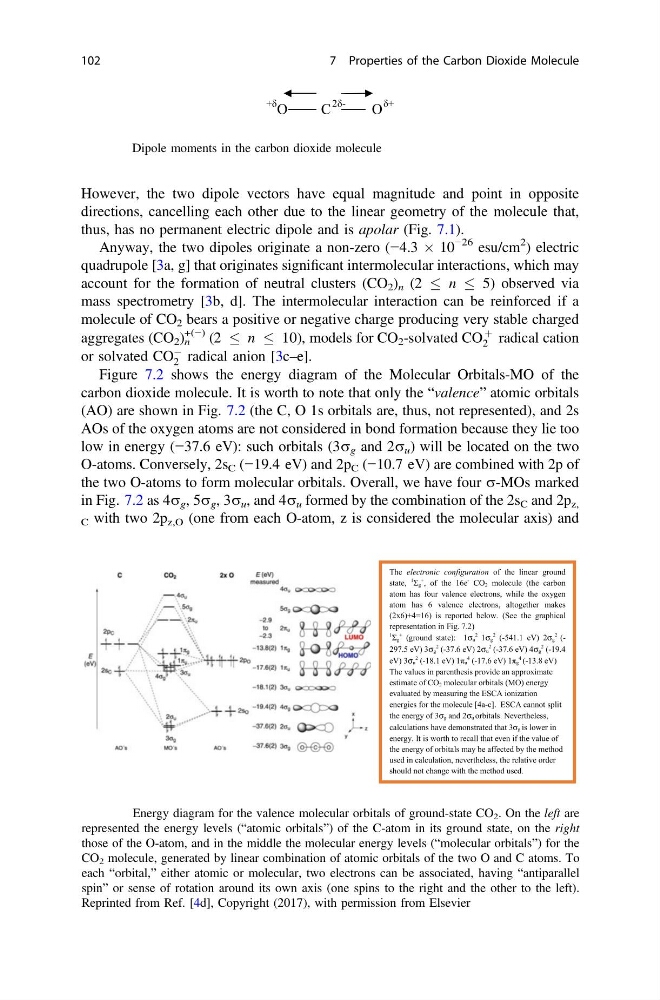
Figure 7.2 shows the energy diagram of the Molecular Orbitals-MO of the
carbon dioxide molecule. It is worth to note that only the “valence” atomic orbitals
(AO) are shown in Fig. 7.2 (the C, O 1s orbitals are, thus, not represented), and 2s
AOs of the oxygen atoms are not considered in bond formation because they lie too
low in energy (−37.6 eV): such orbitals (3r g and 2r u ) will be located on the two
O-atoms. Conversely, 2s C (−19.4 eV) and 2p C (−10.7 eV) are combined with 2p of
the two O-atoms to form molecular orbitals. Overall, we have four r-MOs marked
in Fig. 7.2 as 4r g , 5r g , 3r u , and 4r u formed by the combination of the 2s C and 2p z,
C with two 2p z,O (one from each O-atom, z is considered the molecular axis) and
+δ O
C
2δO
δ+
Fig. 7.1 Dipole moments in the carbon dioxide molecule
The electronic configuration of the linear ground
state,
1
Σg
+ , of the 16e
- CO2 molecule (the carbon
atom has four valence electrons, while the oxygen
atom has 6 valence electrons, altogether makes
(2x6)+4=16) is reported below. (See the graphical
representation in Fig. 7.2)
1 Σg
+ (ground state): 1σu
2 1σg
2 (-541.1 eV) 2σg
2 (297.5 eV) 3σg
2 (-37.6 eV) 2σu
2 (-37.6 eV) 4σg
2 (-19.4
eV) 3σu
2 (-18.1 eV) 1πu
4 (-17.6 eV) 1πg
4 (-13.8 eV)
The values in parenthesis provide an approximate
estimate of CO2 molecular orbitals (MO) energy
evaluated by measuring the ESCA ionization
energies for the molecule [4a-c]. ESCA cannot split
the energy of 3σg and 2σu orbitals. Nevertheless,
calculations have demonstrated that 3σg is lower in
energy. It is worth to recall that even if the value of
the energy of orbitals may be affected by the method
used in calculation, nevertheless, the relative order
should not change with the method used.
Fig. 7.2 Energy diagram for the valence molecular orbitals of ground-state CO 2 . On the left are
represented the energy levels (“atomic orbitals”) of the C-atom in its ground state, on the right
those of the O-atom, and in the middle the molecular energy levels (“molecular orbitals”) for the
CO 2 molecule, generated by linear combination of atomic orbitals of the two O and C atoms. To
each “orbital,” either atomic or molecular, two electrons can be associated, having “antiparallel
spin” or sense of rotation around its own axis (one spins to the right and the other to the left).
Reprinted from Ref. [4d], Copyright (2017), with permission from Elsevier
102
7 Properties of the Carbon Dioxide Molecule
directions, cancelling each other due to the linear geometry of the molecule that,
thus, has no permanent electric dipole and is apolar (Fig. 7.1).
Anyway, the two dipoles originate a non-zero (−4.3 Â 10
−26 esu/cm
2 ) electric
quadrupole [3a, g] that originates significant intermolecular interactions, which may
account for the formation of neutral clusters (CO 2 ) n (2
n
5) observed via
mass spectrometry [3b, d]. The intermolecular interaction can be reinforced if a
molecule of CO 2 bears a positive or negative charge producing very stable charged
aggregates (CO 2 ) n
+(−) (2
n
10), models for CO 2 -solvated CO
þ
2 radical cation
or solvated CO
À
2 radical anion [3c–e].
Figure 7.2 shows the energy diagram of the Molecular Orbitals-MO of the
carbon dioxide molecule. It is worth to note that only the “valence” atomic orbitals
(AO) are shown in Fig. 7.2 (the C, O 1s orbitals are, thus, not represented), and 2s
AOs of the oxygen atoms are not considered in bond formation because they lie too
low in energy (−37.6 eV): such orbitals (3r g and 2r u ) will be located on the two
O-atoms. Conversely, 2s C (−19.4 eV) and 2p C (−10.7 eV) are combined with 2p of
the two O-atoms to form molecular orbitals. Overall, we have four r-MOs marked
in Fig. 7.2 as 4r g , 5r g , 3r u , and 4r u formed by the combination of the 2s C and 2p z,
C with two 2p z,O (one from each O-atom, z is considered the molecular axis) and
+δ O
C
2δO
δ+
Fig. 7.1 Dipole moments in the carbon dioxide molecule
The electronic configuration of the linear ground
state,
1
Σg
+ , of the 16e
- CO2 molecule (the carbon
atom has four valence electrons, while the oxygen
atom has 6 valence electrons, altogether makes
(2x6)+4=16) is reported below. (See the graphical
representation in Fig. 7.2)
1 Σg
+ (ground state): 1σu
2 1σg
2 (-541.1 eV) 2σg
2 (297.5 eV) 3σg
2 (-37.6 eV) 2σu
2 (-37.6 eV) 4σg
2 (-19.4
eV) 3σu
2 (-18.1 eV) 1πu
4 (-17.6 eV) 1πg
4 (-13.8 eV)
The values in parenthesis provide an approximate
estimate of CO2 molecular orbitals (MO) energy
evaluated by measuring the ESCA ionization
energies for the molecule [4a-c]. ESCA cannot split
the energy of 3σg and 2σu orbitals. Nevertheless,
calculations have demonstrated that 3σg is lower in
energy. It is worth to recall that even if the value of
the energy of orbitals may be affected by the method
used in calculation, nevertheless, the relative order
should not change with the method used.
Fig. 7.2 Energy diagram for the valence molecular orbitals of ground-state CO 2 . On the left are
represented the energy levels (“atomic orbitals”) of the C-atom in its ground state, on the right
those of the O-atom, and in the middle the molecular energy levels (“molecular orbitals”) for the
CO 2 molecule, generated by linear combination of atomic orbitals of the two O and C atoms. To
each “orbital,” either atomic or molecular, two electrons can be associated, having “antiparallel
spin” or sense of rotation around its own axis (one spins to the right and the other to the left).
Reprinted from Ref. [4d], Copyright (2017), with permission from Elsevier
102
7 Properties of the Carbon Dioxide Molecule