

It is obvious that the energetic balance in all these processes has a fundamental
role as the balance of CO 2 cannot be negative in the sense that does not make sense
to emit more CO 2 than is sequestered into the carbonates. Therefore, the CO 2
penalty, expressed as the ratio of emitted CO 2 over sequestered CO 2 , has a fundamental role: it must be lesser than 1, the lower it is better is the process. As the
product in all processes is the carbonate, the comparison of processes can be done
considering the energy input that depends on the technical aspects. Avoiding
pressure and lowering the temperature are fundamental parameters together with the
reduction of energy in recycling of materials.
Besides energy parameters, Investment (CAPEX) and Operative costs (OPEX)
have a role in decision-making besides the quality of the product that will determine
its value and use.
A point of importance is that the cost of the technology, whatever it is, depends
on the site where the plant is located. As shown in Fig. 6.14, the parameters on
which the process depends are numerous: the target is the optimization of all of
them in order to minimize energetic and economic costs and maximize profits.
All products and by-products have a market, for example, MgCO 3 has a market
price in the range 500–2 500 US$/t according to its purity and particle size, while
CaCO 3 has a much lower price, up to 300–500 US$/t, but as shown in Table 6.4,
Ca is much more abundant than Mg.
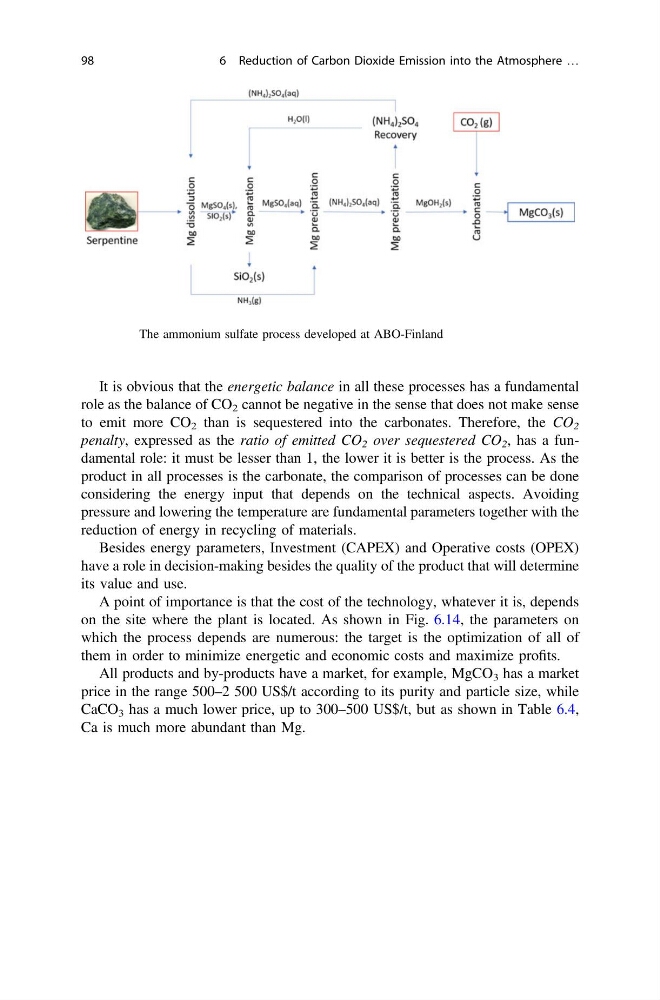
Fig. 6.13 The ammonium sulfate process developed at ABO-Finland
98
6 Reduction of Carbon Dioxide Emission into the Atmosphere …
role as the balance of CO 2 cannot be negative in the sense that does not make sense
to emit more CO 2 than is sequestered into the carbonates. Therefore, the CO 2
penalty, expressed as the ratio of emitted CO 2 over sequestered CO 2 , has a fundamental role: it must be lesser than 1, the lower it is better is the process. As the
product in all processes is the carbonate, the comparison of processes can be done
considering the energy input that depends on the technical aspects. Avoiding
pressure and lowering the temperature are fundamental parameters together with the
reduction of energy in recycling of materials.
Besides energy parameters, Investment (CAPEX) and Operative costs (OPEX)
have a role in decision-making besides the quality of the product that will determine
its value and use.
A point of importance is that the cost of the technology, whatever it is, depends
on the site where the plant is located. As shown in Fig. 6.14, the parameters on
which the process depends are numerous: the target is the optimization of all of
them in order to minimize energetic and economic costs and maximize profits.
All products and by-products have a market, for example, MgCO 3 has a market
price in the range 500–2 500 US$/t according to its purity and particle size, while
CaCO 3 has a much lower price, up to 300–500 US$/t, but as shown in Table 6.4,
Ca is much more abundant than Mg.
Fig. 6.13 The ammonium sulfate process developed at ABO-Finland
98
6 Reduction of Carbon Dioxide Emission into the Atmosphere …