

32
4 Radiation Detection Technology
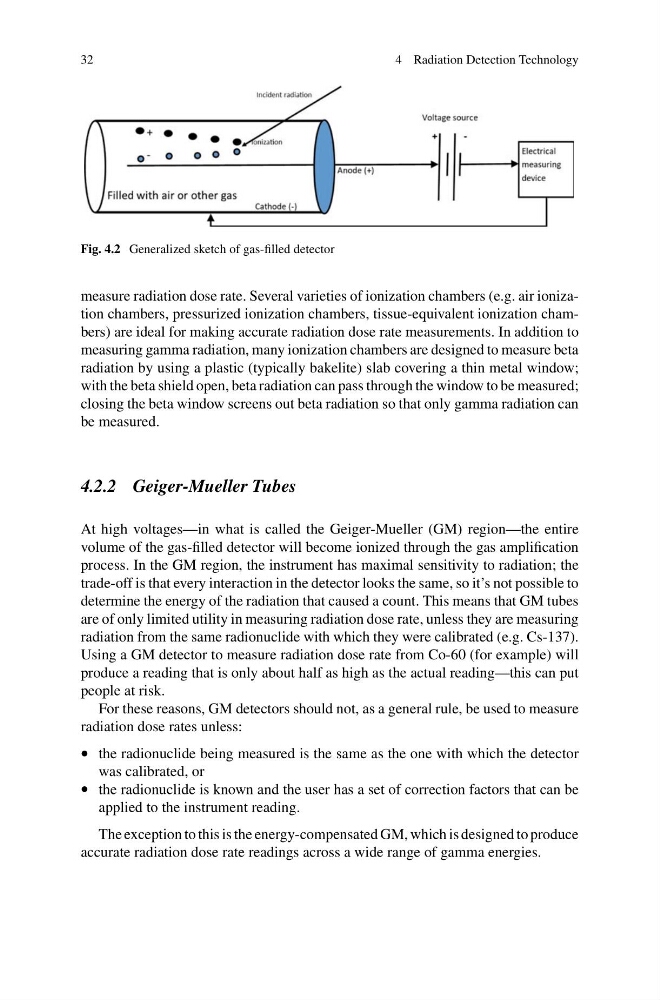
Fig. 4.2 Generalized sketch of gas-filled detector
measure radiation dose rate. Several varieties of ionization chambers (e.g. air ionization chambers, pressurized ionization chambers, tissue-equivalent ionization chambers) are ideal for making accurate radiation dose rate measurements. In addition to
measuring gamma radiation, many ionization chambers are designed to measure beta
radiation by using a plastic (typically bakelite) slab covering a thin metal window;
with the beta shield open, beta radiation can pass through the window to be measured;
closing the beta window screens out beta radiation so that only gamma radiation can
be measured.
4.2.2 Geiger-Mueller Tubes
At high voltages—in what is called the Geiger-Mueller (GM) region—the entire
volume of the gas-filled detector will become ionized through the gas amplification
process. In the GM region, the instrument has maximal sensitivity to radiation; the
trade-off is that every interaction in the detector looks the same, so it’s not possible to
determine the energy of the radiation that caused a count. This means that GM tubes
are of only limited utility in measuring radiation dose rate, unless they are measuring
radiation from the same radionuclide with which they were calibrated (e.g. Cs-137).
Using a GM detector to measure radiation dose rate from Co-60 (for example) will
produce a reading that is only about half as high as the actual reading—this can put
people at risk.
For these reasons, GM detectors should not, as a general rule, be used to measure
radiation dose rates unless:
• the radionuclide being measured is the same as the one with which the detector
was calibrated, or
• the radionuclide is known and the user has a set of correction factors that can be
applied to the instrument reading.
The exception to this is the energy-compensated GM, which is designed to produce
accurate radiation dose rate readings across a wide range of gamma energies.
4 Radiation Detection Technology
Fig. 4.2 Generalized sketch of gas-filled detector
measure radiation dose rate. Several varieties of ionization chambers (e.g. air ionization chambers, pressurized ionization chambers, tissue-equivalent ionization chambers) are ideal for making accurate radiation dose rate measurements. In addition to
measuring gamma radiation, many ionization chambers are designed to measure beta
radiation by using a plastic (typically bakelite) slab covering a thin metal window;
with the beta shield open, beta radiation can pass through the window to be measured;
closing the beta window screens out beta radiation so that only gamma radiation can
be measured.
4.2.2 Geiger-Mueller Tubes
At high voltages—in what is called the Geiger-Mueller (GM) region—the entire
volume of the gas-filled detector will become ionized through the gas amplification
process. In the GM region, the instrument has maximal sensitivity to radiation; the
trade-off is that every interaction in the detector looks the same, so it’s not possible to
determine the energy of the radiation that caused a count. This means that GM tubes
are of only limited utility in measuring radiation dose rate, unless they are measuring
radiation from the same radionuclide with which they were calibrated (e.g. Cs-137).
Using a GM detector to measure radiation dose rate from Co-60 (for example) will
produce a reading that is only about half as high as the actual reading—this can put
people at risk.
For these reasons, GM detectors should not, as a general rule, be used to measure
radiation dose rates unless:
• the radionuclide being measured is the same as the one with which the detector
was calibrated, or
• the radionuclide is known and the user has a set of correction factors that can be
applied to the instrument reading.
The exception to this is the energy-compensated GM, which is designed to produce
accurate radiation dose rate readings across a wide range of gamma energies.