

22.1 Public Health Concerns
273
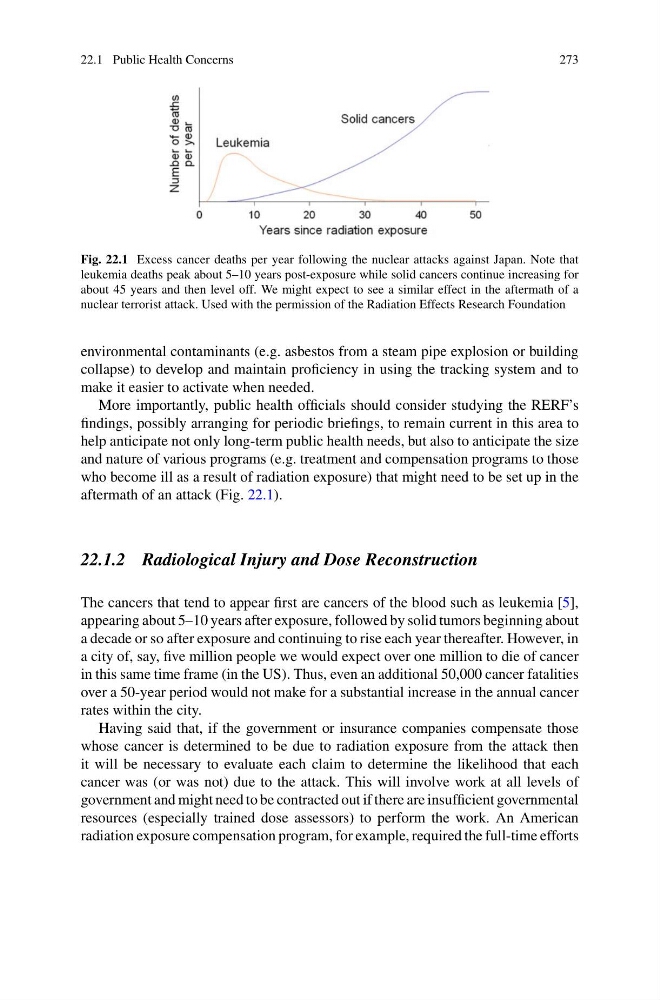
Fig. 22.1 Excess cancer deaths per year following the nuclear attacks against Japan. Note that
leukemia deaths peak about 5–10 years post-exposure while solid cancers continue increasing for
about 45 years and then level off. We might expect to see a similar effect in the aftermath of a
nuclear terrorist attack. Used with the permission of the Radiation Effects Research Foundation
environmental contaminants (e.g. asbestos from a steam pipe explosion or building
collapse) to develop and maintain proficiency in using the tracking system and to
make it easier to activate when needed.
More importantly, public health officials should consider studying the RERF’s
findings, possibly arranging for periodic briefings, to remain current in this area to
help anticipate not only long-term public health needs, but also to anticipate the size
and nature of various programs (e.g. treatment and compensation programs to those
who become ill as a result of radiation exposure) that might need to be set up in the
aftermath of an attack (Fig. 22.1).
22.1.2 Radiological Injury and Dose Reconstruction
The cancers that tend to appear first are cancers of the blood such as leukemia [5],
appearing about 5–10 years after exposure, followed by solid tumors beginning about
a decade or so after exposure and continuing to rise each year thereafter. However, in
a city of, say, five million people we would expect over one million to die of cancer
in this same time frame (in the US). Thus, even an additional 50,000 cancer fatalities
over a 50-year period would not make for a substantial increase in the annual cancer
rates within the city.
Having said that, if the government or insurance companies compensate those
whose cancer is determined to be due to radiation exposure from the attack then
it will be necessary to evaluate each claim to determine the likelihood that each
cancer was (or was not) due to the attack. This will involve work at all levels of
government and might need to be contracted out if there are insufficient governmental
resources (especially trained dose assessors) to perform the work. An American
radiation exposure compensation program, for example, required the full-time efforts
273
Fig. 22.1 Excess cancer deaths per year following the nuclear attacks against Japan. Note that
leukemia deaths peak about 5–10 years post-exposure while solid cancers continue increasing for
about 45 years and then level off. We might expect to see a similar effect in the aftermath of a
nuclear terrorist attack. Used with the permission of the Radiation Effects Research Foundation
environmental contaminants (e.g. asbestos from a steam pipe explosion or building
collapse) to develop and maintain proficiency in using the tracking system and to
make it easier to activate when needed.
More importantly, public health officials should consider studying the RERF’s
findings, possibly arranging for periodic briefings, to remain current in this area to
help anticipate not only long-term public health needs, but also to anticipate the size
and nature of various programs (e.g. treatment and compensation programs to those
who become ill as a result of radiation exposure) that might need to be set up in the
aftermath of an attack (Fig. 22.1).
22.1.2 Radiological Injury and Dose Reconstruction
The cancers that tend to appear first are cancers of the blood such as leukemia [5],
appearing about 5–10 years after exposure, followed by solid tumors beginning about
a decade or so after exposure and continuing to rise each year thereafter. However, in
a city of, say, five million people we would expect over one million to die of cancer
in this same time frame (in the US). Thus, even an additional 50,000 cancer fatalities
over a 50-year period would not make for a substantial increase in the annual cancer
rates within the city.
Having said that, if the government or insurance companies compensate those
whose cancer is determined to be due to radiation exposure from the attack then
it will be necessary to evaluate each claim to determine the likelihood that each
cancer was (or was not) due to the attack. This will involve work at all levels of
government and might need to be contracted out if there are insufficient governmental
resources (especially trained dose assessors) to perform the work. An American
radiation exposure compensation program, for example, required the full-time efforts