

19.7 Sheltering and Evacuation
241
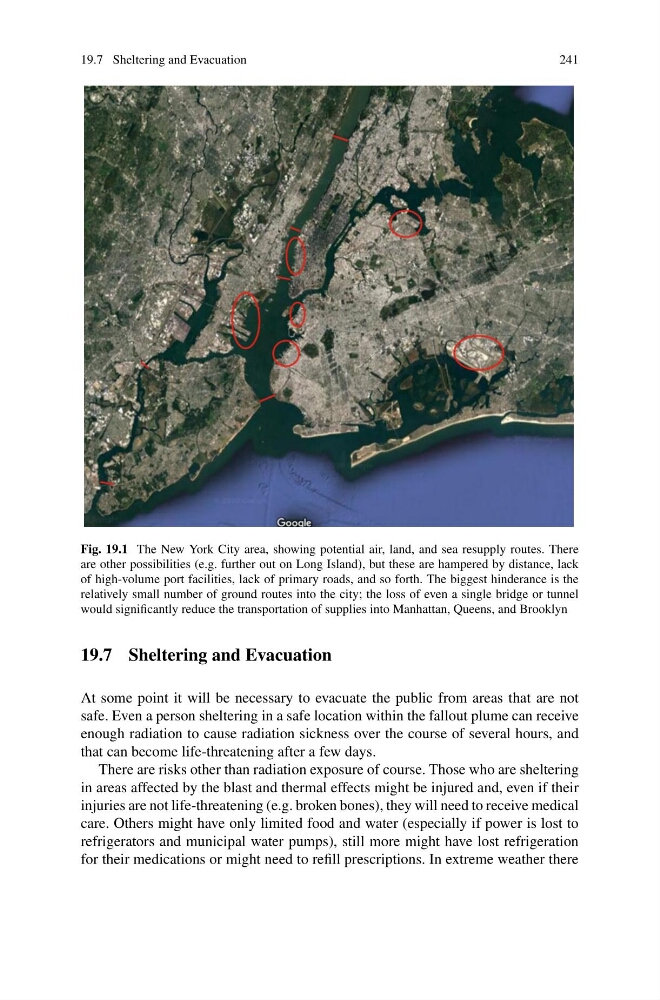
Fig. 19.1 The New York City area, showing potential air, land, and sea resupply routes. There
are other possibilities (e.g. further out on Long Island), but these are hampered by distance, lack
of high-volume port facilities, lack of primary roads, and so forth. The biggest hinderance is the
relatively small number of ground routes into the city; the loss of even a single bridge or tunnel
would significantly reduce the transportation of supplies into Manhattan, Queens, and Brooklyn
19.7 Sheltering and Evacuation
At some point it will be necessary to evacuate the public from areas that are not
safe. Even a person sheltering in a safe location within the fallout plume can receive
enough radiation to cause radiation sickness over the course of several hours, and
that can become life-threatening after a few days.
There are risks other than radiation exposure of course. Those who are sheltering
in areas affected by the blast and thermal effects might be injured and, even if their
injuries are not life-threatening (e.g. broken bones), they will need to receive medical
care. Others might have only limited food and water (especially if power is lost to
refrigerators and municipal water pumps), still more might have lost refrigeration
for their medications or might need to refill prescriptions. In extreme weather there
241
Fig. 19.1 The New York City area, showing potential air, land, and sea resupply routes. There
are other possibilities (e.g. further out on Long Island), but these are hampered by distance, lack
of high-volume port facilities, lack of primary roads, and so forth. The biggest hinderance is the
relatively small number of ground routes into the city; the loss of even a single bridge or tunnel
would significantly reduce the transportation of supplies into Manhattan, Queens, and Brooklyn
19.7 Sheltering and Evacuation
At some point it will be necessary to evacuate the public from areas that are not
safe. Even a person sheltering in a safe location within the fallout plume can receive
enough radiation to cause radiation sickness over the course of several hours, and
that can become life-threatening after a few days.
There are risks other than radiation exposure of course. Those who are sheltering
in areas affected by the blast and thermal effects might be injured and, even if their
injuries are not life-threatening (e.g. broken bones), they will need to receive medical
care. Others might have only limited food and water (especially if power is lost to
refrigerators and municipal water pumps), still more might have lost refrigeration
for their medications or might need to refill prescriptions. In extreme weather there