

204
17 Medical Response
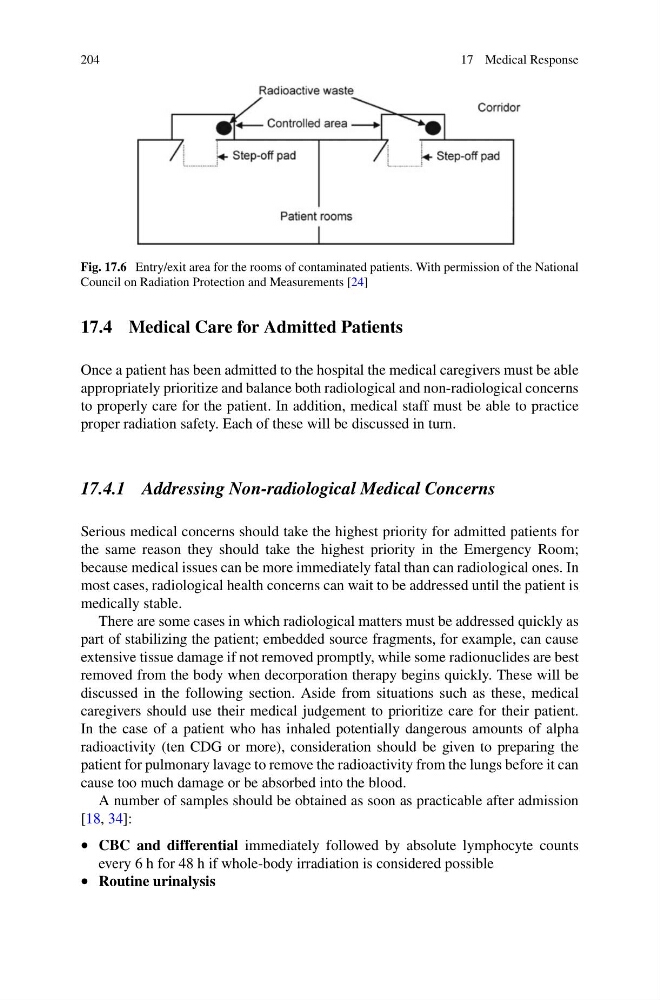
Fig. 17.6 Entry/exit area for the rooms of contaminated patients. With permission of the National
Council on Radiation Protection and Measurements [24]
17.4 Medical Care for Admitted Patients
Once a patient has been admitted to the hospital the medical caregivers must be able
appropriately prioritize and balance both radiological and non-radiological concerns
to properly care for the patient. In addition, medical staff must be able to practice
proper radiation safety. Each of these will be discussed in turn.
17.4.1 Addressing Non-radiological Medical Concerns
Serious medical concerns should take the highest priority for admitted patients for
the same reason they should take the highest priority in the Emergency Room;
because medical issues can be more immediately fatal than can radiological ones. In
most cases, radiological health concerns can wait to be addressed until the patient is
medically stable.
There are some cases in which radiological matters must be addressed quickly as
part of stabilizing the patient; embedded source fragments, for example, can cause
extensive tissue damage if not removed promptly, while some radionuclides are best
removed from the body when decorporation therapy begins quickly. These will be
discussed in the following section. Aside from situations such as these, medical
caregivers should use their medical judgement to prioritize care for their patient.
In the case of a patient who has inhaled potentially dangerous amounts of alpha
radioactivity (ten CDG or more), consideration should be given to preparing the
patient for pulmonary lavage to remove the radioactivity from the lungs before it can
cause too much damage or be absorbed into the blood.
A number of samples should be obtained as soon as practicable after admission
[18, 34]:
• CBC and differential immediately followed by absolute lymphocyte counts
every 6 h for 48 h if whole-body irradiation is considered possible
• Routine urinalysis
17 Medical Response
Fig. 17.6 Entry/exit area for the rooms of contaminated patients. With permission of the National
Council on Radiation Protection and Measurements [24]
17.4 Medical Care for Admitted Patients
Once a patient has been admitted to the hospital the medical caregivers must be able
appropriately prioritize and balance both radiological and non-radiological concerns
to properly care for the patient. In addition, medical staff must be able to practice
proper radiation safety. Each of these will be discussed in turn.
17.4.1 Addressing Non-radiological Medical Concerns
Serious medical concerns should take the highest priority for admitted patients for
the same reason they should take the highest priority in the Emergency Room;
because medical issues can be more immediately fatal than can radiological ones. In
most cases, radiological health concerns can wait to be addressed until the patient is
medically stable.
There are some cases in which radiological matters must be addressed quickly as
part of stabilizing the patient; embedded source fragments, for example, can cause
extensive tissue damage if not removed promptly, while some radionuclides are best
removed from the body when decorporation therapy begins quickly. These will be
discussed in the following section. Aside from situations such as these, medical
caregivers should use their medical judgement to prioritize care for their patient.
In the case of a patient who has inhaled potentially dangerous amounts of alpha
radioactivity (ten CDG or more), consideration should be given to preparing the
patient for pulmonary lavage to remove the radioactivity from the lungs before it can
cause too much damage or be absorbed into the blood.
A number of samples should be obtained as soon as practicable after admission
[18, 34]:
• CBC and differential immediately followed by absolute lymphocyte counts
every 6 h for 48 h if whole-body irradiation is considered possible
• Routine urinalysis